April on the Coast: The Six Weeks That Decide the Year
Quick answer: April on the Coast: The Six Weeks That Decide the Year — Trees on this coast live with fog, salt, wind and thin soil, and the work that keeps them healthy is decided by those conditions rather than by a calendar written inland. Structure, clearance and the root zone are what a tree here needs looked at, and small work done early is what keeps a tree out of the emergency list.
Field note. What we see on this coast is that the trees people worry about are usually not the ones in trouble: the pine with a clean crown and a lean that predates the house is often sounder than the tidy tree that has been quietly drowning in its own root zone.
On the other hand, there is no schedule that suits every tree — the same species on two sides of one street can need opposite care, which is why we look before we recommend.
Spring here does not arrive as a warm morning. It arrives as a week of rain, then a wind off the water, then a tree that suddenly has four inches of new shoots on it. By the time the weather feels like spring, the season’s important work is already underway underground, and most of what a homeowner does in April is either helpfully timed or badly timed with very little middle ground.
Here is what is worth doing, in the order the calendar allows.
Stay off the soil while it is wet
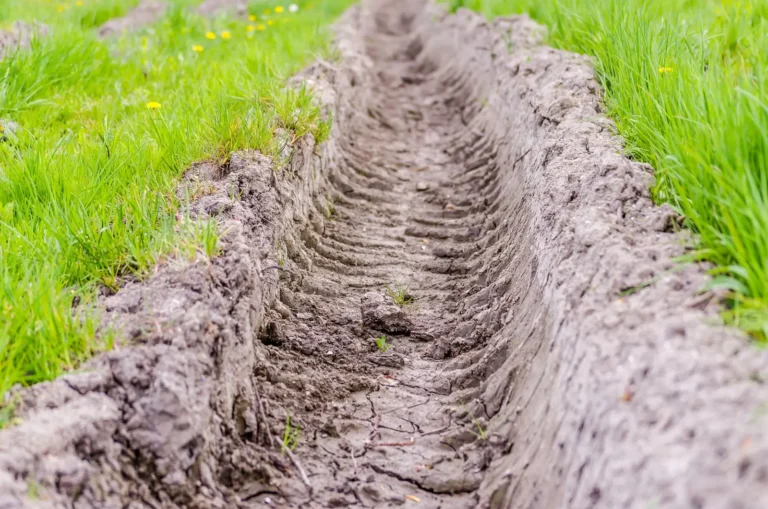
The single most damaging spring activity on a coastal property is walking, parking or driving on saturated ground under a tree’s canopy. Wet soil compacts under far less pressure than dry soil, and compaction is permanent — it removes the pore space roots need for air, and it takes years of mulching and root-zone work to recover. A track worn across the root zone in February is still visible in the growth rings a decade later.
So route the wheelbarrow around the drip line, keep the truck off the lawn, and if a delivery has to cross it, put down boards and accept the damage to one strip. The tree will forgive a strip. It will not forgive a parking space.
Refresh the mulch, and get the maths right
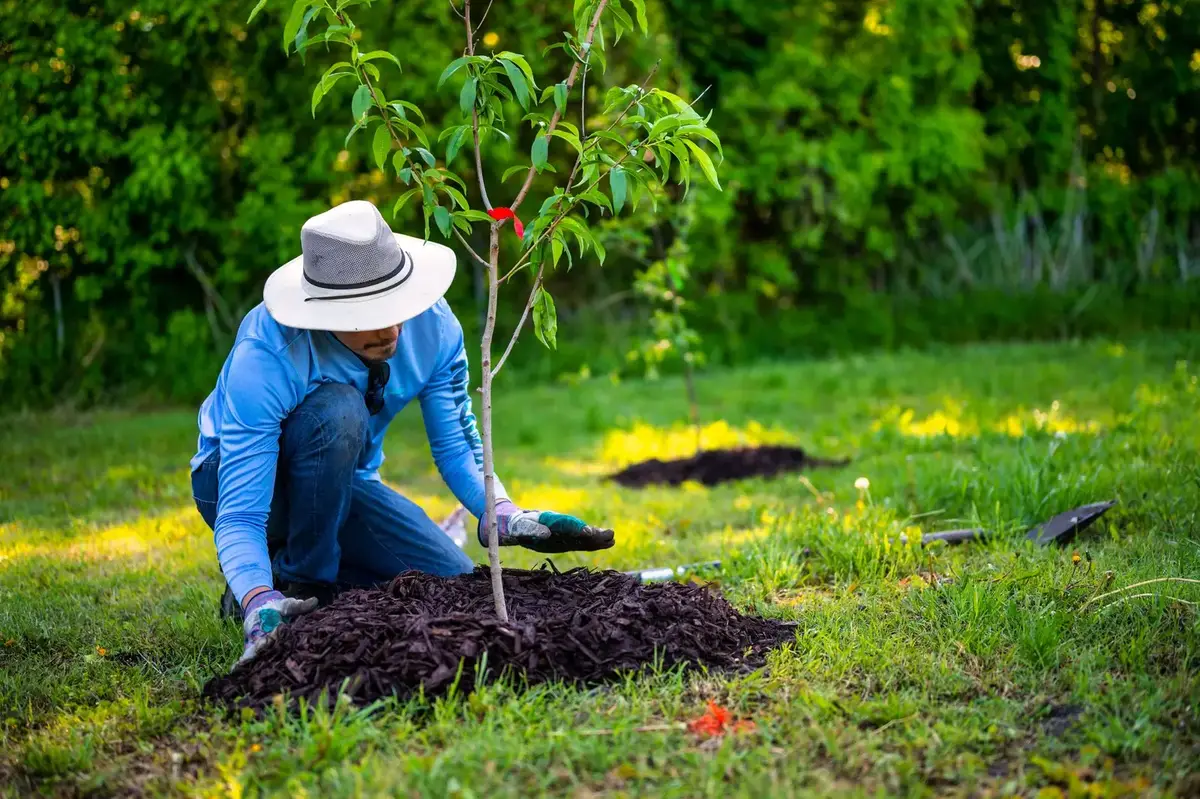
Spring is the right time for the one job that pays every year: top up the mulch ring. Winter rains settle and thin what you spread last year, and a ring that has fallen below an inch has stopped doing its work. Aim for two to three inches, spread to the drip line or beyond, flat, and clear of the trunk by a hand’s width.
Two cautions. Do not mulch a tree you have not looked at since autumn — walk it first, because a mulch pile over a root flare hides the one change worth catching. And do not let anyone edge or cultivate the ring to ‘tidy’ it; the fine feeding roots are in the top few inches of that soil and a hoe goes through them like thread.
The oak rule: nothing wet, nothing wounded
The one hard timing rule on this coast concerns the coast live oaks. The pathogen behind sudden oak death moves in water — rain splash, fog drip, runoff, and soil and sap on tools — so a pruning wound made on a wet day is an opening while the spores are moving. A wound made in dry weather is a door that opens into an empty corridor.
The practical version: no oak pruning while the bark is wet, clean the saw between trees and between properties, and keep the bay laurel that leans over an oak out of the work plan in the rain, because it is the carrier that does not die. The disease itself, and what a bleeding canker looks like, is described in sudden oak death on this coast.
If an oak limb must come off this spring for safety, do it in a dry window and leave the rest of the crown alone. Everything that can wait should wait for the dry months.
Stakes, ties, and the trees you planted last autumn
A young tree’s ties are invisible until the trunk has grown into them. Check every one in spring: the loop should be loose enough to slip a finger under, the stake should not bear weight unless the tree needs it, and any tie that has started to mark the bark must come off today.
A tree that has stood a winter is usually ready to stand alone, and leaving the support on for a second season is how you grow a tree with a thin trunk and a weak base.
While you are there, look at the planting depth. Winter rain and settling soil often bury the root flare by an inch or two, and a buried flare is a slow death sentence. Pull the mulch back, find where the trunk widens, and reset the level if anything has crept up over it.
Read the spring flush, and write it down
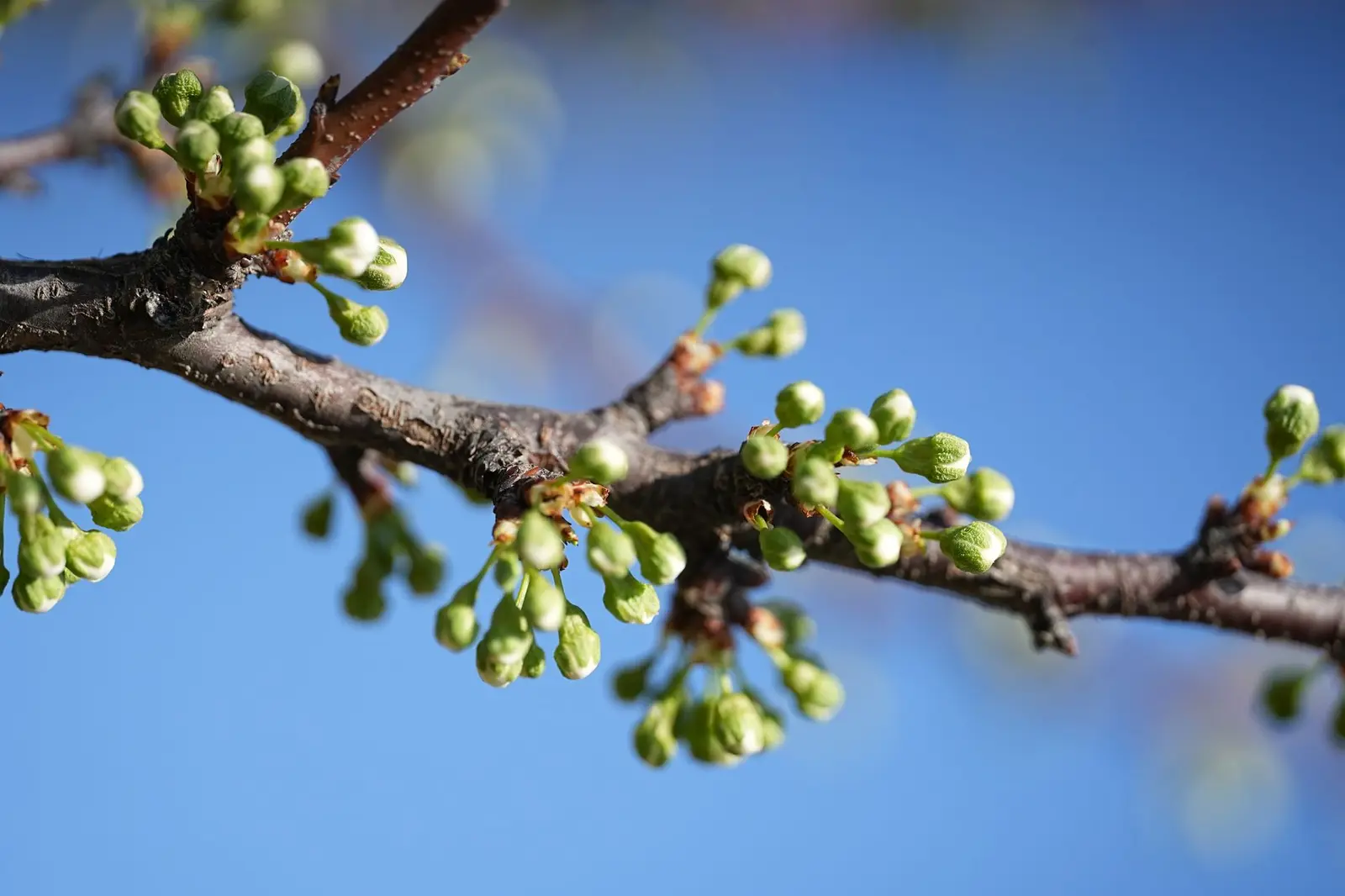
A tree leafs out in a particular order, and the order is information. A crown that comes in late on one side, or a leader whose buds break while the rest of the tree is still tight, is telling you where the damage from winter sits, and the six signals worth photographing are in the signs that come before a diagnosis.
This is the easiest reading of the year to make, and it is only possible in these six weeks — by June the whole canopy looks the same.
So the spring tasks that matter beyond maintenance are the documentary ones. Photograph the crown from a fixed spot, note the date, and write one line: full, late, thin on the south, dead tip in the top third. That is the baseline a professional needs in autumn, and it is worth more than any description given from memory five months later.
The visit that reads that record is the pre-storm inspection described in the inspection that happens before the storm.
Two jobs belong on the summer list instead, and the instinct to do them now should be resisted. Do not fertilise a tree in wet spring weather — the growth it pushes is soft, fungal pressure is at its peak, and the run-off goes where it is not needed.
And do not cut back a deciduous tree to shape it while the sap is running and the leaves are expanding; that work is a dormant-season job, and in spring it costs the tree the leaves it has just paid for.
Spring, in the end, is a season for watching and for the two cheap maintenance jobs: mulch and ties. Every year I meet someone who did an enthusiastic spring prune and then called me in June to ask why the tree looks tired. The tree looks tired because it spent April regrowing what they took off.