When Wet Soil Says No: Access and Refusal
Quick answer: When Wet Soil Says No: Access and Refusal — Mulch is the cheapest thing that happens to a tree: a flat layer over the root zone holds moisture through the dry season, keeps the soil temperature steady and feeds the soil life the tree depends on. Almost every mulch problem is a depth problem or a contact problem — too thick, or piled against the trunk where the bark has to stay dry.
Field note. What we see most on this coast is not too little mulch but too much, in the wrong place: the volcano against the trunk that keeps the bark wet through the fog season and invites rot where the tree cannot show it until the canopy thins.
On the other hand, a thin ring of the wrong material is worse than none at all — matted, water-repellent mulch sheds the rain it was meant to store.
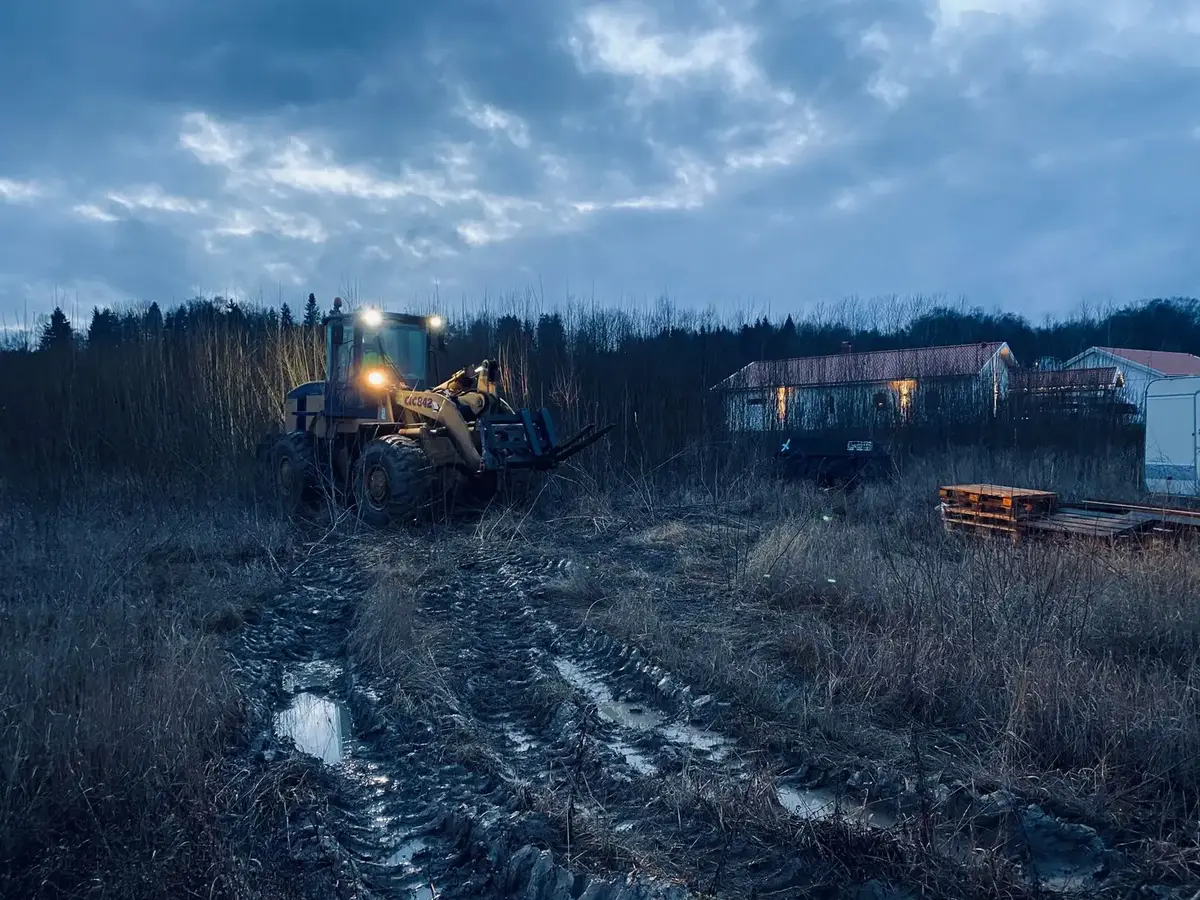
Every winter there is a week when the phone rings with an urgent job and the ground is a sponge. The tree may genuinely need work. The ground may genuinely not allow a truck onto it. Those two facts coexist, and how a crew handles the conflict tells you more about them than any advertisement.
What wet soil does that dry soil does not
Soil is a structure, not a substance. Good garden soil is roughly half mineral, a quarter water, a quarter air, arranged in aggregates with pores between them. Roots need those pores for oxygen, and they are what allows water to move.
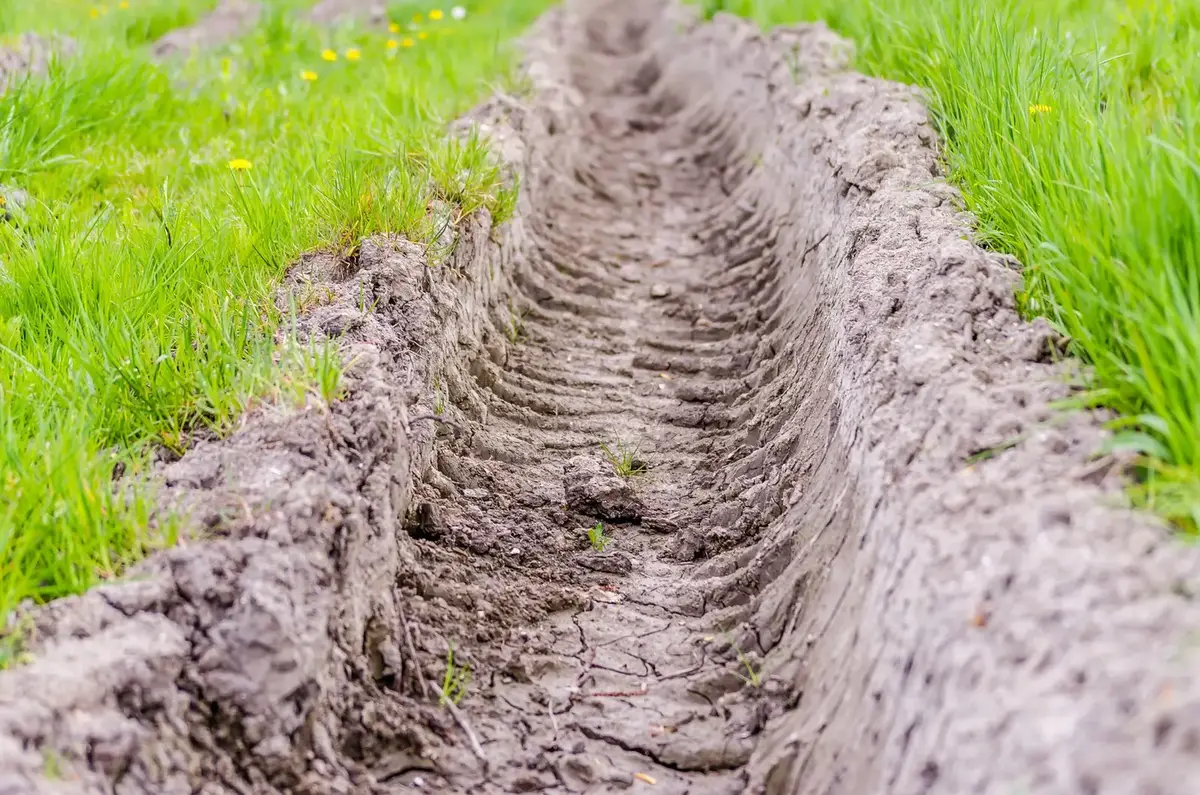
When soil is wet, the aggregates are lubricated and the pores are full; a load applied to it now does not just press down, it rearranges the structure into something denser and flatter. That is compaction, and it does not rebound when the soil dries.
The consequence for trees is slow and severe. Compacted soil has fewer pores, so less oxygen, less water infiltration and more resistance to root growth. A root zone compacted by machinery in one wet afternoon can show reduced growth for a decade, and the decline looks like a disease from the outside — thin crown, dieback, borers — which is why it is so often misdiagnosed.
What a crew does about it
The first answer is timing. If the work is not urgent, it waits. A job scheduled for February on a clay lot is a job that will either damage the ground or be done with much more labour, and a crew that says so is protecting your property and their schedule at the same time.
The second is mats. Plywood or composite track mats spread the load over a larger area and are the standard answer for a machine that has to cross a lawn. They work, within limits: on saturated ground even mats can pump, and the ruts appear at the mat edges. A matted route across a lawn in a normal wet winter is usually acceptable; a matted route across a bog is not.
The third is method. A crew that cannot get a truck close can still work: carry the gear, climb rather than use a lift, rig the pieces down rather than drop them, and move brush by hand.
It is slower and it costs more, and on a really soft site it is the only way to do the job without writing off the garden. Ask for it explicitly if the alternative is waiting six weeks and the tree is a hazard.
What the damage costs to undo
Ruts are cosmetic and repairable — topsoil, seed, a season. Compaction is not cosmetic and is expensive to fix. The treatment is mechanical aeration or, on a bad site, excavation and replacement of the compacted layer, which is a landscaping project rather than a repair. The roots of the tree you were trying to help are underneath it.
That is why the refusal is the professional answer. A crew that says ‘not this week’ is not being difficult; they are declining to hand you a bill now and a dead tree in five years. It is worth asking any crew you hire what their wet-weather policy is, before the winter, because the answer is either a policy or an improvisation.
The one job that cannot wait
A tree that has failed or is about to, over a structure or a road, is a different matter: the ground gets sacrificed and the repair is dealt with afterwards. In that case the priority is to limit the damage deliberately — one route, mats, no repeated passes, and a plan for the ruts — rather than to pretend it can be avoided.
If a winter job is coming and you want to know what access your property can take, the maintenance service page covers scheduled work; a tree that is already down is the emergency line, whatever the ground is doing.