Choosing a Tree Service: Five Questions That Separate Arborists
Quick answer: How to Choose a Tree Service: Five Questions to Ask — The tree that thrives here is the one chosen for this coast: fog, salt, wind and shallow soil are the local constraints, and mature size is the constraint most often ignored. Planting is a matter of putting the right species in a site that can hold it, then keeping the root flare visible and the first summers watered.
Field note. What we see is that the coast is forgiving to the right species and unforgiving to the wrong one: the same tree that looks comfortable four streets in will burn on the windward side of a Cambria lot.
On the other hand, natives are not automatically the answer at every address — a species that belongs in the watershed can still be the wrong size for the garden it is standing in.
Most of the tree-service disasters I hear about were not accidents. They were decisions made in a driveway in ninety seconds, on a number and a handshake. The crew was friendly. The price was good. Nobody asked who was insured, and nobody had to until a limb landed on the neighbour’s car.
You do not need to become an arborist to hire one. You need five questions and the patience to hear the answers.
1. “Are you insured – and can I see the certificate?”
This is the one that matters most, and it is the one most often waved away with a laugh. Ask for a certificate of insurance with liability coverage and, separately, proof of workers’ compensation. Two things follow. First, if a worker is injured on your property and the company carries no workers’ comp, you may be exposed.
Second, if the crew damages your house and carries no liability insurance, you are now in a dispute with a company that may not exist next month. A real operation produces the certificate without drama. “We’re fully insured” is not a certificate.
2. “Who will actually be on the property?”
Not the salesperson – the crew. A licensed arborist who bids the job and then sends unqualified labour is a common gap. A straight answer names the climber, the ground crew, and who is supervising. If the person quoting you is not the person doing the work, that is worth knowing.
3. “What’s the plan for this specific tree?”
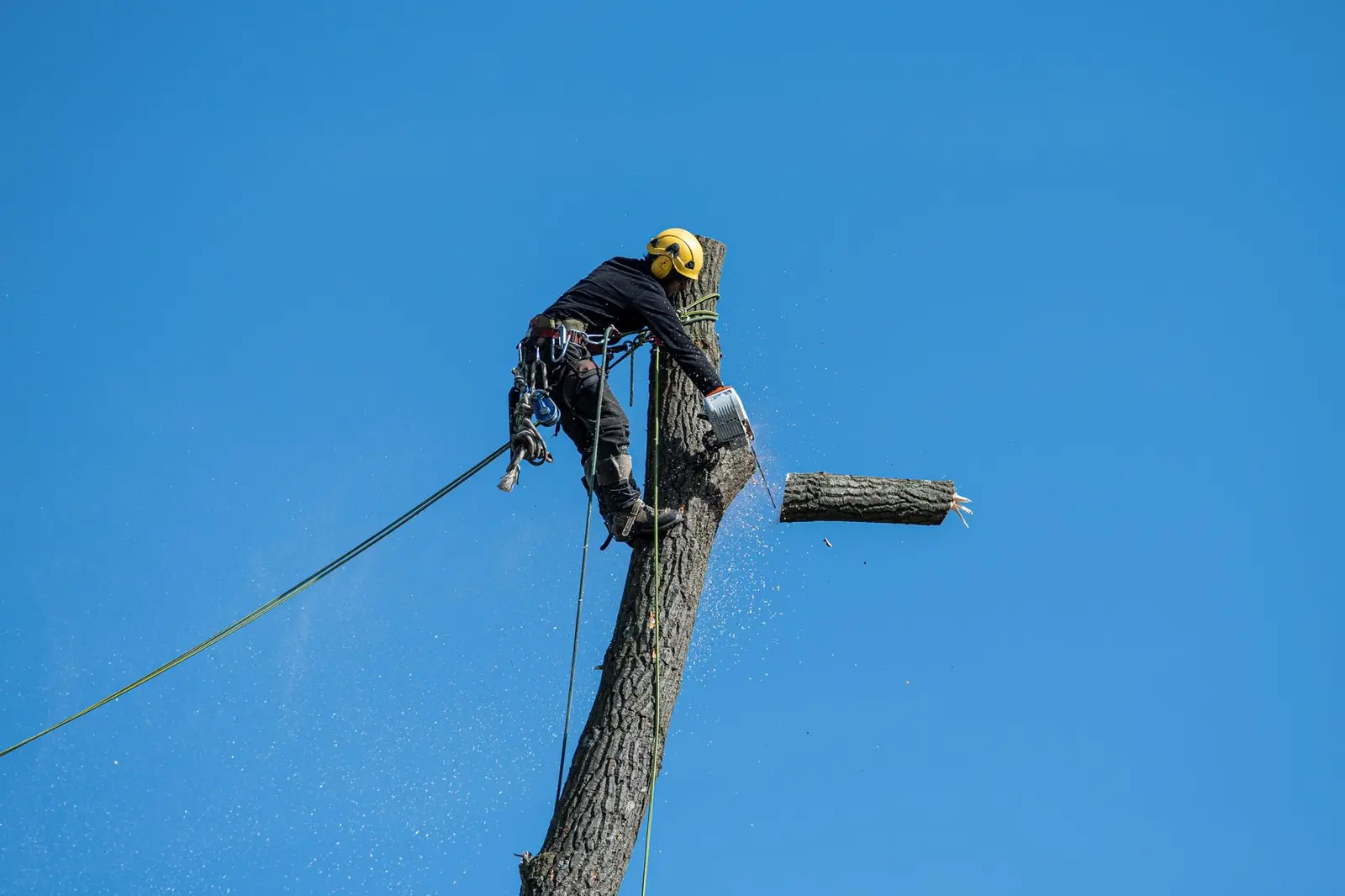
Watch for a plan, not a price. How will it be removed – sectioned, rigged, or felled, and into what drop zone? Is there a removal that requires rigging over the roof, or is there room to fell it clean? A professional will look up, walk the property, and tell you where the limbs are going. A salesman gives you a number in the first thirty seconds and never leaves the driveway.
4. “What happens to the wood, the stump and the mess?”
Get it on paper. Chip haul-away, firewood left on site or taken, and whether stump grinding is included or extra – and how deep the grind goes, because a shallow grind leaves you a re-sprouting stump and a new problem. “Cleanup included” means different things to different companies.
5. “Is the quote in writing, and does it name what’s included?”
A written estimate with the scope, the price and the exclusions. If a crew shows up at the door uninvited the day after a storm offering a “neighbourhood deal,” the answer is no, thank you. Storm-chasers exist because urgency beats judgement.

The safety lesson
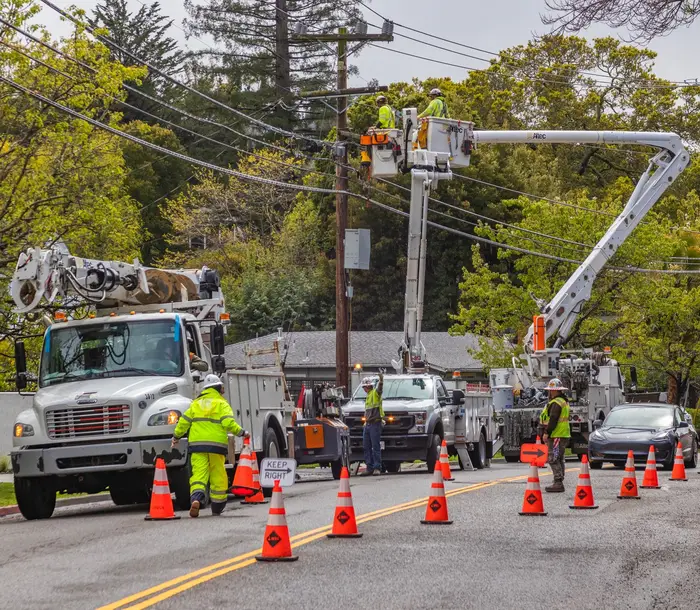
Never let anyone work a tree near a power line unless they can show you they are authorised to, and never accept “we’ll be careful.” If a limb is touching or close to a conductor, that is a utility job and the line is treated as live. The same rule applies to you: assume any downed line is energised, keep everyone back, and call for help. A tree service that shrugs at that rule is one you walk away from.
None of this is exotic. It is the difference between a company that will still answer the phone in five years and a truck with a magnet sign. If you want to see what a straight estimate looks like, or how we describe the work before we touch a tree, ask us the five questions and compare the answers. We are happy to be measured against them – and so should anyone else be, on the same five.