The Estimate Visit: What a Real One Includes
Quick answer: The Estimate Visit: What a Real One Includes — Tree work is priced from the tree and the site rather than from a rate card: access, height, lean, what is under it, how the wood comes down, how far it has to travel and what happens to the stump all move the number. That is why a written quote names the work line by line instead of quoting one figure over the phone.
Field note. What we see is that the quotes people worry about are rarely the expensive ones: the job that costs the most is the one re-done, and a plan that protects the driveway, the fence and the roof is cheaper than the repair.
On the other hand, the cheapest quote is not automatically the worst value — the honest comparison is what each one includes, and a figure with no line items is the one that changes later.
An estimate is a promise about work that has not happened yet, and the only thing that makes it worth reading is that somebody stood on your property and looked. A quote given over the phone, from a photograph, or from the street is not an estimate. It is a guess with a letterhead, and it will be revised upward on the day, in the driveway, when the crew sees the actual tree.
So it is worth knowing what a real visit looks like, because you can tell within ten minutes whether you are getting one. The estimator should be walking, not standing. They should be looking up and then down at the ground, repeatedly. And they should be writing more than a number.
What gets measured before anything is priced
The first measurement is access. Where can a truck stand? How wide is the gate? Is there a slope, a septic field, an irrigation line, a fence that comes out? A tree in a back garden with no vehicle access is a different job from the same tree beside a driveway, and not by a small margin — the difference is dragging versus carrying, and every piece of wood has to leave the property by one of those two methods.
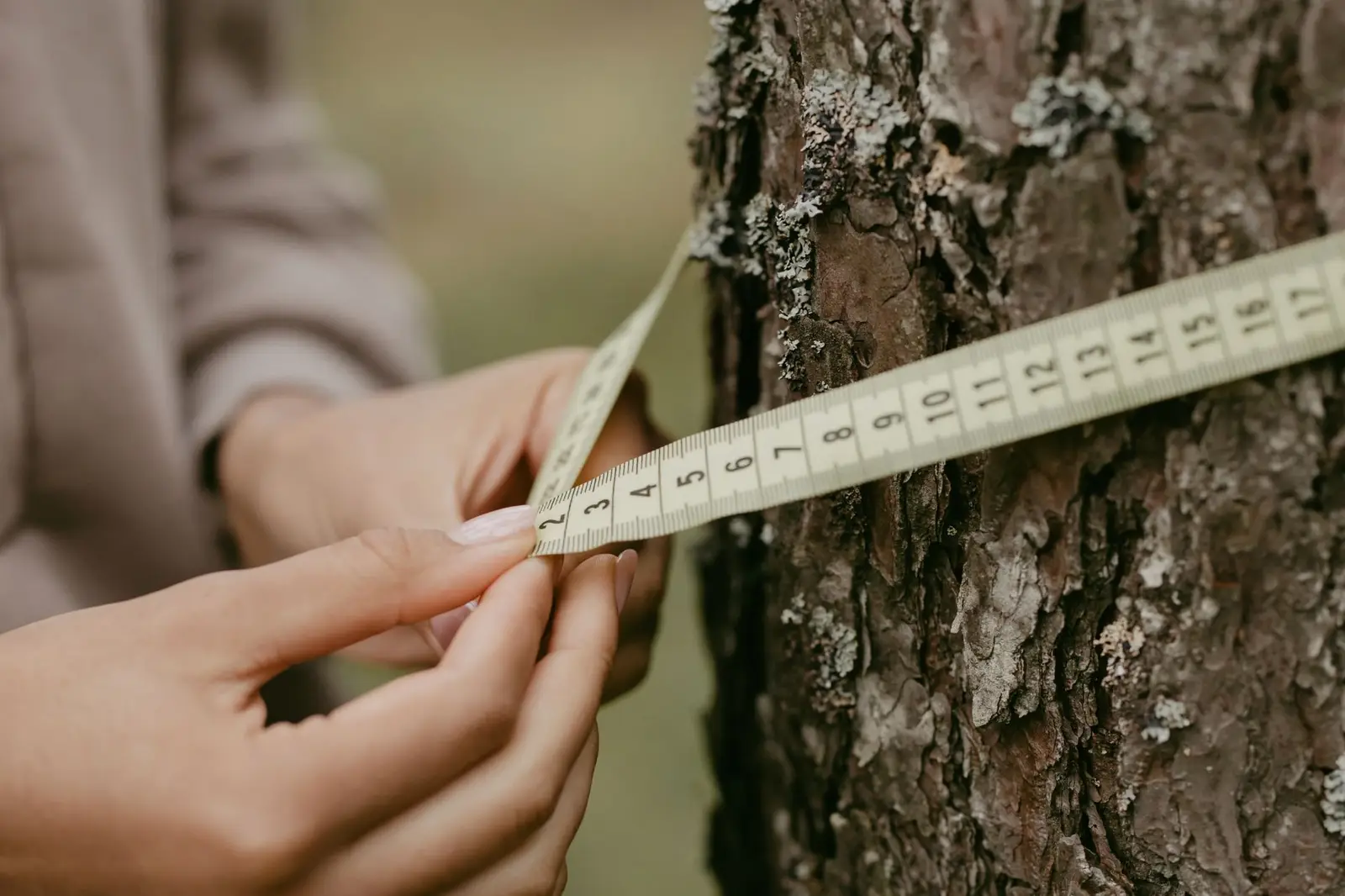
The second is the tree itself: diameter at breast height, height, lean, the number of leaders, the spread. Diameter drives the size of every cut and the weight of every piece; height drives whether it can be felled whole or has to come down in sections. An estimator who does not put a tape on the trunk is estimating the photograph in their memory.
The third is what is underneath: the surface to protect, the buried services marked or not, the wires overhead, the neighbour’s fence exactly on the line. The fourth is what happens to the material. Chips can usually stay if you want them; logs are heavy and somebody has to want them; the stump is a separate machine and a separate line item. All four measurements change the number, and all four are invisible in a phone quote.
The four questions a good estimator asks you
Why now? The answer separates a hazard from an inconvenience. A limb that dropped in last week’s wind is a different conversation from a tree that has been on a to-do list since 2019, and the estimate should reflect which one it is.
What do you want the space to be afterwards? Removal and reduction produce very different yards, and a homeowner who wanted light and got a stump has been sold the wrong job. How long has it been since the tree was last worked on, and by whom? Old pruning cuts tell an estimator a great deal about what the next job will find inside the wood.
And is there anything the tree is currently doing that you like — shade on a window in August, screening from a neighbour, a swing?
That last question is not sentiment. It is scope. A crew that knows the shade matters will shape a reduction differently than one told only to take the tree down a size. The estimate should say so explicitly, because the crew on the day reads the paperwork, not your memory of a conversation.
What the written scope should contain
Every tree by location and size, and the operation on each one: remove, reduce, raise, thin, deadwood. The height of the work and whether climbing or a lift is used. What happens to the wood — hauled, chipped, left, or cut to length and stacked. Whether the stump is ground, and to what depth, and whether the grindings are removed or left. Whether cleanup includes the gutters, the roof, the neighbour’s side.
The date, or the window. The payment terms, the insurance certificate, and who pulls the permit if the tree is protected.
If the scope says ‘trim tree’ and nothing else, the price is not comparable to anything, because you do not know what you bought. Two quotes that differ by 40 percent usually differ by a scope line somebody omitted, not by 40 percent of effort.

One more thing belongs on the page: what the estimator saw that made them recommend something other than what you asked for. If they think the tree should come down and you asked for a trim, the reason should be written, with the defect named. You are allowed to disagree. You are not well served by a document that does not record the disagreement.
For the wider version of this — how to line up three quotes and read them side by side — see comparing tree service quotes. And if a tree has already failed, the emergency service page is the one to call, not the estimate form.