The Branch You Deferred: A Ledger of Dead Wood
Quick answer: The Branch You Deferred: A Ledger of Dead Wood — Trees on this coast live with fog, salt, wind and thin soil, and the work that keeps them healthy is decided by those conditions rather than by a calendar written inland. Structure, clearance and the root zone are what a tree here needs looked at, and small work done early is what keeps a tree out of the emergency list.
Field note. What we see on this coast is that the trees people worry about are usually not the ones in trouble: the pine with a clean crown and a lean that predates the house is often sounder than the tidy tree that has been quietly drowning in its own root zone.
On the other hand, there is no schedule that suits every tree — the same species on two sides of one street can need opposite care, which is why we look before we recommend.
Dead wood is the most deferred item on any tree. It is also the one that fails without warning, because a dead branch has no way to signal. A living limb that is overloaded bends, cracks audibly, sends up water sprouts, shows a seam. A dead one simply hangs there, getting lighter and more brittle at the same time, until a gust arrives at the wrong angle and the whole thing lets go at once.
That is the mechanism people underestimate. Dead wood does not decay into softness the way a log on the ground does. It dries. The wood loses moisture, checks and splits along the grain, and the attachment at the collar becomes a hinge of dry fibre rather than a living union. It is lighter, which sounds reassuring, and it is far more brittle, which is not.
What the first year does
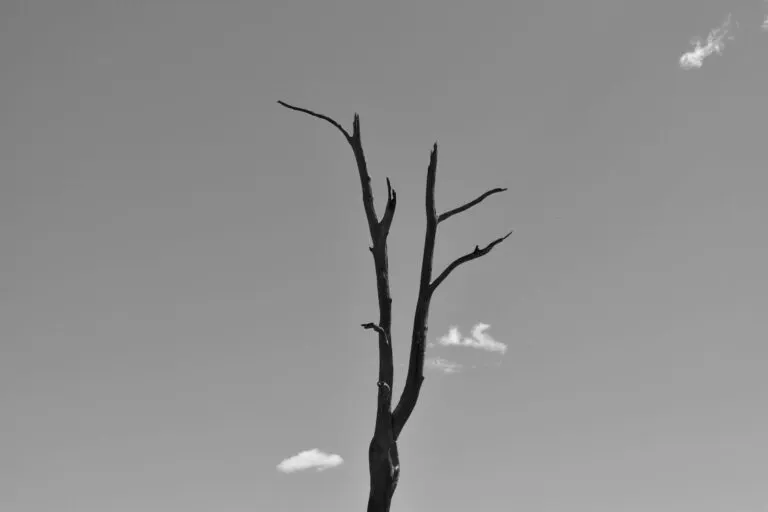
In the first season after a limb dies, the tree walls it off at the collar: a chemical barrier and then a physical one, sealing the dead stub from the living stem. That is the tree doing exactly the right thing, and it is also the moment the stub becomes a separate object attached to the tree rather than part of it. The connection is now mechanical.
Meanwhile the bark loosens and sloughs, which changes how the branch catches wind. A dead limb with its bark gone presents a smooth, narrow profile; one still wearing its bark catches far more. This is why two dead branches of the same size fail at different wind speeds, and why ‘it survived last winter’ is a weaker statement about dead wood than about anything else on the tree.
The season it fails
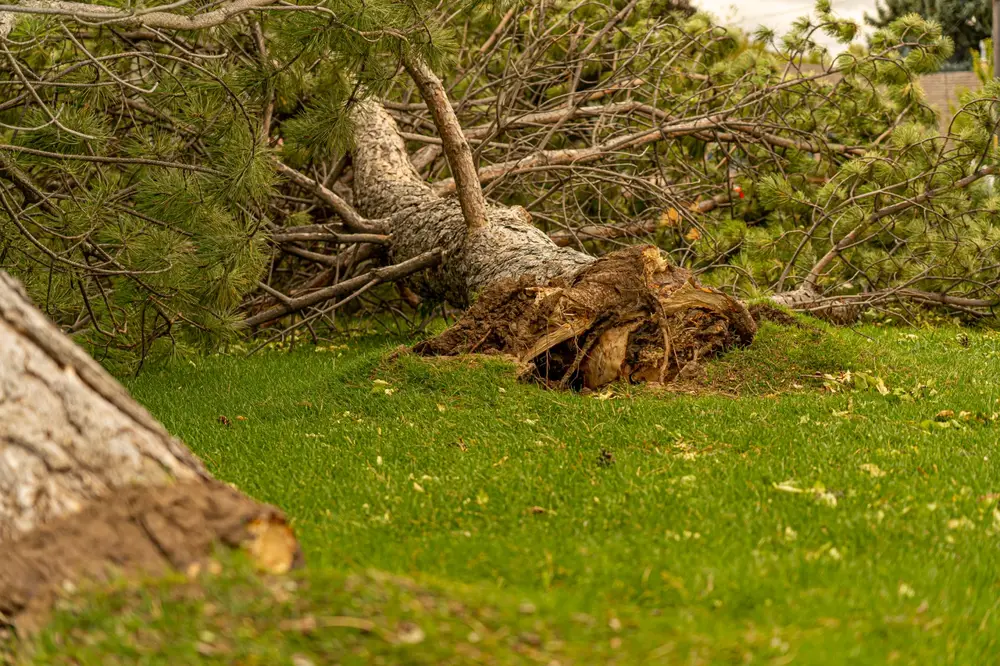
On this coast the pattern is consistent: the failures cluster in the first big rain after a long dry spell, and in the wind that comes with it. There are two reasons. The soil softens, so the whole tree moves more than it has for months, and every attachment is loaded in a way it has not been.
And the dead wood itself has spent the summer at low moisture, which is when it is at its most brittle. Add the first real gust and the ledger comes due.
Summers of drought make this worse over several years, because the tree sacrifices limbs to survive — it sheds what it cannot keep supplied, usually from the top and the outer crown. By the third dry year there can be a surprising amount of it up there, all of it attached mechanically, none of it visible from the ground as anything other than a slightly thinner crown.
What dead wood costs you beyond the risk
There is a slower cost that matters on a property you intend to keep. A tree that is carrying a lot of dead wood is not sealing its wounds efficiently, and dead stubs are entry points for the fungi that hollow stems. The rot that starts in a dead branch does not stay in the branch; it moves to the union and then into the parent wood.
A tree cleaned up in year one is a tree whose wound boundaries are still working. The same tree left for five years can have a cavity where the branch used to be.
There is also the practical cost, which is that every deferred branch is a branch that eventually has to be dealt with on an emergency basis, in the rain, at emergency rates, possibly on top of something you liked. Dead wood removed on a scheduled visit is cheap, planned work. The same wood removed after it lands is a repair job with a tree attached.
How much is too much
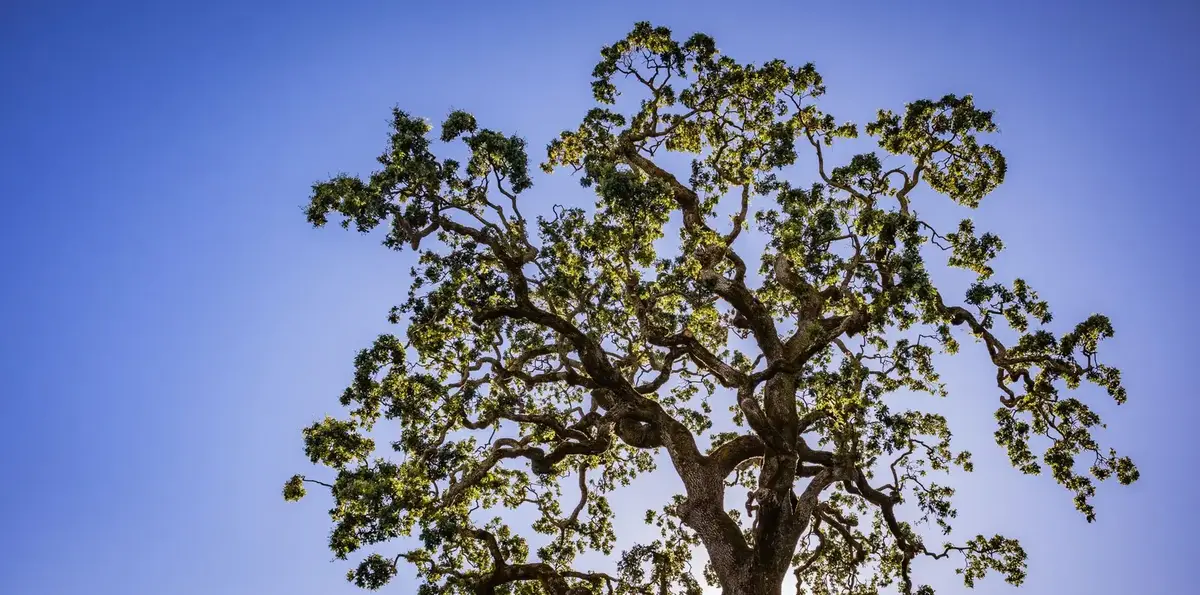
A little dead wood in the interior of a mature oak is normal, and removing every dead twig is not the goal — that is cosmetic work with a real cost and no benefit. The line is roughly this: dead wood in the upper crown and outer canopy, dead wood over anything you use, dead wood larger than your wrist, and any dead leader at the top of the tree are all worth removing.
Interior deadwood under a dense canopy, in a tree that is otherwise sound, can usually wait for the next scheduled visit.
What cannot wait is a hanging branch — one that has broken but not fallen, caught in the canopy below. Those are unpredictable in a way that is worse than either dead or attached, and they are the one item on this list that should be dealt with immediately. If you can see one from the ground, call. The pruning service covers deadwood removal as routine work, and if the branch is already down, storm cleanup is the right page.