The First Sixty Days: What a New Tree Needs, and What Kills It
Quick answer: First 60 Days: What a New Tree Needs, What Kills It — Mulch is the cheapest thing that happens to a tree: a flat layer over the root zone holds moisture through the dry season, keeps the soil temperature steady and feeds the soil life the tree depends on. Almost every mulch problem is a depth problem or a contact problem — too thick, or piled against the trunk where the bark has to stay dry.
Field note. What we see most on this coast is not too little mulch but too much, in the wrong place: the volcano against the trunk that keeps the bark wet through the fog season and invites rot where the tree cannot show it until the canopy thins.
On the other hand, a thin ring of the wrong material is worse than none at all — matted, water-repellent mulch sheds the rain it was meant to store.
A tree that arrives in a pot has already lost most of what it was grown with. It was dug in the nursery, its roots cut to fit a container, and whatever survived that is what you are planting.
Nothing visible about the tree is a reliable guide to how much root is left, and that gap — a full crown on a fraction of a root system — is why so many new trees die in their first summer and why the ones that live often stall for two years before they take off.
The first sixty days are the whole of the argument. Here is what actually matters in them.
Mulch, and the arithmetic of the ring
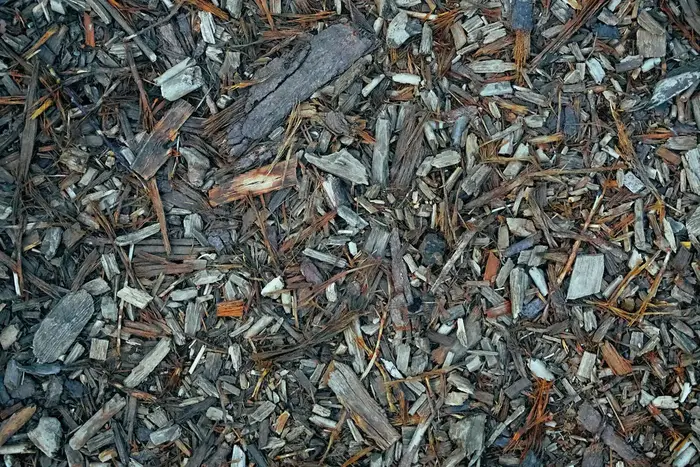
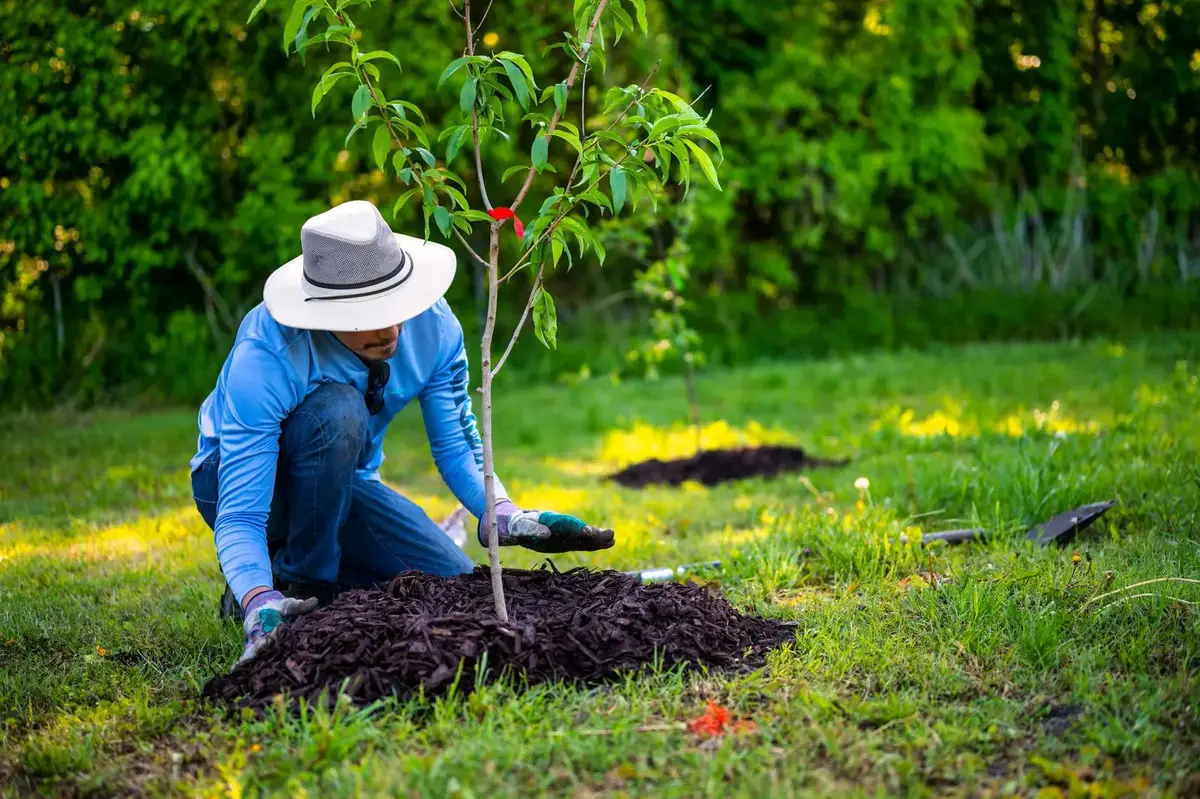
Two to three inches of arborist chips, spread over the root ball and out to three times its diameter, in a flat ring that looks like a large doughnut with a hole in the middle. Not a volcano.
Not a neat cone against the trunk, which is the single most common way an enthusiastic planting kills a tree: a mulch volcano holds water against the bark, keeps the root flare buried and gives rodents a place to live while they eat the trunk.
Why the width matters more than the depth: roots grow outward, not downward, and they grow fastest in the zone where soil is cool, moist and undisturbed. Widening the ring every year is the cheapest thing you will ever do for a tree, and the reasons are laid out in what mulch does that watering cannot.
Mulch transitions between the root ball and the surrounding soil — the depth and placement arithmetic is set out in how to mulch around a tree — which also solves the real problem with a transplanted tree — the two textures dry at different rates, and irrigation aimed at one is wrong for the other.
Water the ball, not the hole
Two soils sit under a newly planted tree: the potting mix in the root ball and the soil around it. They have different textures, and they therefore hold different amounts of water. Hand-watering the surrounding soil for ten minutes may not wet the ball at all, which is how a tree can die of thirst in a hole that looks damp.
The test that works is physical. Push a finger or a cheap moisture probe into the ball itself, four inches down, and water when it is dry at that depth. In warm weather that can be daily; in a cool foggy week it may be every third day. Water slowly enough to soak the ball, and shallowly enough that you are not filling the hole and drowning the lower roots.
A berm of soil around the ring helps a lot, as long as it is a ring and not a volcano).
The three things not to do
Do not amend the planting hole. A hole filled with rich compost in ordinary clay becomes a bathtub: it holds water, the roots refuse to leave it, and they circle. Plant into the native soil, and put the improvement on top as mulch.
Do not fertilise in year one. A new tree needs to grow roots, and nitrogen builds shoots and leaves it cannot support. The classic failure is a tree that pushes a spectacular flush in June and is dead by September, because the root system that was supposed to pay for the flush is not there yet.
Do not prune to balance the crown. It is intuitive and wrong. The tree needs every leaf it has to rebuild its roots, and the only cuts worth making at planting are broken, damaged or crossing branches. The exception is a crown so heavy on a bare-root tree that wind will lever it out of the ground — reduce the sail area by taking length off, not by removing limbs.
Stakes, ties and the tug test
Stake only if the tree cannot stand on its own or sits in wind. If you do, use two stakes, low, with flexible ties set so the trunk can still move a little — movement is what builds the trunk’s taper and its reaction wood, and a tree strapped rigid for two years grows up weaker than an unstaked one.
Remove the ties within a year, and check them every month in the meantime, because a tie that has been overtaken by trunk growth will girdle the tree quietly.
Around day thirty, the informal test is a gentle pull on the trunk. A tree that has taken has resistance at the base; one that shifts in the ground has not rooted, and its water or its planting depth needs attention before the soil dries. Around day sixty, look at the tips: new growth on a transplanted tree is not a cosmetic detail, it is evidence that roots are working again.
Which leaves the honest summary. In the first two months a new tree wants a wide ring of chips, water measured at the root ball, wind protection that allows some movement, and nothing else. No fertiliser, no pruning, no soil heaped over the flare, no stake left on longer than a season. Everything a garden centre will sell you for the occasion is, with the exception of the mulch, either unnecessary or actively harmful.
The month you will regret is not the one where you did too little; it is the one where you did too much. The planting decision itself — species, spot, soil — is covered in planting under the fog line.