Mulch, and the Two Mistakes That Kill Trees Slowly
Quick answer: Mulch, and the Two Mistakes That Kill Trees Slowly — Mulch is the cheapest thing that happens to a tree: a flat layer over the root zone holds moisture through the dry season, keeps the soil temperature steady and feeds the soil life the tree depends on. Almost every mulch problem is a depth problem or a contact problem — too thick, or piled against the trunk where the bark has to stay dry.
Field note. What we see most on this coast is not too little mulch but too much, in the wrong place: the volcano against the trunk that keeps the bark wet through the fog season and invites rot where the tree cannot show it until the canopy thins.
On the other hand, a thin ring of the wrong material is worse than none at all — matted, water-repellent mulch sheds the rain it was meant to store.
There is a specific kind of garden that looks loved and is quietly failing: a tidy bed, fresh mulch, and every trunk rising out of a cone of it like a candle in a cake. I have inherited several. The owners were doing more than most people do, and the trees were dying of it.
Mulching has two failure modes and both are about geometry, not effort.
Mistake one: the volcano
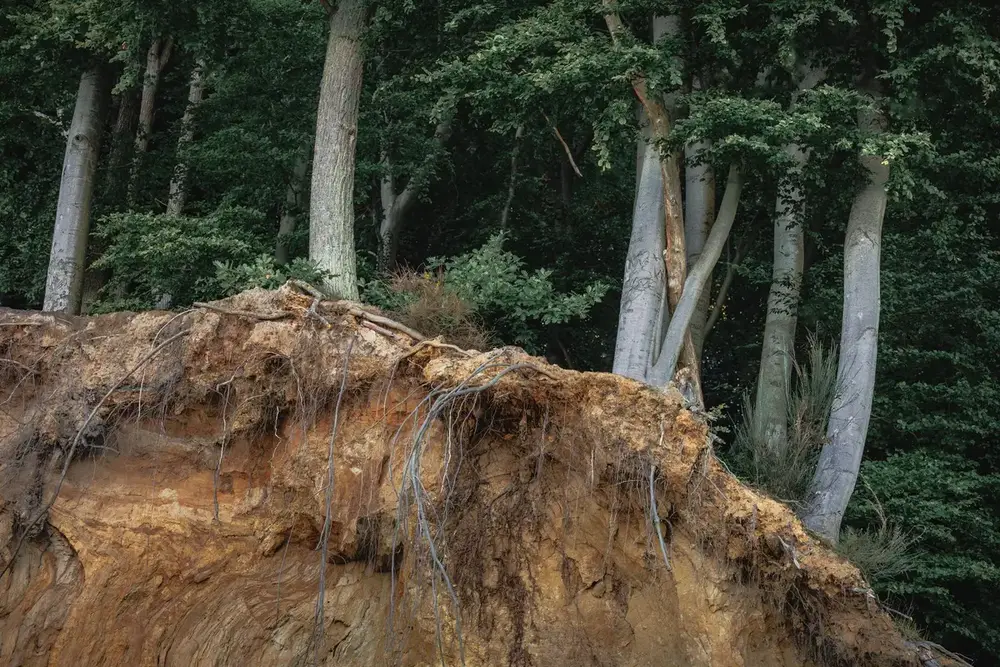
A cone of mulch piled against the trunk keeps the bark permanently damp, and damp bark is an invitation. It also buries the root flare — the widening where trunk becomes root — which is a tissue that needs air. Bury it and the tree responds by growing roots upward into the mulch, where they dry out and girdle the trunk.
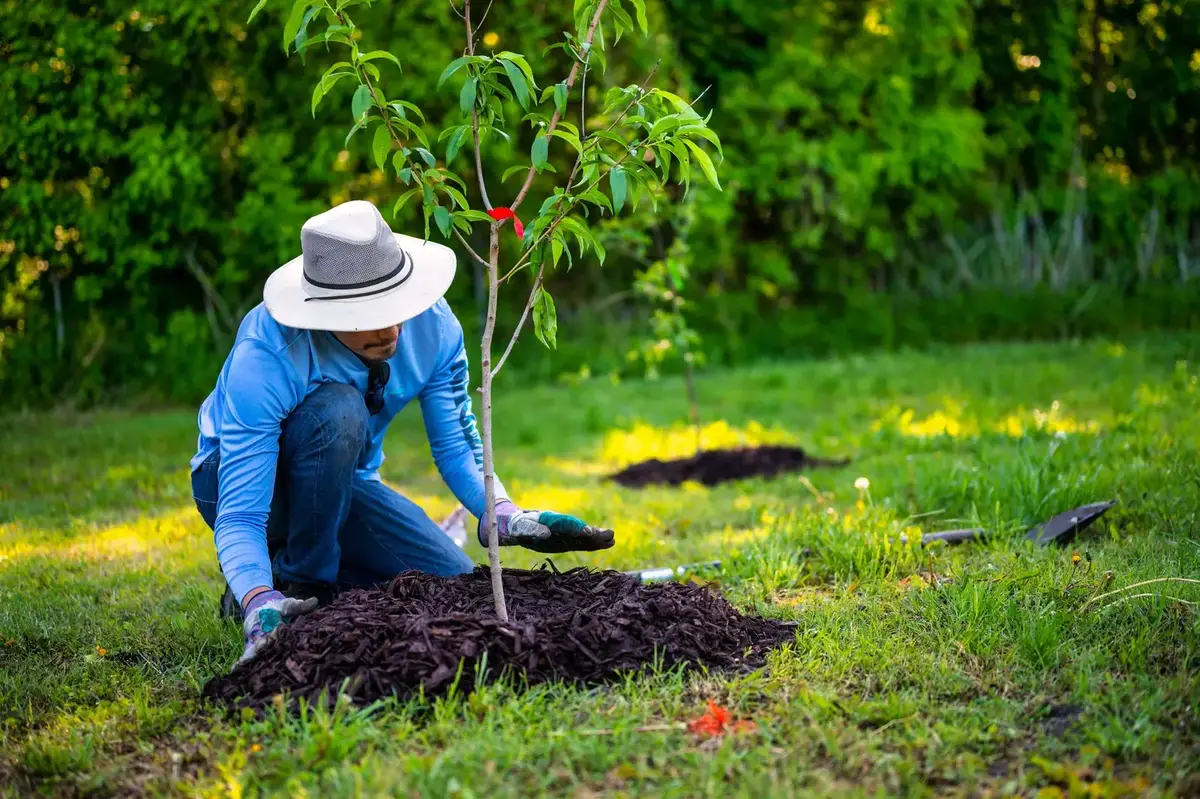
The fix costs nothing: pull the mulch back so the flare is fully visible, and keep a bare ring — a hand’s width is enough — around the trunk. What you want is a shallow, wide donut with a hole in the middle.
Mistake two: the saucer
The opposite error is a thin, tight ring mounded up at the edge — a saucer that holds water against the trunk after rain. It looks intentional and it does the same damage as the volcano, from the other direction.
A mulch ring should be as wide as you can afford, ideally out to the drip line, and flat or slightly dished across that whole area, not banked at the boundary.
The numbers
| Dimension | Target | Why |
|---|---|---|
| Depth | 2-4 inches | Enough to suppress weeds, shallow enough to pass air |
| Radius | To the drip line if possible, minimum 3 feet | Roots extend well past the canopy edge |
| Trunk gap | A hand's width bare | Bark and flare need to breathe |
| Placement | Flat, or slightly dished | Banking against the trunk traps moisture |
What to use
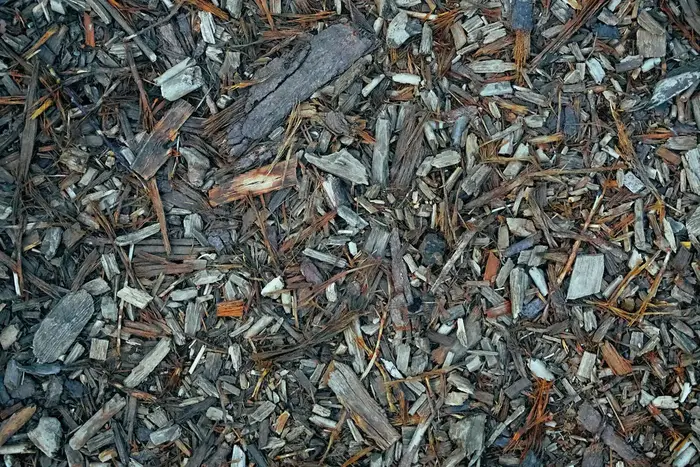
Coarse arborist chips are the best default on this coast: cheap, local, slow to break down, and structurally useful to the soil as they go. Composted material is fine as a thin top-dressing. What to avoid is the one thing sold most aggressively — finely shredded, dyed bark that mats into a water-repellent crust, and anything that has been aged into a uniform dark product with no structure left in it.
On colour, the practical rule is that mulch should be a colour you would see on the ground in a forest. Black and red are achieved with dye, and dye is not a problem in itself; the matting is. If water beads on the surface instead of soaking in, the material is wrong regardless of colour.
How often
Once a year, in autumn, topped up to depth rather than replaced. If the existing layer is more than four inches, remove some instead of adding. Piling new mulch on an old, matted layer is how beds end up six inches deep with a crust on top and dry soil beneath.
Then leave it. The best thing about mulch is that the correct amount of work is almost none, applied at the right geometry, once a year, forever.