Mulch in a Vegetable Bed: What Belongs on Food
Quick answer: Mulch in a Vegetable Bed: What Belongs on Food — Mulch is the cheapest thing that happens to a tree: a flat layer over the root zone holds moisture through the dry season, keeps the soil temperature steady and feeds the soil life the tree depends on. Almost every mulch problem is a depth problem or a contact problem — too thick, or piled against the trunk where the bark has to stay dry.
Field note. What we see most on this coast is not too little mulch but too much, in the wrong place: the volcano against the trunk that keeps the bark wet through the fog season and invites rot where the tree cannot show it until the canopy thins.
On the other hand, a thin ring of the wrong material is worse than none at all — matted, water-repellent mulch sheds the rain it was meant to store.
The mulch that is right around an oak is wrong in a vegetable bed, and the reason is the rotation. A tree bed is a permanent system that wants a slow, coarse layer on top. A vegetable bed is rebuilt every season, and what you put on it is next year’s soil.
Compost first
An inch or two of finished compost is the best surface layer for vegetables. It suppresses some weeds, keeps the surface from crusting, and breaks down into exactly the material you want to plant into. It is not a weed barrier, and it is not meant to be: you will be turning it in anyway.
Apply after planting, when the seedlings are tall enough to survive being surrounded, and keep it a inch off the stems.
Straw for structure, leaves for free
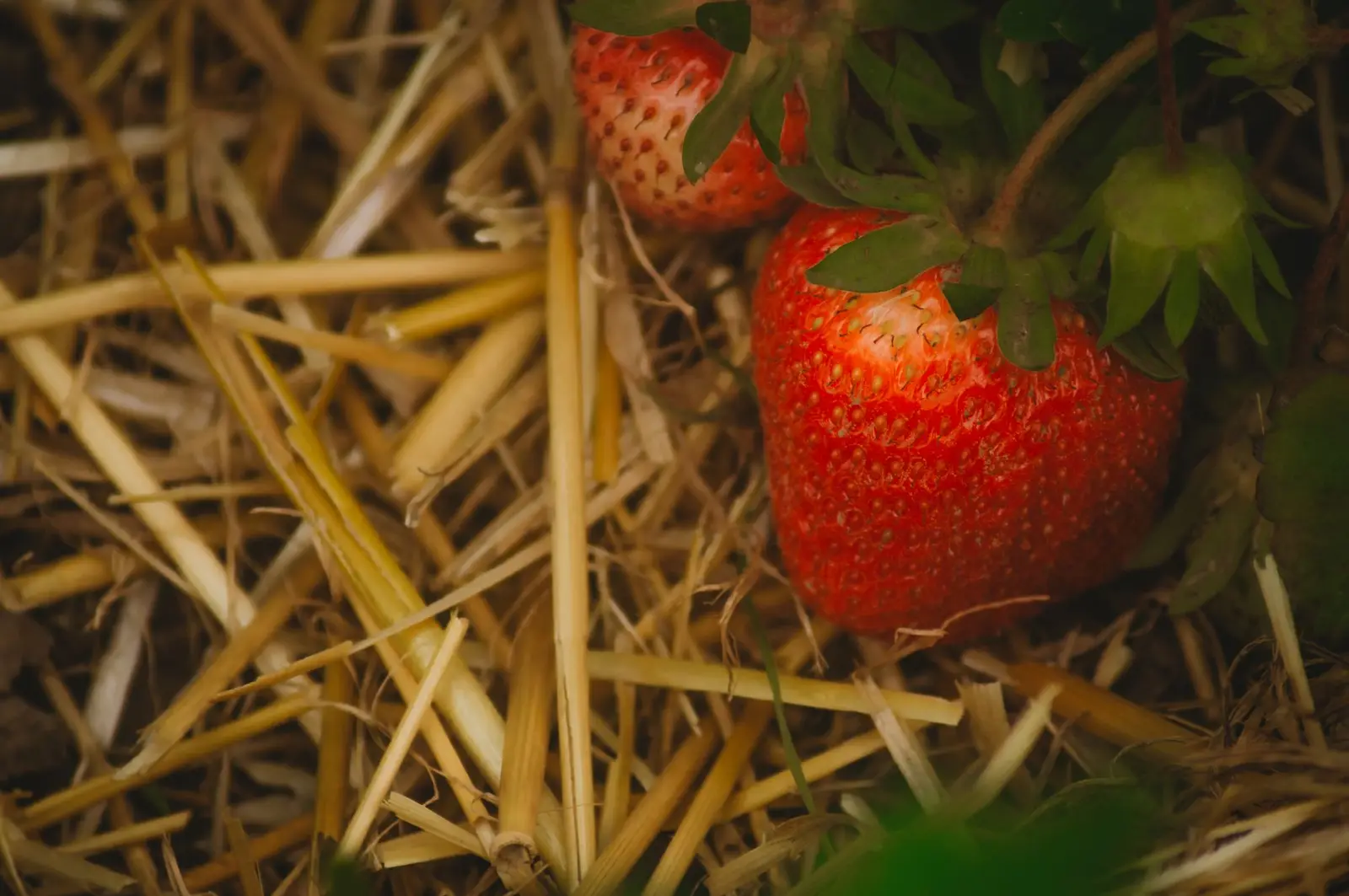
Straw is the classic vegetable mulch: light, clean, easy to move at the end of the season. Use it around tomatoes, squash and paths, and make sure it is straw and not hay. Shredded leaves are free and work almost as well; whole leaves mat and shed water, so run the mower over them first.
Why fresh wood chips stay out
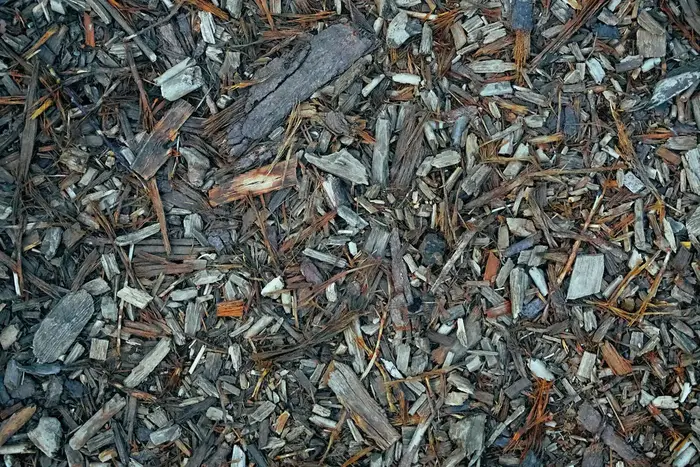
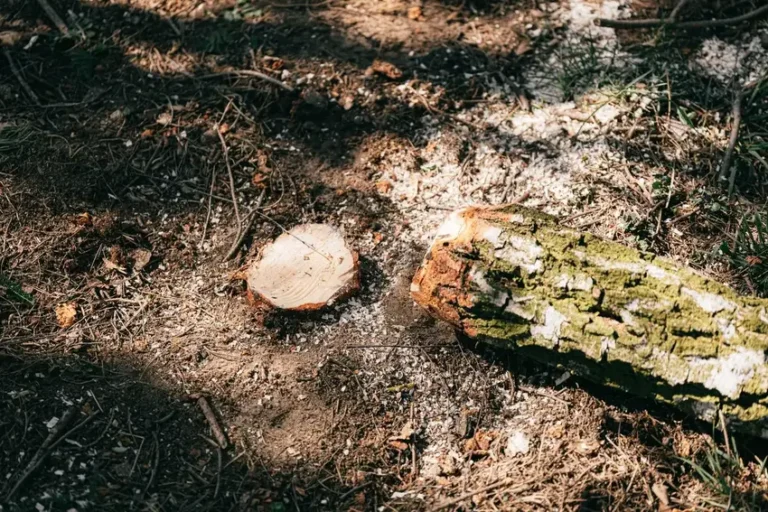
Fresh chips on the surface of a vegetable bed are not toxic, but they are the wrong tool. They break down slowly, they tie up nitrogen at the interface, and they make cultivation awkward. If chips are what you have, compost them for a year first or use them on the paths between beds, where they are excellent.
Dyed bark is worse: the feedstock is often recycled wood of unknown origin, and the bed is growing food. Keep it out.
The depth, and the slug problem
Two inches is enough in a vegetable bed. Deeper and you smother seedlings and give slugs a cool, wet apartment. On this coast slugs are the main cost of mulching vegetables, and the mitigation is timing: mulch once the soil has warmed and the plants are established, not the day after transplanting.
The end-of-season question
At cleanup, do not turn everything in reflexively. Mulch that sat under healthy plants can be worked into the top inch and left for the worms. Mulch that sat under tomatoes with blight, or courgettes with mildew, should be removed and composted hot or sent away, because the surface layer is carrying the spores that will meet next year’s seedlings.
Bare soil over winter is not the disaster it is sometimes described as on this coast. Rain, not cold, is the agent here, and a thin layer of leaves is enough to stop the surface crusting without giving slugs a winter hotel.
At the end of the season, turn the top inch in or leave it to be worked by worms over winter. Either way, the mulch becomes soil, which is the point of a vegetable bed and the opposite of what a tree bed wants.