Mulch Inside the Fire Zone: What Belongs in Zone 1
Quick answer: Mulch Inside the Fire Zone: What Belongs in Zone 1 — Mulch is the cheapest thing that happens to a tree: a flat layer over the root zone holds moisture through the dry season, keeps the soil temperature steady and feeds the soil life the tree depends on. Almost every mulch problem is a depth problem or a contact problem — too thick, or piled against the trunk where the bark has to stay dry.
Field note. What we see most on this coast is not too little mulch but too much, in the wrong place: the volcano against the trunk that keeps the bark wet through the fog season and invites rot where the tree cannot show it until the canopy thins.
On the other hand, a thin ring of the wrong material is worse than none at all — matted, water-repellent mulch sheds the rain it was meant to store.
Mulch is the one garden material that is asked to do two opposite jobs on the same parcel. In a bed it holds moisture, suppresses weeds and keeps soil temperature down, which is why every planting guide recommends it. Against a wall, in a fire zone, it is a horizontal bed of fuel with a wick. The material does not change; the distance to the thing you are protecting does.
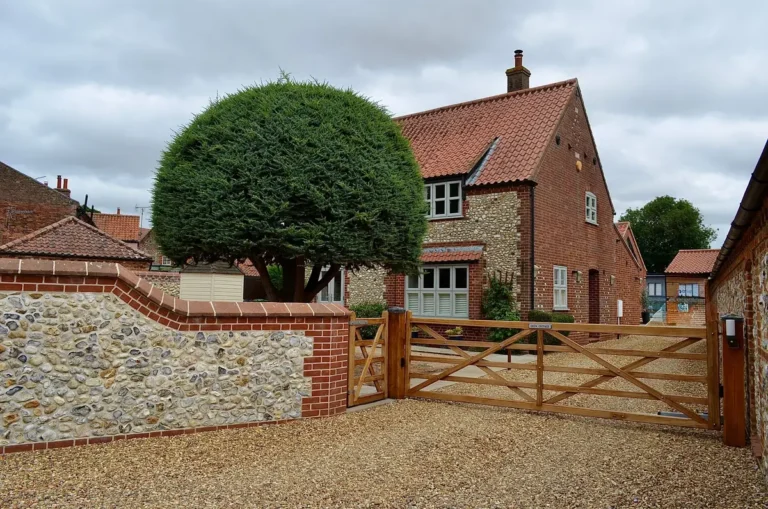
Fire clearance guidance on this coast divides the ground around a structure into zones, and the first one — the five feet immediately around the walls, under the deck, along the fence line — is the one where the rules change. That strip is not a garden bed. It is a defendable gap, and what is lying in it decides whether an ember that lands there becomes a flame at the siding or a black mark on gravel.
Why bark mulch is the wrong material at the wall
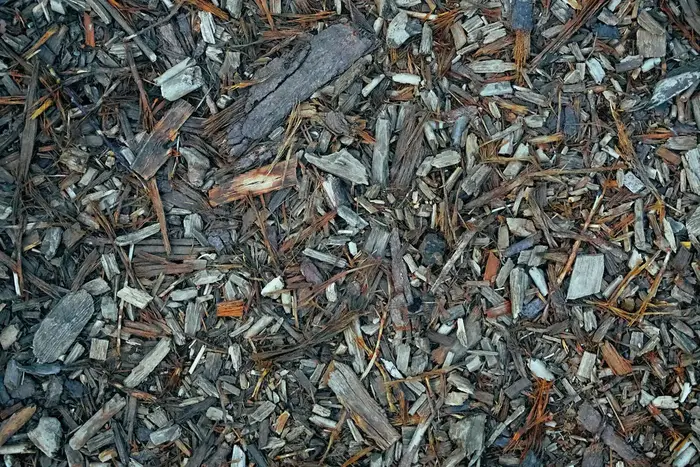
Bark and wood-chip mulches are designed to smoulder. That is what makes them good at what they do: a thick layer holds moisture and breaks down slowly because it burns badly. The same property makes them a liability at a foundation. A bark bed does not need a flame to become a problem — a single ember landing in it can establish a smoulder that creeps, with no visible flame, for hours.
Measurement matters here. A two-inch bed of bark is a surface layer. A six-inch bed against a vent, under a deck, or beside a woodpile is a reservoir, and depth is what turns a surface into a reservoir. Where a bed is deep and the fuel is continuous — mulch touching the siding, mulch meeting a wooden fence, mulch running under a deck — the strip stops being decoration and becomes a path.

What belongs in the first five feet
Non-combustible is the short answer: gravel, crushed rock, pavers, concrete, bare mineral soil kept free of litter. It is not the most interesting surface in the garden, and that is rather the point. The first five feet is a working gap, not a planting bed, and the plants that live there should be low, irrigated, and not resinous.
Where the ground must be planted — a slope that would erode, a shaded north wall — the combination that works is a thin layer of compost or well-rotted material worked into the soil rather than left on top, plus low herbaceous plants with high moisture content, kept green and kept clear of the wall by at least a foot.
Compost is not fireproof, but it does not carry flame the way dry bark does, and a thin worked-in layer has no reservoir to smoulder in.
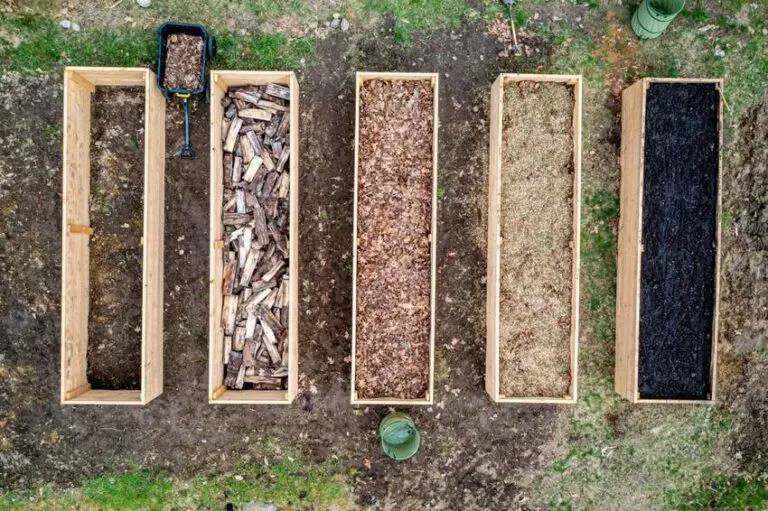
The rest of the yard is a different calculation
Beyond that first strip the arithmetic changes. Out in the root zone of a tree, mulch is doing the work the tree needs, and a coarse bark mulch at three or four inches is the right material — kept clear of the trunk itself, never mounded against it.
The fire guidance for that zone is not ‘no mulch’; it is ‘no continuous fuel ladder’, which means separating beds with paths, breaking up long runs, and not letting a bed run unbroken from a shrub to a window.
What you are trying to prevent further out is a horizontal continuity that carries fire across the parcel, and a vertical one — grass into shrub into low limb into canopy — that carries it up. Mulch is one input to both. So is the hedge, the woodpile, the bamboo screen and the palm fronds waiting for the green waste pickup.
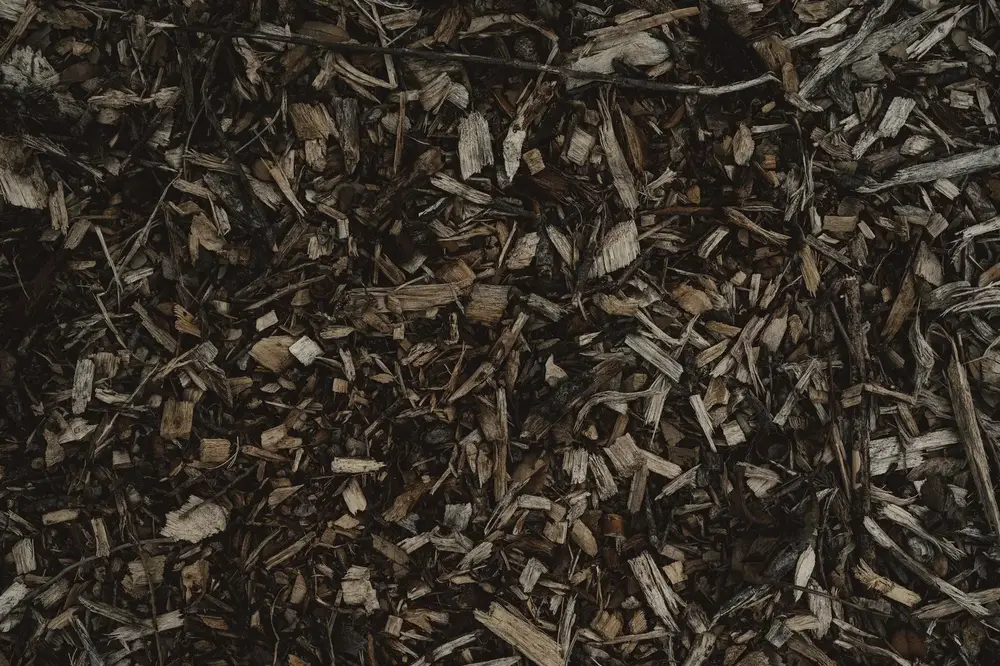
The maintenance that decides it
A clean gravel strip stays clean only if somebody keeps it clean. Leaves accumulate against the wall within one autumn, and leaf litter in a gravel bed is exactly the fuel the gravel was meant to deny. Blowing that strip out is a ten-minute job in November and it is the difference between a defendable gap and a decorative one.
The same logic applies to the mulch itself. Fresh, coarse bark holds more air and ignites more readily than aged, compacted material. A bed that has been sitting for five years, broken down and moisture-holding, is a different fuel from the bag you just spread. If you are re-mulching a bed that runs toward the house, the material near the wall is the material to rethink, and the material under the tree is the material to keep.
For the wider picture — what the zones mean, what the county asks for, and how trees fit into a defensible space plan — see fire clearance. The planting side of the same question lives under mulching.