

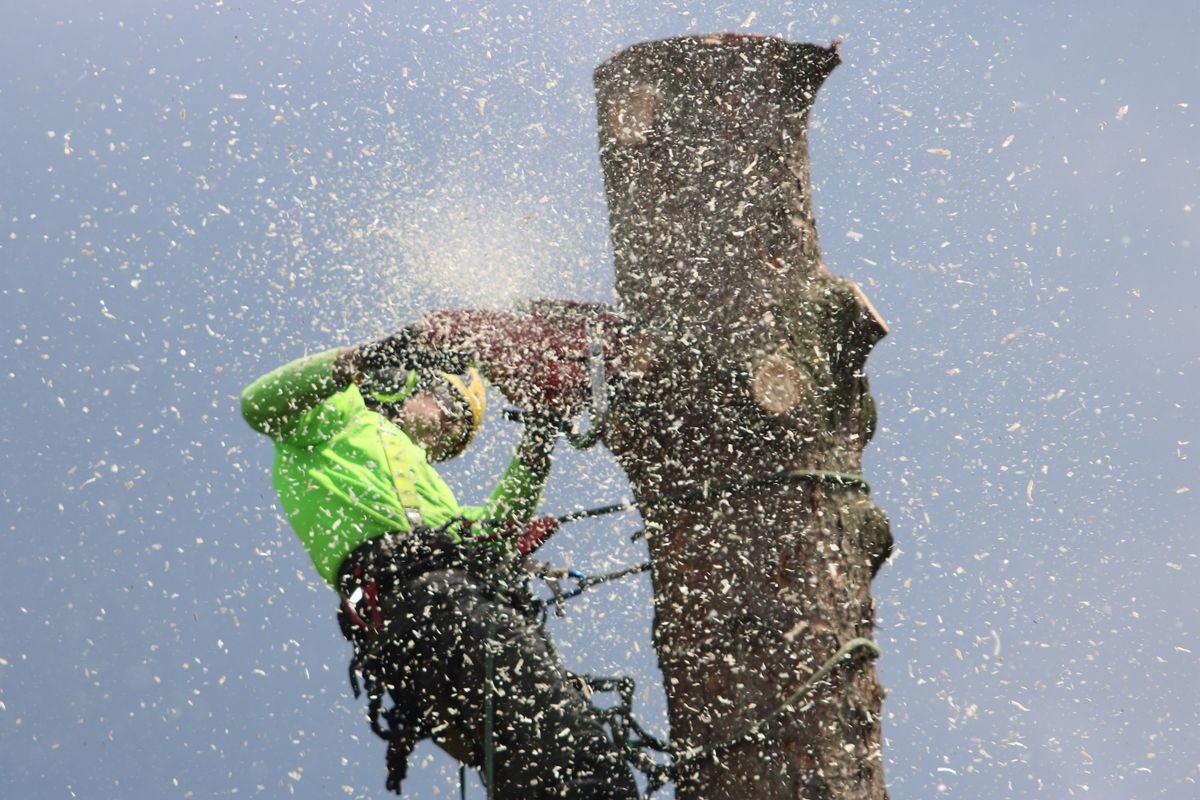

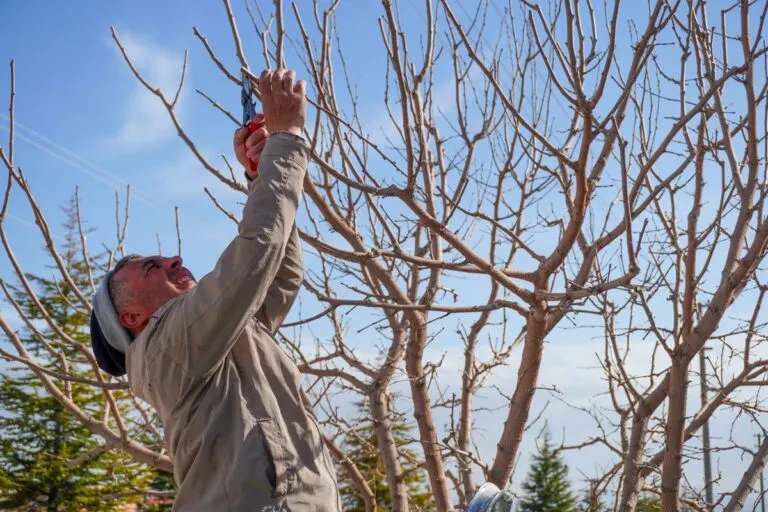
Limb up and crown raise the trees nearest the structure, so the lowest limbs are well clear of anything below them that can burn.
Fire clearance in Cambria, a town inside a fuel load
Quick answer: Fire Clearance in Cambria, CA — Defensible space is the work that decides what a fire has to burn between the wildland and the house: dead material out, ladder fuels separated, and the tree you keep limbed up rather than removed. It is measured in zones from the structure, and the first few feet are the ones that matter most.
- Typical timing: Best done in the cool months so the debris is gone before the dry season; clearance rules apply year-round.
- What it involves: Removing dead and dying material, separating shrubs from low limbs, limbing trees near structures, and keeping the roof and gutters clear.
- The standard: Cal Fire's defensible-space guidance for the first 100 feet, applied to the trees a property actually has.
- Where we work: The wooded parts of Cambria, San Simeon, Harmony and the surrounding ranch country.
- Our own record: 503 pages and 291 stories published on this site. Counted from our own archive, not a stock table.
Field note. What we see on this coast that surprises people is how much of the fuel load is low: the limb at four feet and the brush beneath it carries fire into a canopy that would otherwise survive, so the work is often lifting rather than felling.
On the other hand, over-clearing has its own cost — bare ground erodes, and the wind that comes with the fog belt is harder on a thinned stand than the fire risk it removes.
Standards and sources: Defensible space (Cal Fire — defensible space and wildfire preparedness) · Forest management (USDA Forest Service)
Prepared by Cambria Pines Tree Service Inc. — ISA-certified arborists working on the Central Coast.
Cambria Is a Town Built Inside a Fuel Load
Cambria sits in one of California's more serious fire environments: a native Monterey pine forest, steep canyon edges, narrow roads, and houses whose roof lines sit under canopies that have been growing for decades. The county classifies much of it as a Very High Fire Hazard Severity Zone.
That has three practical consequences for a property owner — a legal clearance obligation, an insurance obligation, and a real question about whether your house survives a wind-driven ember shower.
Fire clearance is not landscaping and it is not a one-time cut. It is the systematic removal of the fuel that carries fire from the ground into a tree's crown, from a tree's crown onto a roof, and from a burning ember into a gutter. We do that work to CAL FIRE's defensible-space framework and to the spacing the county and your insurer actually inspect.
The Three Zones, and What Changes in Each
California's defensible space framework is built in zones measured from the structure. Each one has a different job.
The single most important concept underneath all three is ladder fuels — the continuous vertical path of low brush to mid shrubs to low limbs to canopy. A ground fire that finds a ladder is a crown fire in minutes. Severing the ladder is what most clearance work actually does.
- Zone 0 — the ember-resistant zone, and the hardest to argue with. Directly around the structure, the goal is that a wind-blown ember landing at the base of your wall finds nothing that will burn. That means clearing dead needles, leaves and bark from against the foundation, removing the low shrub layer under windows and vents, clearing under decks, and getting the first few feet of the yard down to mineral soil, gravel or irrigated, well-maintained low plantings. The mulch bed you built against the wall is a wick.
- Zone 1 — the lean, clean and green band. Out to about thirty feet: remove dead material, break up continuous shrub masses into separated islands, strip lower limbs so a ground fire cannot climb into the canopy, keep trees separated so their crowns do not touch, and irrigate what stays. This is the zone where the difference between a maintained property and an unmaintained one is visible from the road — which is exactly why insurers photograph it.
- Zone 2 — reduced fuel out to a hundred feet, or to the property line. Thinning, brush mastication, removing downed wood and ladder fuels, and spacing the remaining canopy so fire has to work to move through it. On a steep slope, the effective distance has always been larger; Cambria's canyons are the reason.
What We Actually Do on a Cambria Property
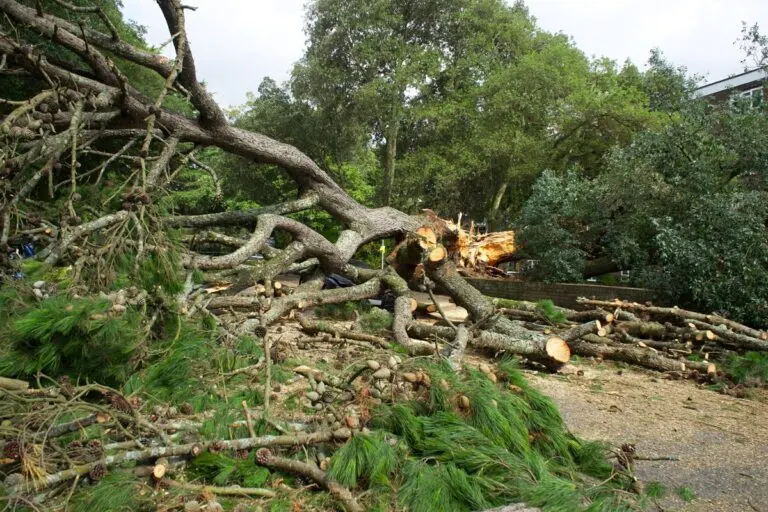
Remove dead, dying and diseased trees and limbs — a standing dead pine is a torch, and a dead limb over a roof is both a fire path and a falling hazard. This is the overlap between fire work and our tree removal service.
Thin and separate the canopy so crowns do not touch and fire has to cross a gap to spread tree to tree.
Clear brush and ladder fuel, masticate or haul the material, and get it off the property — the cut material left in a pile is the fuel you just removed, stored next to the house.
Clear roofs, gutters and valleys of needles, and clear around deck posts, under stairs, propane tanks, fences and any attachment to the house. Ember ignition is a detail problem, not a forest problem.
Mind the chimney and the power drop — the clearance your wood stove needs and the branches rubbing the drop to the house are the same visit.
Leave the documentation. Photographs, dates and what was done where. In a high-severity zone this is what you hand an insurer or a buyer.
Where Clearance and Tree Health Pull in Opposite Directions
This is the part a mow-and-blow crew gets wrong. Aggressive clearance can kill the trees that make the property worth protecting in the first place.
- Never top a tree. Topping is a fire-risk increase, not a reduction: it produces a burst of rank, dense regrowth that is more flammable than what was removed and structurally weak.
- Do not strip limbs you need. A pine's vitality lives in its crown; over-thinning a Monterey pine to open a view leaves a tree that cannot sustain itself and invites bark beetles into a stressed host.
- Prune at the right time and the right cut. Pruning wounds are how a tree gets decay, and decay is how it eventually becomes a hazard over your roof. Cuts are made to the branch collar, never flush. Our trimming and pruning work follows ISA standards for exactly this reason.
- Protect the root zone. Clearance work that drives equipment over a tree's roots, or removes the duff layer the fine roots live in on a slope, trades a fire problem for a stability and erosion problem. The two are managed in the same plan or not at all.
How Clearance Fits the Rest of the Year
Clearance has a season. Material cut now, in the dry months, sits as cured fuel; the same work done ahead of the season and hauled off the property is why some properties survive a wind event and others do not. The realistic pattern on the coast:
Before the season — the main clearance pass: zones, ladder fuels, dead material, roof and gutter work, haul-off, documentation.
Mid-season — re-clear gutters and roof valleys, check anything that has dropped needles since the main pass.
After a storm — storm-damaged limbs and downed material become new ladder fuel overnight. Our emergency response handles the immediate hazard, and clearance follows.
Ongoing — a maintained property holds its clearance; a neglected one restarts every year. Most of our clearance clients are on a recurring schedule rather than a single visit.
If You Are Not Sure Whether You Comply
Clearance requirements depend on your zone, your slope, your distance from a neighbour, what the county requires of the parcel and what your insurer has asked for in writing. If you have received a notice — from the county, from CAL FIRE, or from an insurer asking for documentation — bring it to the visit; the wording usually names exactly what has to be measured.
We will walk the parcel with you, name what has to change and in what order, and give you a written estimate before any cutting starts. Call (805) 927-4414 or reach us through our contact page, and see our full service list if you want the clearance handled alongside pruning, removal and stump work in one plan.
Next step
Ready when you are.
Questions, quotes, or just exploring — we’re here to help.