Arborist Chips Versus Bagged Mulch: What the Difference Buys
Quick answer: Arborist Chips Versus Bagged Mulch: What the Difference Buys — Mulch is the cheapest thing that happens to a tree: a flat layer over the root zone holds moisture through the dry season, keeps the soil temperature steady and feeds the soil life the tree depends on. Almost every mulch problem is a depth problem or a contact problem — too thick, or piled against the trunk where the bark has to stay dry.
Field note. What we see most on this coast is not too little mulch but too much, in the wrong place: the volcano against the trunk that keeps the bark wet through the fog season and invites rot where the tree cannot show it until the canopy thins.
On the other hand, a thin ring of the wrong material is worse than none at all — matted, water-repellent mulch sheds the rain it was meant to store.
The cheapest mulch on this coast is the one a tree crew is trying to get rid of. The most convenient is the one in a bag. The difference between them is not just price, and it is not just quality — they are different materials with different behaviour in a bed.
What arborist chips actually are
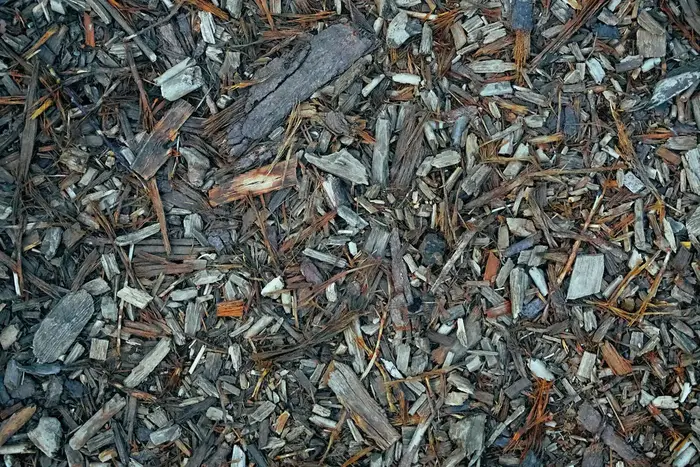
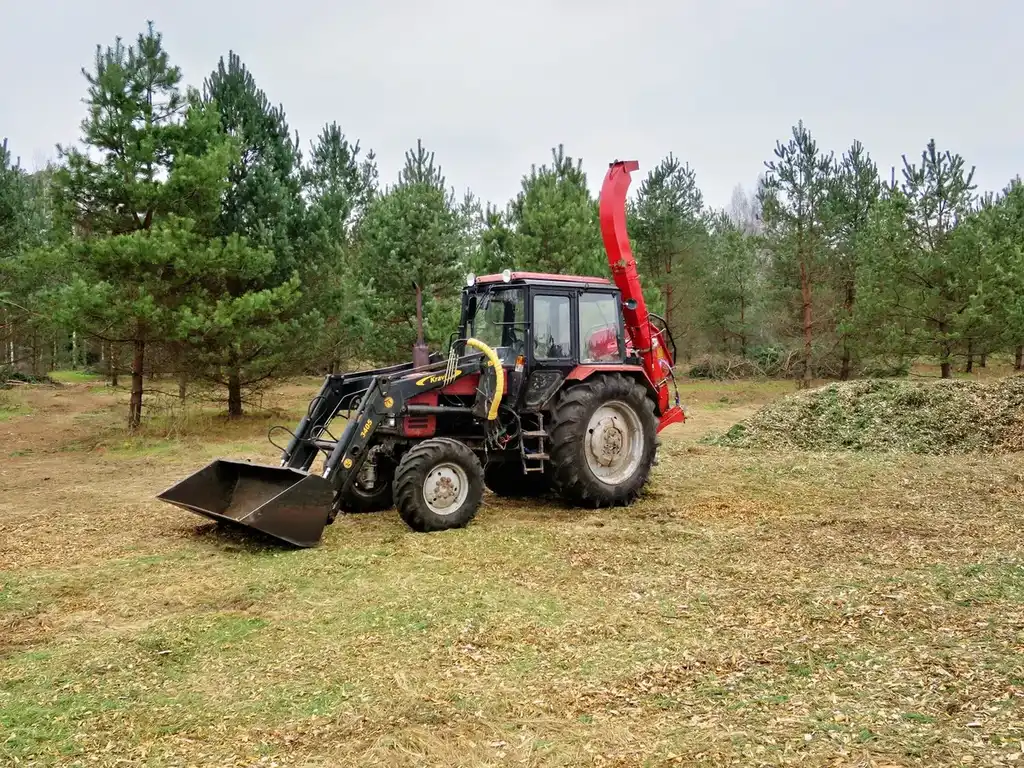
A chipper produces a mix of wood, bark, twigs and leaves in whatever proportion the tree had. Particle size varies from fines to two-inch pieces. It is fresh, which means it is biologically active and still breaking down. It is not screened, not aged and not consistent — and that inconsistency is a feature, because the mix of sizes creates a layer that holds air and water well.
It is also free or nearly free if you take a full load, and the crew is usually glad to drop it.
What bagged mulch is
Screened, aged, consistent, and usually a single species or a blend designed for appearance. It spreads evenly, looks the same across the bed, and has less weed seed than raw chips. It is also several times the price per cubic yard, and it has often been composted enough that the biological activity is lower.
For a visible border where appearance is the requirement, that is a fair trade. For a tree bed, it is paying more for less.
The nitrogen question, settled
Fresh chips on the surface do not steal nitrogen from a tree. The tie-up happens at the interface where soil and chips meet, and it affects the top fraction of an inch. Roots are not concentrated there, and the effect is smaller than the benefit. Incorporated into soil, the story changes: chips mixed into a planting bed will compete with seedlings. Keep them on top and the problem disappears.
The cost per yard, honestly
Bagged mulch runs roughly 13.5 bags to the yard. At typical garden-centre prices that is several times the bulk price, and many times the price of a free load of chips. Delivery of a bulk load costs about the same as the fuel to collect bags, so the comparison is not close.
What you pay for with bagged material is consistency, screening and the absence of surprises. If those matter — a front border, a client’s garden, a photograph — buy them. If the bed is behind the house and full of oaks, take the chips.
Storage, and the pile that heats
A delivered pile is not inert. Fresh chips stacked more than a metre deep in warm weather compost from the inside, and a large pile can reach temperatures that scorch the material and, in rare cases, catch fire. Spread it, turn it, or use it within a few weeks. A tarp keeps the rain off but also holds the heat in.
If you are storing for next season, keep the pile under a metre, in shade, and turn it once. What you get after six months is closer to compost than to mulch, which is a different and equally useful material.
One practical note: ask the crew what the load contains. A chip load from a diseased tree is fine for a bed, but a load full of palm fronds or eucalyptus is a different material and behaves differently. The best chips come from a mixed hardwood job with leaves included.