Chainsaw Kickback Safety: The Physics of the Arc
Quick answer: Chainsaw Kickback Safety: The Physics of the Arc — Trees on this coast live with fog, salt, wind and thin soil, and the work that keeps them healthy is decided by those conditions rather than by a calendar written inland. Structure, clearance and the root zone are what a tree here needs looked at, and small work done early is what keeps a tree out of the emergency list.
Field note. What we see on this coast is that the trees people worry about are usually not the ones in trouble: the pine with a clean crown and a lean that predates the house is often sounder than the tidy tree that has been quietly drowning in its own root zone.
On the other hand, there is no schedule that suits every tree — the same species on two sides of one street can need opposite care, which is why we look before we recommend.
Every saw I have ever opened came with the same warning about kickback, and every owner I have ever met believed their own hands were somehow exempt. I believed it too, once. Then a saw came back at me across a limb I had cut a hundred times, and I spent a month looking at the scar on my chaps working out precisely why.
Here it is without the mystique: kickback is a physics problem, and physics does not care how long you have been doing this.
What is actually happening
The top quarter of the bar nose is the danger zone. When a chain running at speed contacts wood there, it is dragged up and over the nose instead of cutting cleanly, and that force throws the saw up and back toward the operator. That is the whole mechanism. It is not a failure of grip or nerve. It is the saw behaving like a lever, because it is one.
The three situations that cause it
Reaching
cutting at a height or angle where you cannot see the nose, especially overhead or across your body.
Pinching
the wood closing on the bar as a limb settles, or as you undercut a heavy piece.
Notice what those share: the nose is in play, and the cut is not fully controlled. Every fix follows from that.
What actually prevents it
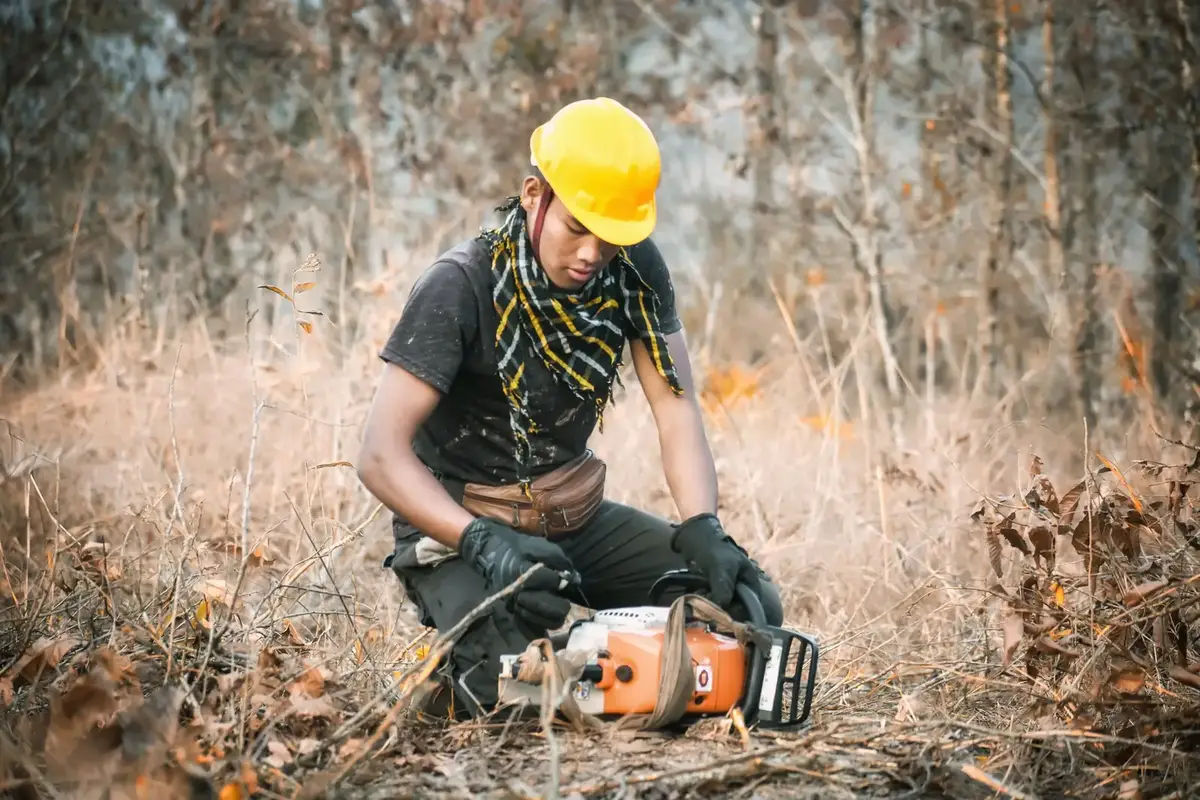
Begin with the saw: a sharp chain, correctly tensioned, and a working chain brake. A dull chain invites you to force the cut, and forcing the cut is where the nose wanders. Then technique: both hands on the saw, the saw held to one side of your body, never cutting above shoulder height, and using the bottom of the bar rather than letting the tip lead.
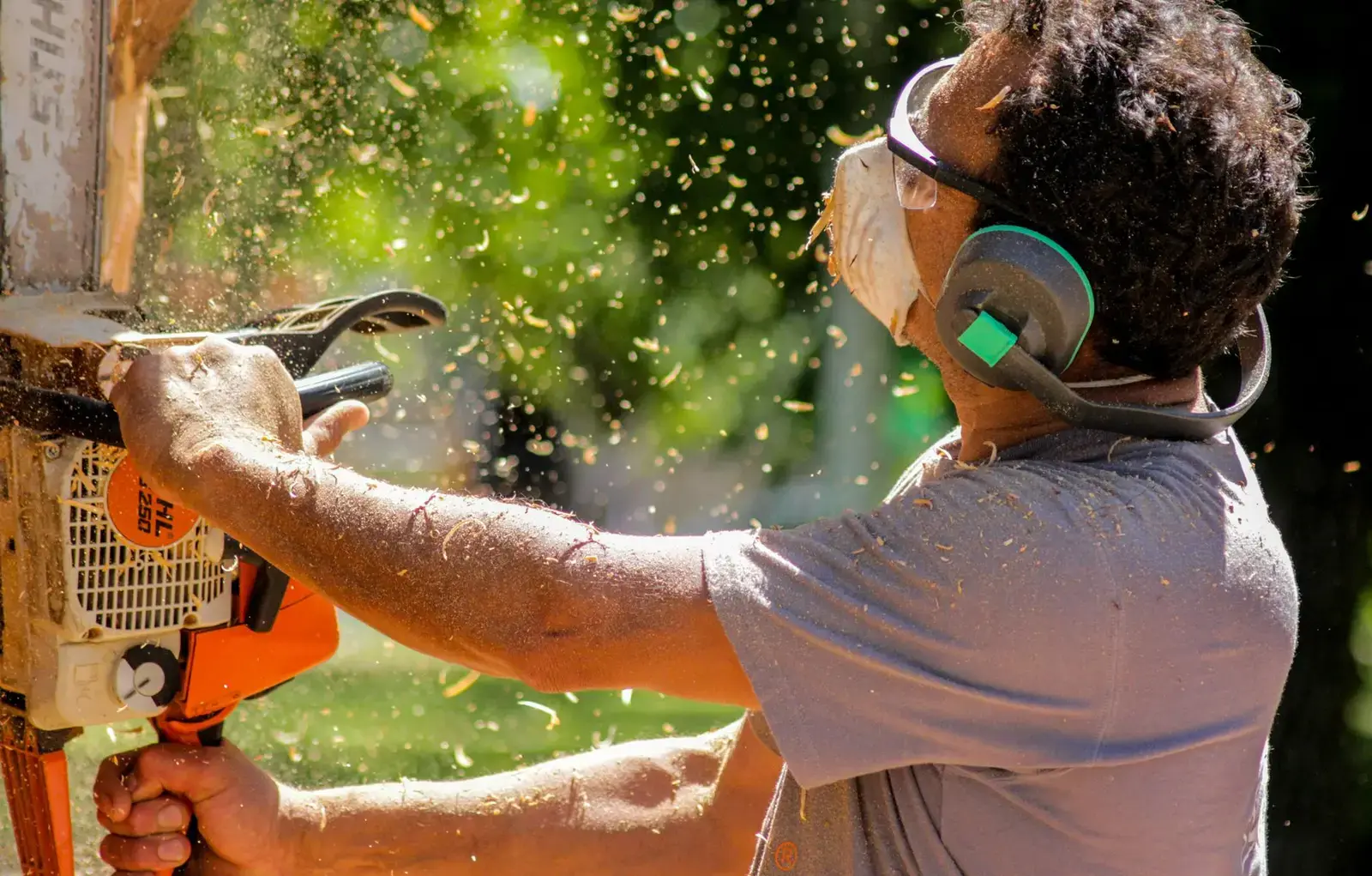
Then the gear – and I will not be diplomatic here – chaps and a helmet with a face screen are not optional. The chaps are why my scar is a scar and not a lost leg.
Maintenance is a safety feature
The brake, the vibration damping, the throttle return spring – they are what backs up your reflexes on the bad day. A saw whose brake has not been tested is a saw with one safety layer missing. Sharpen or replace the chain before it stops pulling, not after it turns into a fight. I have straightened more bars dented on the ground by someone leaning on a dull chain than I care to count.
The safety lesson
Kickback injuries do not happen because someone was careless. They happen because the nose met wood at the wrong instant. Cut with the brake within reach of your thumb, hold the saw like it can hurt you, and never cut a limb under tension from the wrong side – that same tension pinches the bar and hurts the person holding it.
If a limb is loaded, decide where it will go before you touch it; if you cannot, that is a rigging job, not a chainsaw job.
I am not asking anyone to be frightened of a chainsaw. I am asking you to stop believing you are the exception. The pruning we do is the cut you would make – made with the nose accounted for, the gear on, and the plan already settled. Ask us to walk it with you if you are ever unsure.