
The Benefits of Mulching Around Trees (And How to Do It
Quick answer: The Benefits of Mulching Around Trees (And How to Do It) — Mulch is the cheapest thing that happens to a tree: a flat layer over the root zone holds moisture through the dry season, keeps the soil temperature steady and feeds the soil life the tree depends on. Almost every mulch problem is a depth problem or a contact problem — too thick, or piled against the trunk where the bark has to stay dry.
Field note. What we see most on this coast is not too little mulch but too much, in the wrong place: the volcano against the trunk that keeps the bark wet through the fog season and invites rot where the tree cannot show it until the canopy thins.
On the other hand, a thin ring of the wrong material is worse than none at all — matted, water-repellent mulch sheds the rain it was meant to store.
Last summer, my neighbor Ruth flagged me down on my morning walk, worried sick about the maple in her front yard. The leaves were scorching at the edges, weeds had claimed the base of the trunk, and the soil was baked so hard I could barely push a trowel into it. When I asked what she had protecting the ground around that tree, she just blinked at me. Friends, if I had a dollar for every struggling tree that simply needed a proper layer of mulch, I could retire to a porch swing somewhere. The benefits of mulching around trees are real, they show up fast, and this is one of the kindest things you can do for your yard in under an hour.
The Benefits of Mulching Around Trees, Explained Simply
A tree’s most important roots live in the top foot of soil, right where weather and foot traffic hit hardest. Mulch acts like a cozy blanket over that root zone, and the payoffs stack up quickly:
- Moisture stays where roots can reach it.Mulch slows evaporation, so the soil stays evenly damp between waterings and your tree weathers dry spells with far less stress.
- Soil temperatures stay steady.That same blanket insulates roots from summer heat and winter freezes, protecting them from sudden swings.
- Weeds lose their sunlight.A good layer blocks the light weed seeds need to sprout, so you spend less time pulling and your tree keeps the water and nutrients for itself.
- The soil gets fed for free.Organic mulch breaks down gradually, feeding helpful soil life and improving structure so roots can breathe and spread.
- The trunk stays safe from equipment.Mulch creates a buffer zone that keeps mower blades and string trimmers from scarring the bark — wounds that invite disease and pests.
- Erosion and compaction slow down.Mulch cushions rain impact and foot traffic, keeping soil loose and in place instead of washing away or packing solid.
How to Mulch Around a Tree the Right Way
Done well, mulching looks like a wide, shallow donut around the trunk. Start by pulling any existing weeds and lightly loosening crusted soil. Then spread organic mulch — shredded bark, wood chips, or composted leaves all work beautifully — in a layer about two to four inches deep. Extend it out to the tree’s drip line if you can, or at least three feet from the trunk for a young tree. The one non-negotiable rule: pull the mulch back a few inches from the bark itself, so the root flare where the trunk widens stays visible and dry. Roots love that blanket; bark does not.
Beware the Mulch Volcano
Now for the mistake I spot on practically every commercial property and plenty of front yards: mulch heaped up the trunk like a volcano. It might look tidy, but burying the bark traps moisture against tissue that was never built to stay wet. The result is soft, rotting bark, an open invitation to insects and fungal disease, and — sneakiest of all — roots that grow in circles inside the pile and slowly strangle the tree. If your tree looks like it is standing in a mound, pull that mulch back today. You will likely see the difference within a season.
Choosing Mulch and Keeping It Fresh
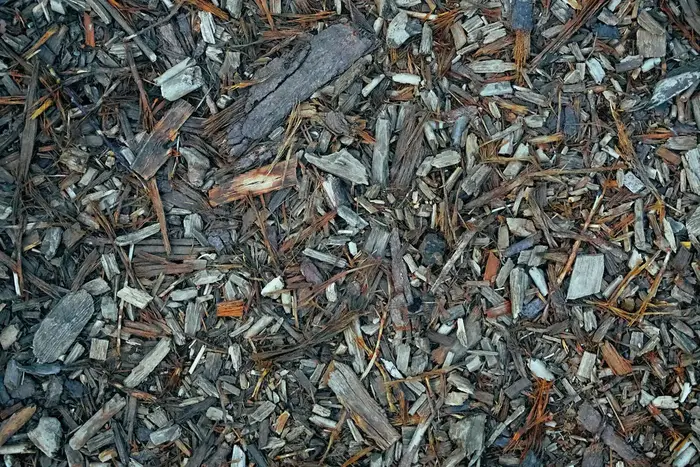
Stick with natural, organic materials: shredded hardwood bark, arborist wood chips, pine straw, or composted leaves. Skip dyed mulches around young trees, and never lay plastic or landscape fabric underneath — roots need air and water exchange, and organic mulch does its best work when it can touch the soil and break down over time. Plan to top things up once or twice a year, in spring or fall, whenever the layer thins below two inches. Fluff matted mulch with a rake so water can still soak through, and you are set.
Here is the whole story in a nutshell: mulching around your trees keeps moisture in the soil, steadies the temperature, chokes out weeds, feeds the earth as it breaks down, and shields the trunk from damage — as long as you keep the layer two to four inches deep and a few inches clear of the bark. It takes an afternoon, costs little, and pays you back with healthier, more resilient trees for years to come. Ruth’s maple? One donut of mulch later, it came back looking like the pride of the street. Yours can too.
The right mulch depth and ring are the cheapest long-term health investment a tree gets. mulching.
See our Cambria tree service for every service we run across the coast.

Leave a Reply