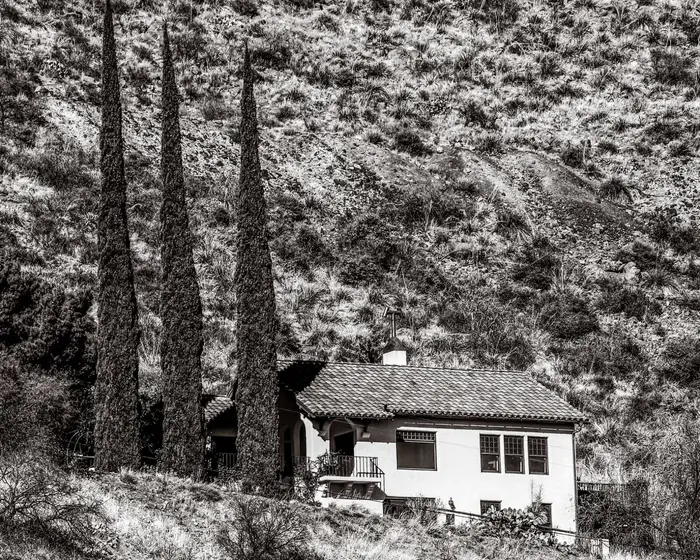
Curb Appeal in February: What a Buyer Sees When the Leaves Are Gone
Quick answer: Winter Curb Appeal: What a Buyer Sees With No Leaves — Trees on this coast live with fog, salt, wind and thin soil, and the work that keeps them healthy is decided by those conditions rather than by a calendar written inland. Structure, clearance and the root zone are what a tree here needs looked at, and small work done early is what keeps a tree out of the emergency list.
Field note. What we see on this coast is that the trees people worry about are usually not the ones in trouble: the pine with a clean crown and a lean that predates the house is often sounder than the tidy tree that has been quietly drowning in its own root zone.
On the other hand, there is no schedule that suits every tree — the same species on two sides of one street can need opposite care, which is why we look before we recommend.
Curb appeal is usually discussed in spring, when everything is in leaf and the garden is doing the work. But most of this coast sells in the grey months, and in February a tree is a drawing: trunk, limbs, sky. Everything that was hidden by foliage is now the first thing a buyer sees.
The thirty-second read
A buyer standing at the kerb reads five things in order: the silhouette, the trunk, the ground beneath, the relationship between the tree and the house, and whether anything looks like it is about to fall. None of those are about the tree’s species or its age. They are about maintenance.
A well-maintained bare tree looks deliberate. An unmaintained one looks like a liability, even when it is structurally fine.

The five fixes that read from the street
Deadwood. The single most visible defect in winter. Removing it changes the silhouette more than any other work and is the cheapest item on the list.
Water sprouts and suckers. The vertical shoots on limbs and at the base read as neglect. They also indicate a tree that was pruned badly.
The root flare. If the trunk disappears into a mound, the tree looks planted too deep — because it probably is. Exposing the flare is unglamorous and visible.
The ground line. Mulch piled against the trunk, bare compacted soil, or a mower ring all read badly. A flat three-inch ring is the fix.
Clearance. Branches touching the roof or the siding read as a problem the owner has ignored.
The view from the street, literally
Stand at the kerb, at the centre of the frontage, and take a photograph. Then look at the photograph rather than the tree. The camera flattens the scene and shows you what a buyer sees: the balance of the canopy, whether the trunk is straight, whether the tree frames the house or hides it.
If the tree hides the front elevation, that is a design conversation, not a pruning one. A heavy reduction to open a view is usually the wrong answer; thinning the interior is the right one, and it is cheaper.

The six weeks before a listing
Tree work before a sale has a sequence, because the visible result of some operations takes a season to appear and the visible result of others is immediate.
Six weeks out: the arborist walk, the report if a defect is found, and any permit application. Permits take the longest and are the item most likely to derail a closing date.
Three weeks out: the deadwood, the raising, the clearance from the roof, and the removal of anything that reads as a hazard. This is work that changes the photograph the day it is finished.
One week out: the ground. Fresh mulch, the edges of the beds, the walkway cleared, the chips gone. This is the cheapest item on the list and it is the one a buyer’s eye lands on at the door.
What does not belong in that window is anything that will look worse before it looks better: a hard reduction, a stump grind that leaves a raw hole, a new planting that will sulk through the summer. Those are the operations to do a year early or a year late.
One thing worth doing that is not work at all: walk the frontage at dusk. A tree that is lit from below, or that casts a shape on the wall, reads as an asset in a photograph taken at seven in the evening. The same tree in flat noon light reads as a mass.
If the house is being photographed, the tree should be photographed in the hour that flatters it — and the pruning should be finished before that hour, not during it.
What not to do before a sale
Do not top the trees to make them smaller. It produces a stump-like silhouette, a burst of weak shoots in spring, and a defect an inspector will name. Do not remove a healthy mature oak to open a view; on this coast that can trigger a permit process and a disclosure problem. Do not hide a defect with paint or a decorative screen; the buyer’s inspector will find it and the negotiation will cost more than the repair.
Do the cheap visible things, document what you did, and let the tree be the reason someone stops at the kerb rather than the reason they drive on.