Morro Bay Hillsides and the Trees That Lean
Quick answer: Morro Bay Hillsides and the Trees That Lean — A stump is the part of the problem that is still in the ground: it holds the roots that lift pavement, keeps a species alive if it re-sprouts, and occupies the spot where the next planting goes. Grinding removes it below the surface so the ground can be worked again, and the roots that matter are the ones under the driveway rather than the ones beside the trunk.
Field note. On this coast the stump is rarely the end of the job: Monterey pine and eucalyptus both keep enough energy in the roots to push new growth, so we are looking at the species before we quote the grind rather than after.
On the other hand, a stump left in a garden bed is sometimes the better answer — it decays, feeds the soil and costs nothing — so grinding is a choice, not a rule.
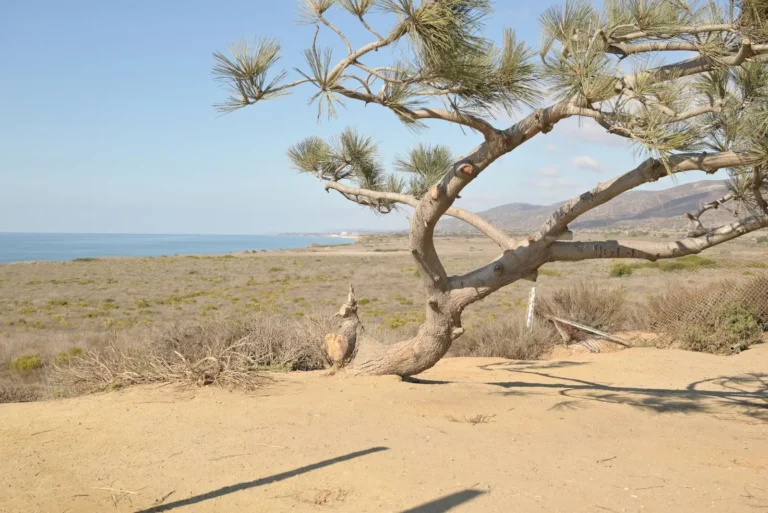
The hillsides behind Morro Bay hold a particular kind of tree problem, and it is not the one people ask about. The question is usually whether a leaning tree will fall on the house. The more useful question is what the tree is holding up, because on a steep slope those two answers can point in opposite directions.
How a tree anchors on a gradient
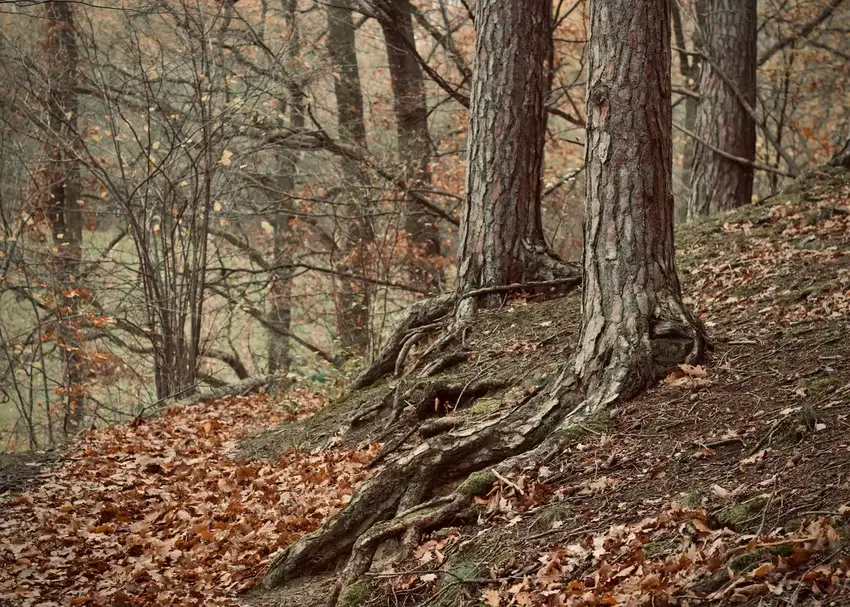
A root plate on flat ground spreads in all directions and mobilises soil friction across a wide disc. On a slope, the same plate is asymmetric: the roots on the uphill side are shallow and spread into soil that is being pushed toward them, and the roots on the downhill side grow longer and deeper to find purchase.
Trees on gradients therefore develop a buttress on the downhill side and a lean that follows the slope — they grow toward the light, which on a hillside is downslope.
That lean is normal and, up to a point, stable. A tree that has leaned with the slope for sixty years has been growing reaction wood on the tension side for sixty years to hold itself there. What is not normal is a change: a lean that has increased, a curve at the base where the trunk was straight, a bulge of soil on the downhill side.
Water is the mechanism
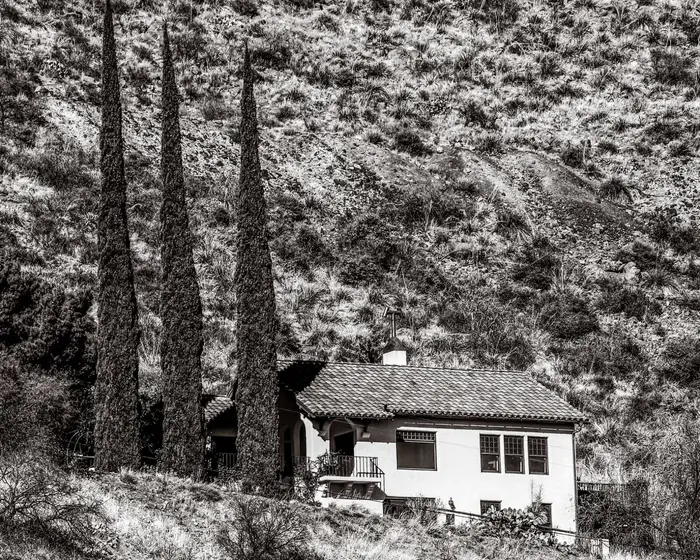
Slope failures here are almost always water-driven. The soil on a hillside is a layer of clay or loam sitting on something less permeable, and after enough rain the interface between them lubricates. A root plate that was gripping dry soil is now gripping a wet plane, and the whole assembly can move.
What that means practically is that a tree’s stability on a slope is seasonal, and the season is winter. A tree that looks solid in August can be at its limit in February after a week of rain. The signs to read are the ground signs: new cracks parallel to the slope, soil piled against the downhill base of the trunk, a fence post or retaining wall that has begun to lean in line with the tree.
Why removing the tree can increase the risk
This is the part that surprises people. A mature tree on a slope is a soil-retention structure. Its roots bind a volume of soil, and it removes water from that soil through transpiration. Take the tree away and two things happen at once: the root system stops holding, and the soil stops drying.
The result is a slope that is both looser and wetter than it was, and the failure mode moves from ‘a tree may fall’ to ‘the hillside may move’ — which is a much larger event, often taking the tree’s neighbours and the retaining wall with it.
That is not an argument for keeping every tree. It is an argument for removing a slope tree as part of a plan: staged removal, replanting with species that root deeply and quickly, and where the slope is already compromised, engineering rather than gardening. The worst outcome is the one that happens most often — the tree comes down for the view and nothing replaces it.

What to do with a leaning hillside tree
First, measure rather than remember. A photograph with a fixed reference in frame, taken twice a year, is worth more than any amount of recollection about how it used to look. Second, look at the ground on the downhill side after the first big rain, not in summer.
Third, reduce load before removing the tree: a crown reduction takes weight off the end of the lever and lowers the wind sail, which on a leaning tree buys years without touching the anchor.
Fourth, do not dig near the base. A new retaining wall, a path, a drainage trench cut across the downhill root zone removes exactly the roots that were holding the slope, and the failure tends to follow within a few winters.
Where a slope tree is a genuine hazard, the risk assessment covers the ground-sign reading and the reduction options, and slope and bluff stabilization is the engineering side when the answer is not a tree at all.