
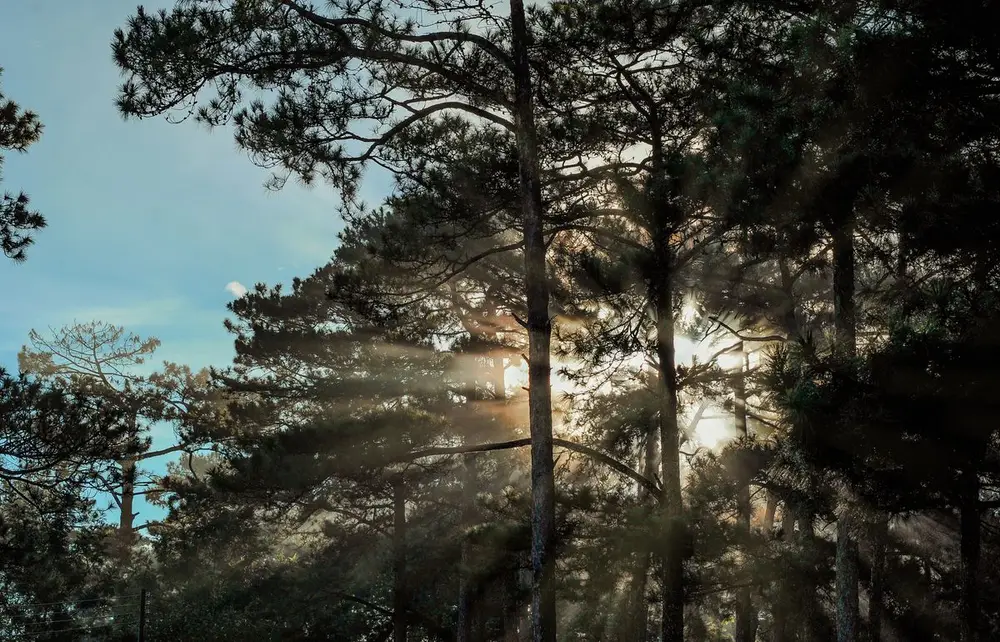
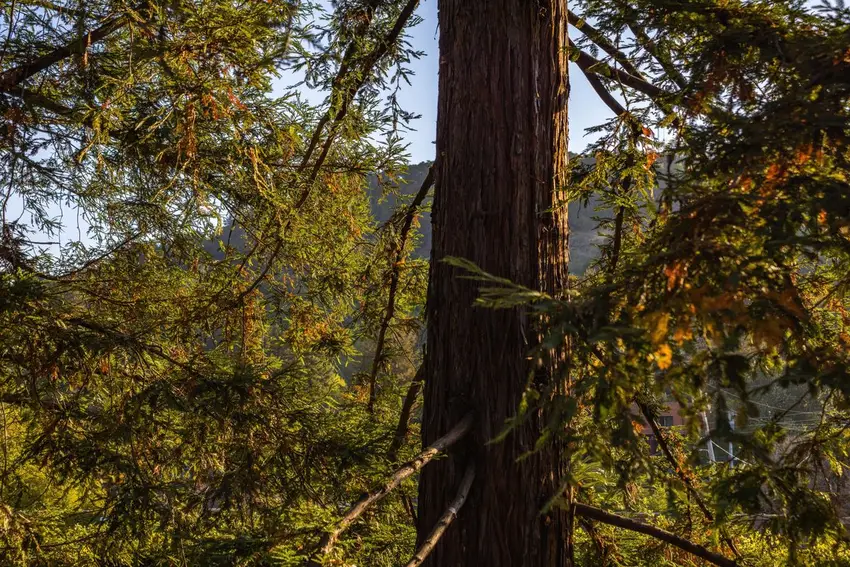
A tree leaning over a roof that is sound but too tall and too close for comfort — reduce toward the structure, never away from it.
Crown reduction in Cambria, smaller without topping
Quick answer: Crown Reduction in Cambria, CA — Trees on this coast live with fog, salt, wind and thin soil, and the work that keeps them healthy is decided by those conditions rather than by a calendar written inland. Structure, clearance and the root zone are what a tree here needs looked at, and small work done early is what keeps a tree out of the emergency list.
- What it involves: Structural pruning, clearance from structures and wires, deadwood removal, root-zone care and hazard assessment.
- Typical timing: Structural work in the dormant months; deadwood, clearance and hazard work whenever the tree needs it.
- The standard: The ISA standards for pruning and tree risk assessment, applied by ISA-certified arborists.
- Where we work: Cambria, San Simeon, Harmony, Cayucos, Morro Bay, Los Osos and the Cambria pine belt.
- Our own record: 503 pages and 291 stories published on this site. Counted from our own archive, not a stock table.
Field note. What we see on this coast is that the trees people worry about are usually not the ones in trouble: the pine with a clean crown and a lean that predates the house is often sounder than the tidy tree that has been quietly drowning in its own root zone.
On the other hand, there is no schedule that suits every tree — the same species on two sides of one street can need opposite care, which is why we look before we recommend.
Standards and sources: Tree care standards (ISA — International Society of Arboriculture) · Pest and disease notes (UC IPM — University of California pest management)
Prepared by Cambria Pines Tree Service Inc. — ISA-certified arborists working on the Central Coast.
Making a Tree Smaller Without Topping It
Crown reduction is how you make a tree genuinely smaller on purpose — height and spread taken off deliberately, each limb cut back to a living branch big enough to carry on the job — and it is the exact opposite of what a tree does to itself when someone tops it. The distinction is not a matter of taste.
A reduction cut is made where the tree can respond; a topping cut is made where it cannot, and the difference shows for the rest of the tree's life.
We do reduction work across Cambria and up the coast, most often on a tree that is too close to a roof, a view line or a service drop and cannot simply be removed. It is precise, slow pruning, and it is honest work only when the tree is healthy enough to take it.
The Reduction Cut, and Why the Lateral Matters
A reduction cut takes a limb back to a live lateral branch — and the size of that lateral is the whole trick. The remaining branch should be at least roughly a third the diameter of the piece you removed. When it is, three things happen correctly:
Cut to a lateral that is too small and you have effectively created a stub with extra steps. The tree responds the same way it does to topping, and you have spent the money without the benefit.
- The lateral continues the food and water pathway that the removed limb was serving, so the tree is not left with a dead end.
- The tree can seal the wound at the branch collar, because the cut sits in living, defensive wood.
- Hormones produced by that surviving branch suppress the eruption of shoots that a stub would trigger.
What Topping Actually Does
Topping — cutting the top out of a tree into old wood, above the last live lateral — is the single most damaging thing done to landscape trees, and it is worth being blunt about the sequence. The tree loses the bulk of its leaf area and its stored energy in one cut. It cannot seal the wound, so decay organisms enter the stub and start working downward.
Then it panics and throws out a ring of vigorous, weakly attached shoots around the cut, which grow fast because they are fed by a root system sized for the tree that was there before. A few years later you have a shorter tree with a decayed top and a broom of unstable branches — a worse structure than you started with, at a lower height.
Nothing about that is a fix, and repetition makes it worse every time.
How Much Is Safe in One Pass
Reduction is a heavier intervention than thinning, so the limits matter more. Standard practice under ANSI A300 keeps a single pass to no more than about a quarter of the live crown, and it treats any large change in height as a change the tree has to pay for over several years. On a stressed, declining or shallow-rooted tree the allowance is smaller still, and sometimes the answer is that no reduction is safe.
The growth response is the other half of the calculation. A reduction cut does not switch growth off. It redirects energy into what is left, so a heavy reduction produces a heavy flush of regrowth — which is exactly what a client who wanted a lower tree does not expect.
The aim is a series of moderate reductions spread over years, each one leaving the tree balanced, rather than one heroic cut that triggers the response we were trying to avoid.
Species Decide Whether It Works
Reduction suits some trees here and not others, and that is not negotiable.
That is why we look at the tree before we price the work. A reduction on the wrong species is a slow removal, and we would rather say so than take the job.
- Coast live oak, valley oak and sycamore respond well. They hold latent buds along the branches and can rebuild a crown from a properly made cut.
- Eucalyptus responds vigorously — often too vigorously — and needs the regrowth managed afterwards.
- Monterey pine and cypress are poor candidates. A pine's growth is concentrated at the tips of its branches; cut a pine back into bare wood and the branch does not regrow, it just dies back. Reduction on a pine means removing whole limbs or whole leaders and accepting the shape that leaves, not shortening branch ends.
Where Reduction Is the Right Tool Here
Where the real concern is a coded tree, a protected oak or a heritage tree, the work may need a permit before it needs a saw. Our page on tree removal permits and local tree rules covers which trees those are.
A service drop or a sightline where the limb and not the tree is the problem, and the owner will not consider removal.
A boundary tree whose spread now crosses a property line and needs to come back into its own space.
End-weight reduction on a long horizontal limb — shortening it to reduce the leverage at the union, which is a different and often better answer than a cable.
When We Say No
We will refuse a reduction when the tree is in decline, when the species does not respond, when the cut required is so large that it becomes topping with a nicer name, or when the honest answer is that the tree is in the wrong place and should come out. If a tree is failing structurally, no amount of trimming makes it safe — that is a inspection and possibly a removal, not a haircut.
Where the goal is simply more light and less wind, crown thinning does the job with far less cost to the tree.
And a reduced tree stays reduced only if the work is repeated. If a tree needs to be smaller than its species wants to be, that is a maintenance commitment for the rest of its life, and we would rather you knew that before the first cut than after the third.
Getting a Reduction Assessed
Send us a photograph of the whole tree, one looking up through the crown, and one showing what it overhangs. Species, height and what is underneath is enough for an honest first opinion on whether reduction is possible, and whether it is worth doing.
Call (805) 927-4414 or reach us through the contact page. Every estimate is written before work begins, and it will say plainly what the tree will and will not do afterwards. To see everything else we handle, start at our services.
Next step
Ready when you are.
Questions, quotes, or just exploring — we’re here to help.