
Thinning a Crown Without Ruining It
Quick answer: Crown Thinning in Cambria, CA — Pruning is a plan before it is a cut: deadwood and broken limbs first, then clearance from roofs, wires and paths, then the structure the tree will carry for the next decade. The right cut heals and the wrong one invites decay, which is why the order matters more than the number of cuts.
- Typical timing: Structural work in the dormant months, light clearance and deadwood any time the tree is not under stress.
- What it involves: Removing dead and crossing limbs, thinning to let light through, lifting low limbs for clearance, and never topping a tree.
- The standard: The ANSI A300 pruning standard as applied by ISA-certified arborists — including the three-cut method on every limb worth saving.
- Where we work: Cambria, San Simeon, Cayucos, Morro Bay, Los Osos and the towns between.
- Our own record: 503 pages and 291 stories published on this site. Counted from our own archive, not a stock table.
Field note. What we see on this coast is a pruning calendar that does not match the inland one: salt air, fog and wind mean a cut that would be minor in the valley can be the one that opens a crown to decay here, so we look at the species and the exposure before the season.
On the other hand, not every tree wants to be pruned: leaving a healthy canopy alone is a decision that pays, and a tree with plenty of space is often better served by doing nothing.
Crown thinning is the one pruning job homeowners ask for by name and the one most often done badly, because the easy version of it — strip the inside out until you can see straight through the tree — is also the version that wrecks the tree.
Real thinning is a careful, selective removal of inner live branches to reduce how dense the crown is, and nothing about it changes the tree's outline, its height or its spread. The tree gets lighter, windier and brighter inside while still looking like the tree it was.
Done correctly it is one of the most useful things you can do for a mature tree on this coast. Done carelessly it is the single worst thing, because the damage is permanent and it shows up two years later.
What Thinning Is, and What It Is Not
The confusion is worth settling first, because three different jobs get called "thinning".
- Thinning removes inner branches. You take out selected laterals along a limb, distributed through the crown and mostly from the inside, so air and light move through the canopy. The outer shell of the crown stays.
- Reduction shortens limbs and takes height or spread off. That is a different cut with a different purpose. If what you actually want is a smaller tree, thinning is the wrong job — see our crown reduction page.
- Lions-tailing is stripping every inner branch off a limb and leaving a tuft at the end. It is not thinning. It is a common, damaging shortcut, and it is the reason pine and oak pruning on this coast gets a bad name.
Why We Thin Trees on This Coast
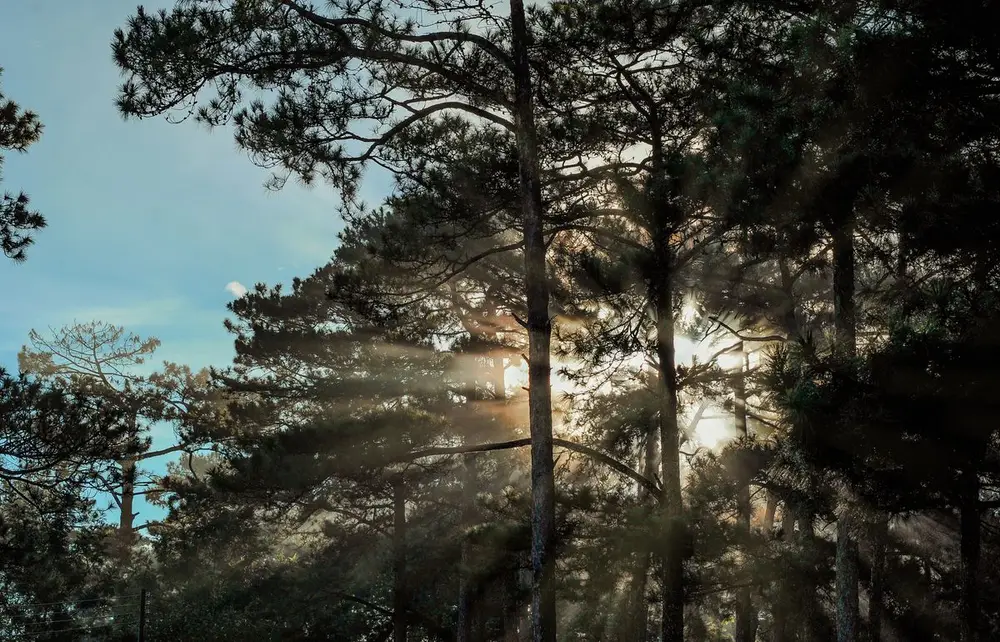
Most of the thinning we do in Cambria, Cayucos and Los Osos is about wind. A dense, heavy crown is a sail. In a northwesterly blowing through the pines on Park Hill or along the bluff, the tree that fails is usually the one that could not let the wind through — the force has nowhere to go, so it goes into the branches and into the root plate.
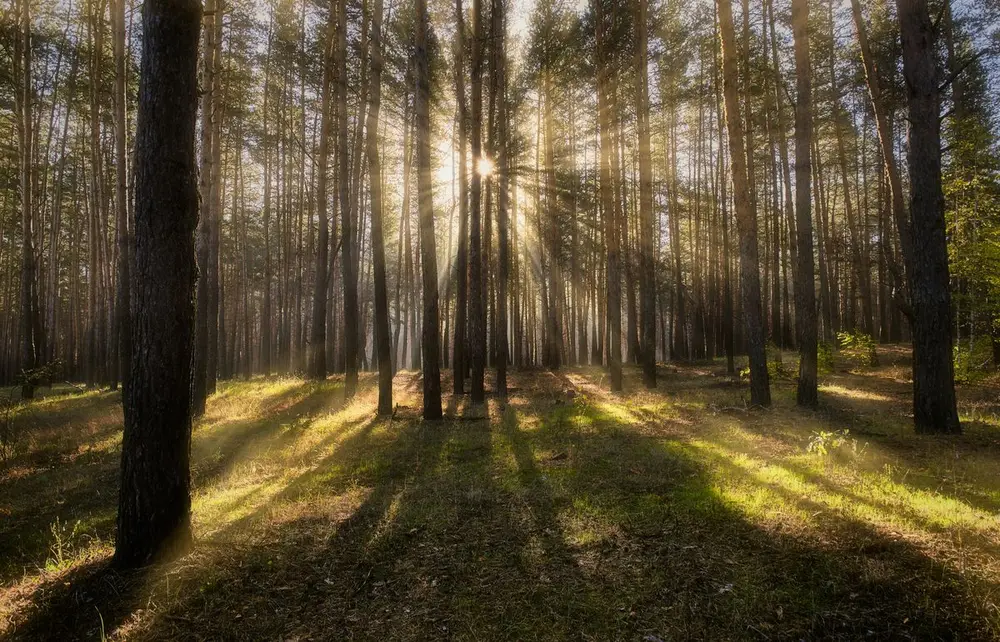
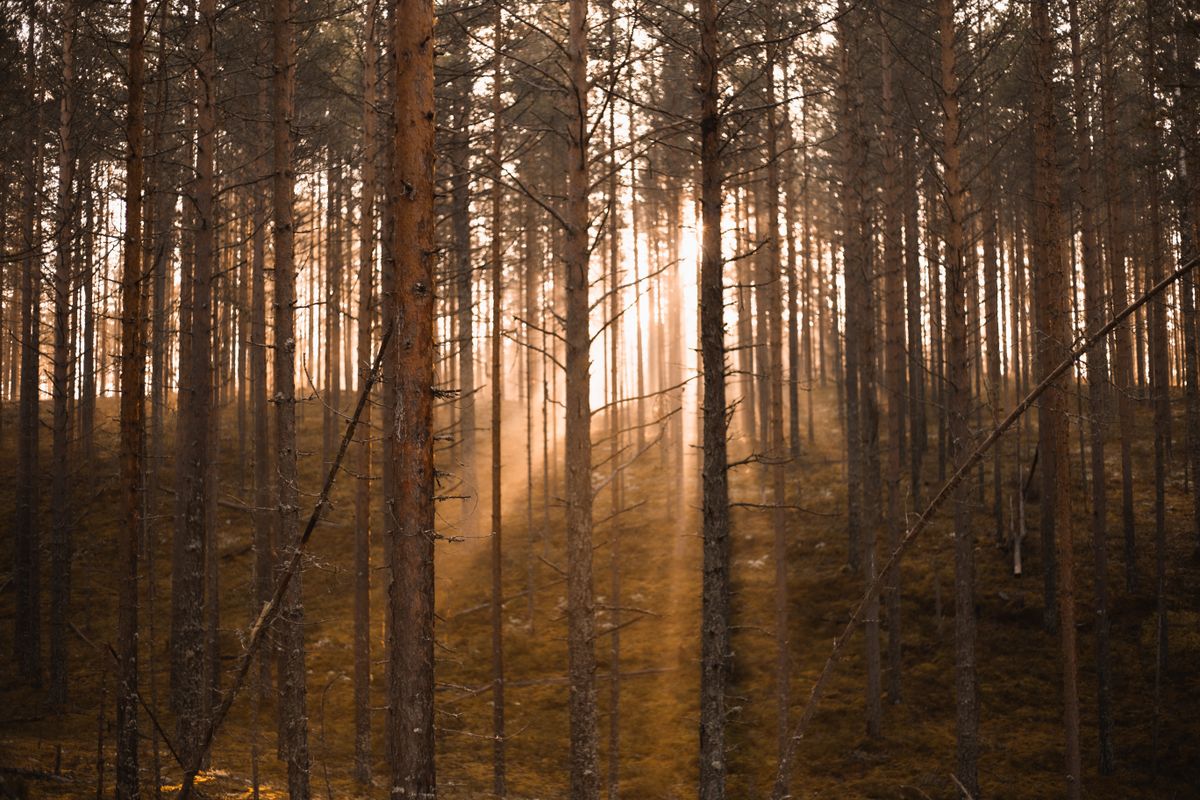
A properly thinned crown has less surface to catch the wind, and the branches that remain move more independently instead of loading together. Light comes in, which matters for the understory and for anything you are trying to grow below. And dead or weak material gets removed at the same time, which is a free risk reduction.
The Limits, Because Over-Thinning Is Real
Standard practice under ANSI A300 (Part 1) is a dosage limit, not a target: no more than about a quarter of the live crown in a single pass, and less than that on a tree under stress. A tree's leaves are its manufacturing plant and its storage; take too many and the tree cannot feed itself, cannot seal the cuts, and cannot lay down the wood that holds it up.
Over-thinning has a counter-intuitive result. A tree thinned too hard produces a burst of epicormic shoots — fast, weakly attached growth along the trunk and the limbs — and the crown comes back denser and heavier than it started, anchored worse than before. Sunscald on newly exposed trunks and limbs is the other giveaway. Both are permanent marks, and neither is fixable later with more pruning.
- We do not thin a declining tree. If it is thin already, adding stress is not care.
- We do not thin a pine's upper crown hard. Monterey pines do not rebuild interior laterals well; a badly thinned pine stays bare.
- We do not thin as a substitute for structural work. If the concern is a weak fork or a failing root plate, lighter branches are not the cure — that is a support or removal decision. Start with our tree inspection service.
How a Proper Thinning Is Actually Run
The work is mostly judgement spent before the first cut. We walk the tree, decide what the crown is for — clearance, wind, light, the health of a neighbouring tree — and mark the limbs to keep. Then the removal is distributed: no two cuts fighting each other, no limb left isolated, weight balanced left-to-right and end-to-end so the crown does not end up leaning.
Cuts are made at the branch collar — the swollen ring at the base where the tree has already formed its defence — never flush to the trunk and never leaving a long stub. Anything dead, broken or rubbing goes in the same visit.
On a large oak or a mature pine over a roof, that means rope access and rigged lowering rather than a ladder, and it takes longer than the shortcut version, which is exactly why the shortcut exists.
When Thinning Is Not the Answer
Occasionally someone asks us to thin a tree to make it "storm-safe", and we have to say no. Thinning reduces sail area; it does not fix a narrow-angled fork with bark trapped inside it, a hollow base, or a root plate that has already begun to lift.
Those are the failures that actually drop trees here, and the honest response is a written tree risk assessment, a support system where it is warranted, or removal. Aesthetics and structure are different conversations, and we will tell you which one you are having.
Booking a Thinning
Tell us the species if you know it, roughly how tall it is, and what is underneath — roof, drive, power drop, neighbour. A photograph of the whole tree and one looking up into the crown is enough for us to tell you whether thinning, reduction or something else is the right call.
Call (805) 927-4414 or use our contact page to arrange a visit. Estimates are written and given before any work starts, and the limits above are the limits we hold to whether or not they shorten the job. For the full picture of what we do, see our services.
Questions, quotes, or just exploring — we’re here to help.