Choose Mulch by the Question It Answers
Quick answer: How to Choose Mulch by the Question It Answers — Mulch is the cheapest thing that happens to a tree: a flat layer over the root zone holds moisture through the dry season, keeps the soil temperature steady and feeds the soil life the tree depends on. Almost every mulch problem is a depth problem or a contact problem — too thick, or piled against the trunk where the bark has to stay dry.
Field note. What we see most on this coast is not too little mulch but too much, in the wrong place: the volcano against the trunk that keeps the bark wet through the fog season and invites rot where the tree cannot show it until the canopy thins.
On the other hand, a thin ring of the wrong material is worse than none at all — matted, water-repellent mulch sheds the rain it was meant to store.
Every mulch question that arrives at a nursery counter is really a question about something else. Which mulch should I use means: what am I trying to change? Weeds, water, appearance, or the ground within twenty feet of the house? There is no single best mulch, and the right answer changes twice along a single property line. What exists is a set of four decisions, and once you have made them the material in front of you is obvious.
Decision one: what is the job?
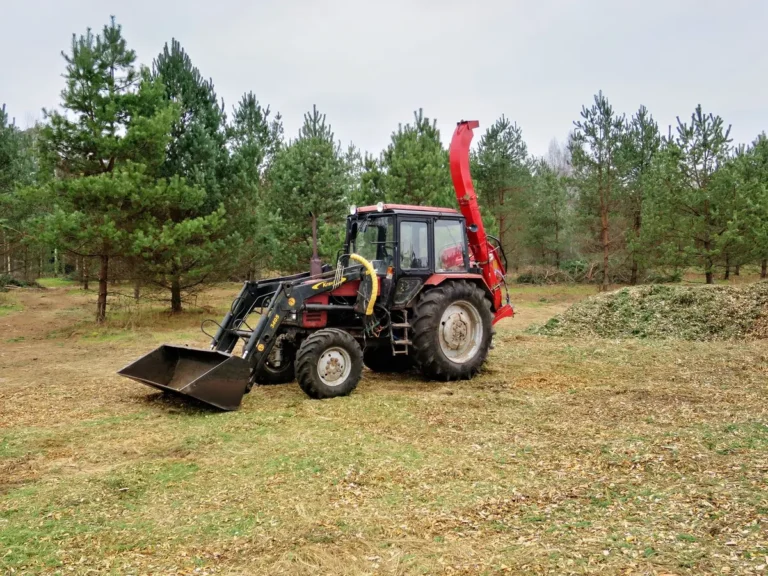
If the job is weeds and moisture over a tree’s root zone, the answer is a coarse arborist chip — branches and leaves chipped together, the material a pruning crew produces — laid two to four inches deep over bare soil. It knits together, it does not blow, and it breaks down into the soil instead of forming a crust that sheds water.
If the job is the look of a bed in front of the house, you are shopping for color and texture, and the honest way to do that is by the yard rather than by the bag, so the whole bed matches when the light changes through the day.
If the job is a path or a play area, mulch is the wrong product. You want gravel, decomposed granite, or engineered wood fibre rated for impact. Treating a path with bark is how a bed ends up wandering into a walkway every winter.
Decision two: the depth, and the one place it must not go
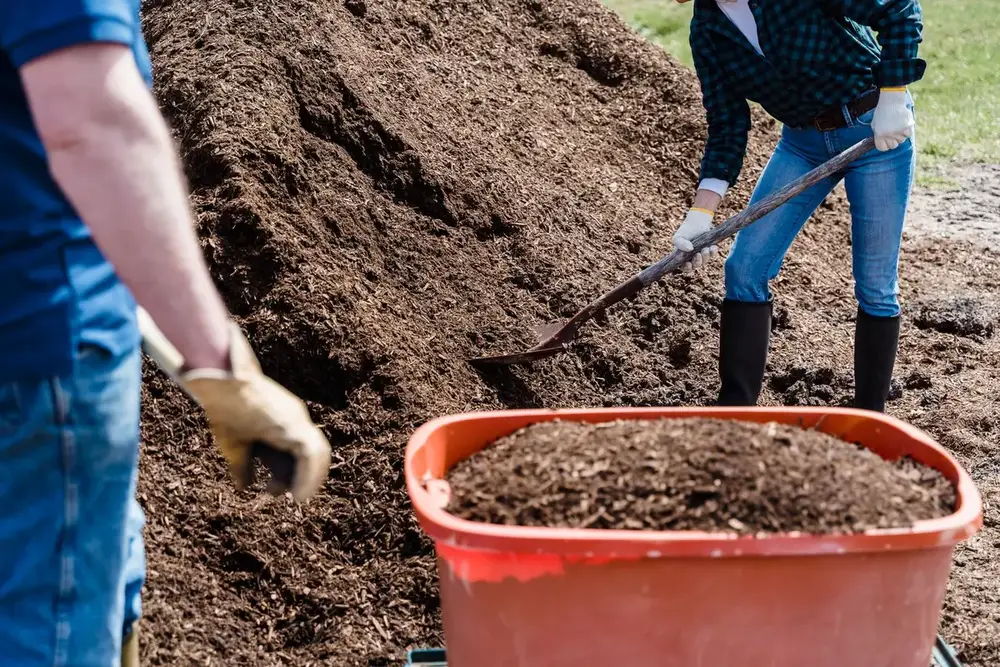
Two to four inches, measured with a hand rather than estimated by eye. Deeper is not better: past about four inches the material holds water against the trunk instead of in the soil, and the fine roots that need air begin to suffer. Shallower than two and the sun and wind here will take it back before the season turns.
Then the trunk. The most common way a healthy young tree is killed on this coast is a mound of mulch piled against its base — the volcano everybody photographs and nobody admits to building. The flare at the base of a tree, where the trunk widens into the roots, needs air. Cover it and you invite decay exactly where decay is unrecoverable.
Push the material back until you can see the flare from every side, and keep it that way: a donut with a hole in the middle is the shape the tree wants.
Decision three: fire, which outranks looks
In the first twenty feet from the house, mulch stops being landscaping and becomes fuel. That is the band where an ember lands, and a continuous bed of dry bark against a wall is a wick. There, the answer is gravel, mineral soil, or low irrigated plantings with the material pulled well back from the foundation and out from under the vents. Not a different color of the same thing.
If you have had a notice from your insurer about the ground next to the house, that is the fire clearance conversation, and it decides that band before aesthetics get a vote.
Decision four: what the tree already grew
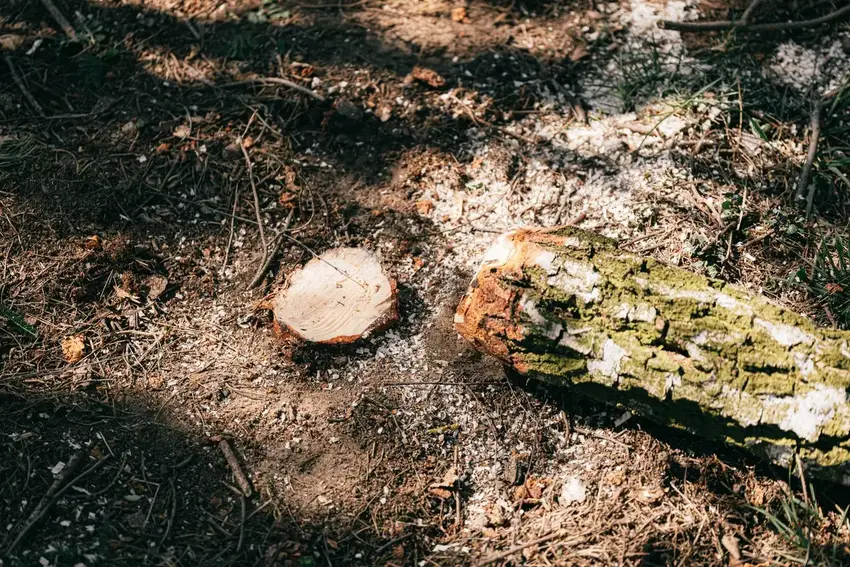
If the mulch is going around a tree, the best material on this coast is the least fashionable one — the chips from that tree’s own last pruning. They carry a mix of particle sizes that decomposes at a rate the soil can use, they do not mat down, and they cost nothing but the haul. Two cautions. Fresh eucalyptus chips are fine as a surface mulch, but let them sit a few weeks before they go around young plantings.
And after a beetle year, chips from a condemned pine are better moved off the property than spread, because the beetles may still be in the wood.
Then leave it alone. Mulch is not a weekly chore: the top layer can be topped up once a year, and the bed should never be turned over. Turning buries the fine roots that have grown up into the decomposing layer, which is the one thing the layer exists to feed. The people who ask whether mulch is worth the effort are usually the people who have been turning it.
For the colors, textures and depths we use on a coastal lot, our mulching page is the long version. And when the roots themselves are the worry rather than the surface, the answer usually starts under the ground instead of on top of it — which is the subject of our slope and soil work.