Removing Dead Trees Before They Fall Is the Cheaper Path
Quick answer: Removing Dead Trees Before They Fall Is the Cheaper Path — Removing a tree is planning before it is cutting: where the wood lands, what is under it, whether a rope or a crane takes the weight, and what is left when the crew drives away. A removal is finished when the drop zone is clear and the stump is dealt with, not when the trunk hits the ground.
Field note. What we see here is that access decides the price more than height does: a pine over a fence on a slope with no driveway costs more to take down safely than a taller tree with a clear drop, and the plan is where that shows up.
On the other hand, removal is not the only safe answer — a tree with one failing limb, or a lean that can be corrected by reduction, is often better kept and managed than gone.
Every dead tree I have been called to take down was standing last year and looked roughly the same from the driveway. What changed was invisible: the roots, the base, the hinge of sound wood a rigger needs to control the direction of the fall. A tree dying is not a static object waiting for a decision. It is a structure losing capacity at a rate nobody can measure from underneath it.
So the case for removing a dead tree promptly is not tidiness and it is not fear. It is that the cost, the risk and the technical difficulty all move in the same direction, and none of them move in your favour.
Where a dead tree actually loses strength
Not where you can see it. The top of a dead tree dries out and gets lighter and more brittle, which is inconvenient but predictable. The problem is at the other end. Once a tree stops making new wood, the roots and the base stop being defended: fungal decay that was being contained below ground accelerates, and the root plate starts to lose the fine roots that are holding it in.
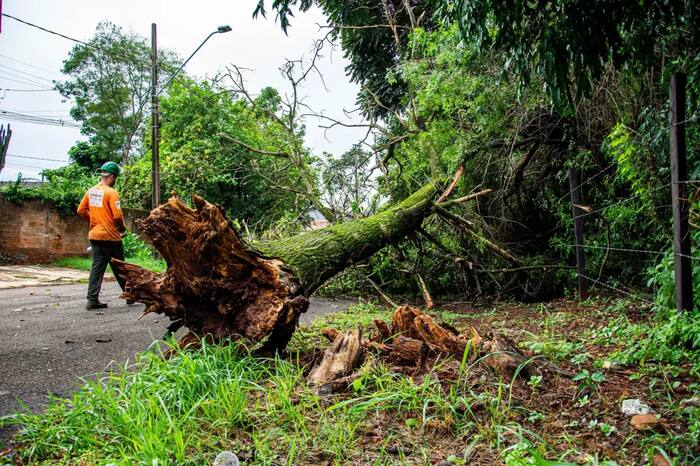
A dead tree on a slope or in heavy soil can stand for a decade and then go over in the first saturated week of a wet winter.
Species vary, and the variation is what makes guessing dangerous. Dead pines lose their roots quickly and their wood is brittle; eucalyptus dries with the weight still out on the limbs and drops it, sometimes with no more warning than a crack; a dead oak can stand a long time on sound heartwood and then fail at a decaying buttress instead of the stem. Whatever the species, the rustle of a dry crown tells you nothing about the base.
A dead conifer is a beetle nursery
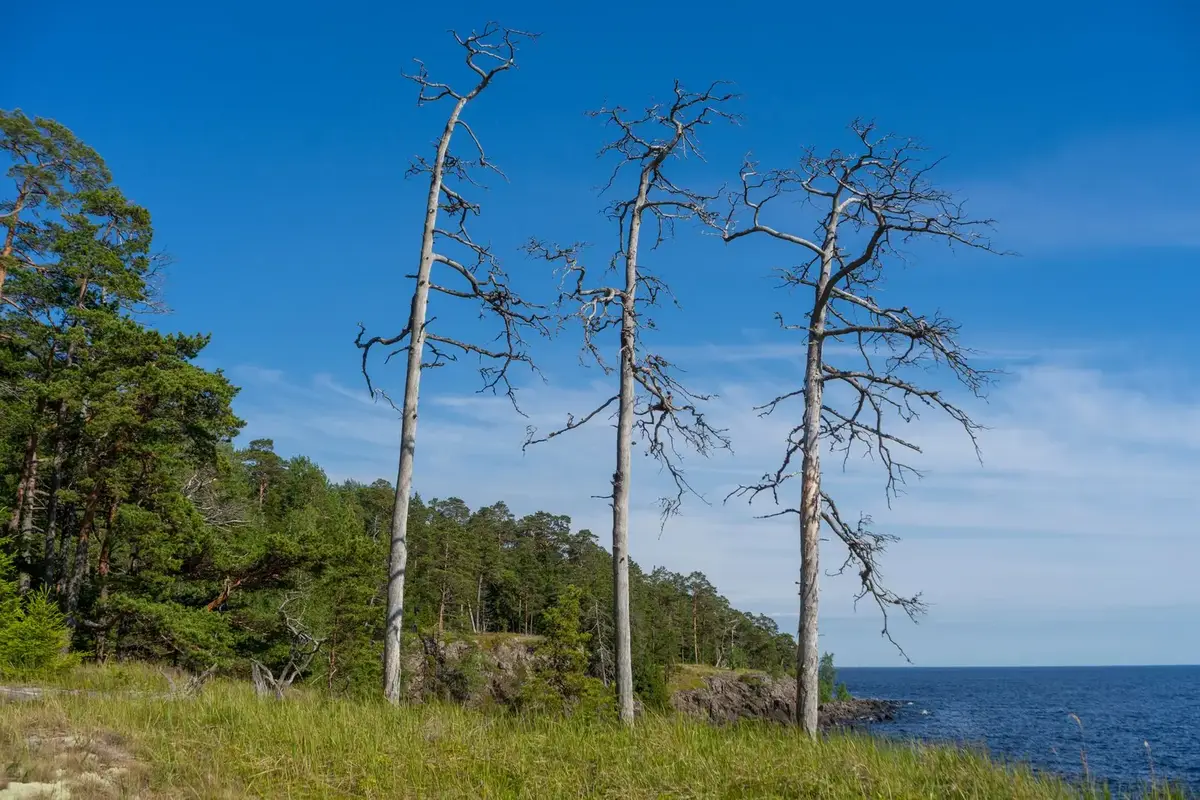
This is the argument that convinces neighbours, because it is a fact about their trees rather than yours. When the bark beetles that killed a pine finish developing inside it, the new generation emerges and flies to the nearest stressed trees.
A dead pine left standing through a warm spring is a rearing site with tens of thousands of insects and a delivery route to every pine within a few hundred metres — the signs are in reading a pine — including the healthy ones, which are easier targets when they are already dry.
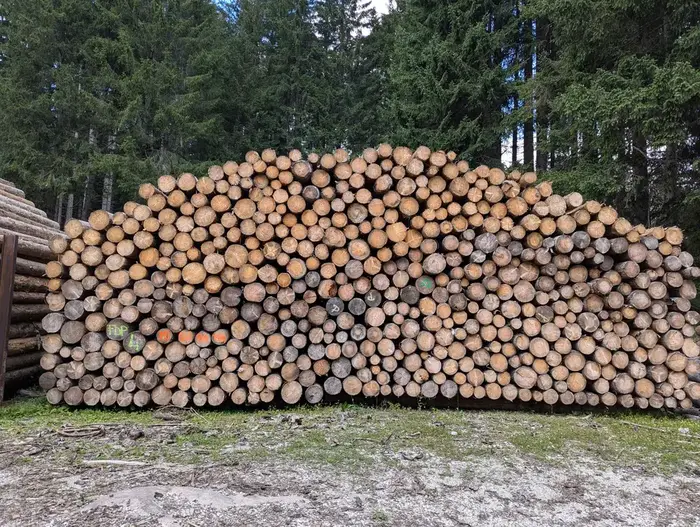
So the removal of a dead conifer has an awkward second half: if the tree is felled and the wood is left on site in the sun, the brood completes in the log. Chip or remove it, or at least get it off the ground and away from standing pines, or you have moved the nursery rather than closed it.
Planned removal versus an emergency, in money
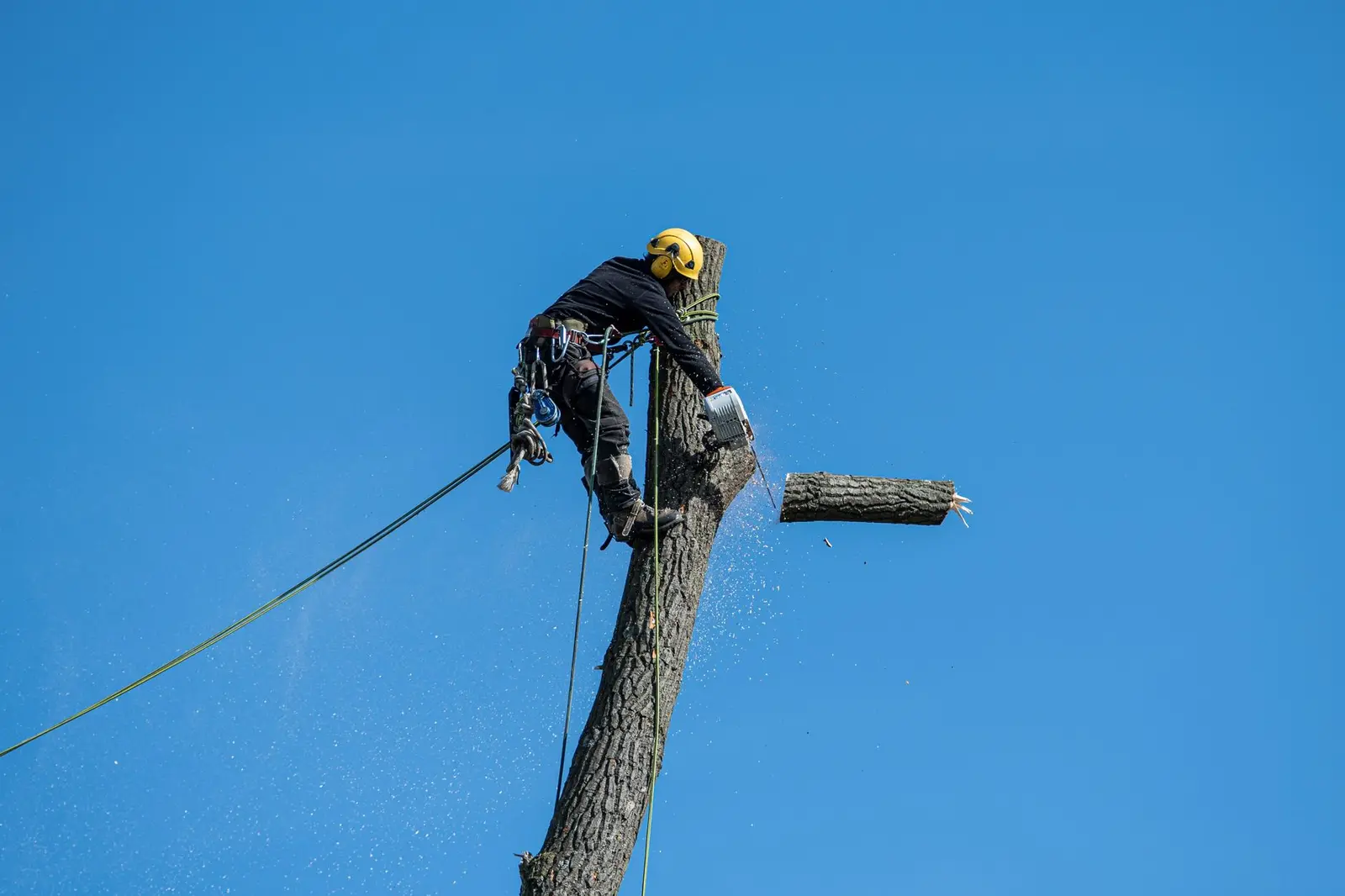
A standing dead tree with room to fall is the cheapest removal there is. The crew can plan the drop, rig the pieces, use the ground, and take their time. Take away the room — a shed, a fence, a neighbour’s porch, a slope — and every piece must be lowered on a rope, which means a climber, a rigging crew, more hours and a higher hourly rate.
Ignore it until it fails and you have bought all of that plus an emergency premium, a damaged structure and a call to an insurer who will ask, reasonably, when the tree died. The hour after a failure is described in the first hour of a tree emergency.
The three quotes version of the same argument: the plan-you-own removal, the controlled dismantle, and the aftermath. Nobody who has paid the third one has wanted the first two.
The honest counterpoint, and its limit
Dead wood has real ecological value. A standing snag is a cavity home for owls and small mammals, a foraging site for woodpeckers, an insect factory, and one of the few things a suburban garden contributes to the food web for free. I have cabled and retained dead trees on properties where the snag stood well away from anything, and it is the right answer there.
The limit is the target. Snag value is real when the tree can fall into open ground; when it is over a bedroom, a driveway, a power drop or the only route out in a fire, the habitat argument has stopped being ecology and become a way of not making a decision.
There is also a middle path that arborists use more than most owners expect: reduce the snag to a safe monolith of a dozen or fifteen feet with all the limbs off, and leave it as a standing habitat stump where it is clear of structures.
What the work itself involves
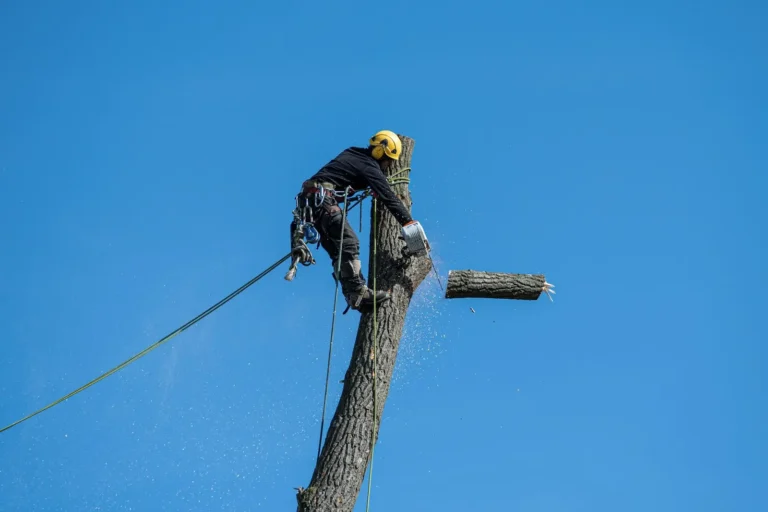
Nothing about removing a dead tree changes because it is dead; it gets slower and it gets treated as though it may come apart at any moment, because it may. Expect the crew to inspect the base and the hinge wood before anyone climbs, to reduce the crown from the ground where possible, to use a rope on anything with a target below it, and to spend time on the first cuts that on a live tree they would not.
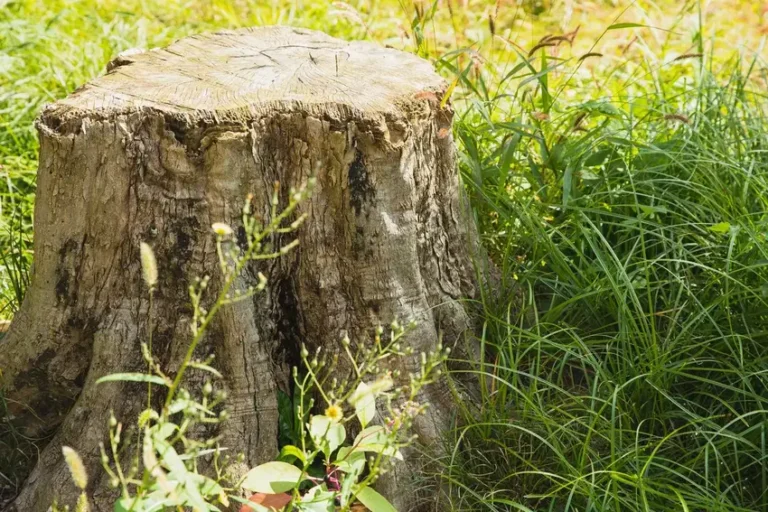
Two things worth having ready before the quote: whether the tree is protected by a permit requirement in the city — heritage trees carry their own rules — and whether the wood is staying on site, because the stump is a separate decision from the tree (why the stump matters).
Ash, chips and logs all have to go somewhere and the answer changes the price. The rest is safety and patience, and the patience is what you are paying for.
Which brings the argument back to its simplest form. There is no version of this in which the tree recovers, and there is no version in which waiting makes it cheaper. There is only a version where the tree is taken down on a scheduled day while it is still standing in one piece, and a version where the first storm decides the timing, the direction and the price.