A Tree on the House: The First Six Hours
Quick answer: A Tree on the House: The First Six Hours — Trees on this coast live with fog, salt, wind and thin soil, and the work that keeps them healthy is decided by those conditions rather than by a calendar written inland. Structure, clearance and the root zone are what a tree here needs looked at, and small work done early is what keeps a tree out of the emergency list.
Field note. What we see on this coast is that the trees people worry about are usually not the ones in trouble: the pine with a clean crown and a lean that predates the house is often sounder than the tidy tree that has been quietly drowning in its own root zone.
On the other hand, there is no schedule that suits every tree — the same species on two sides of one street can need opposite care, which is why we look before we recommend.
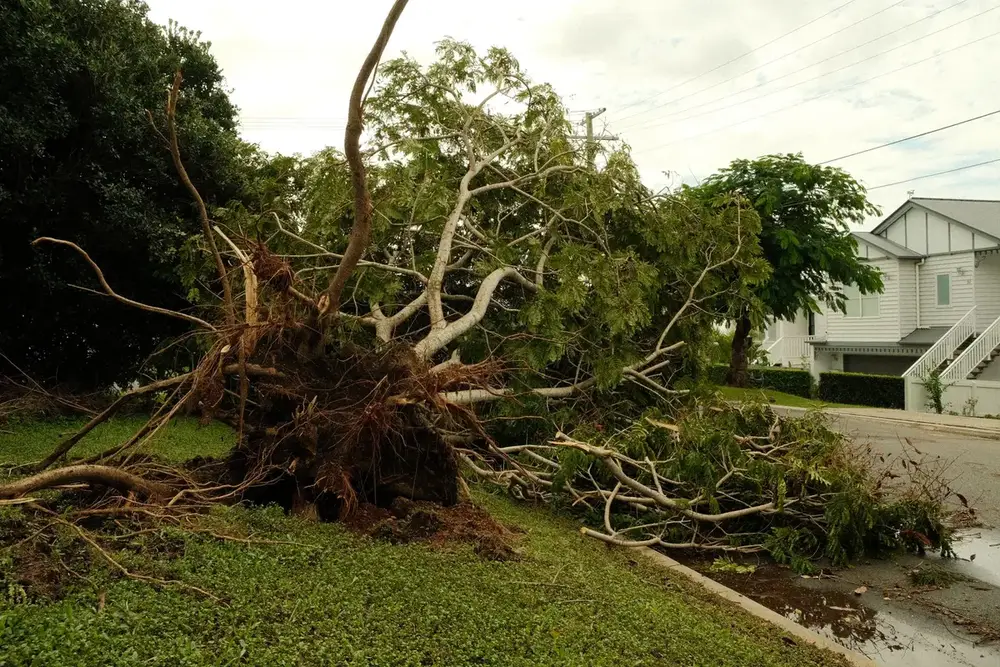
A tree that has come down on a house is a structural event that happens to involve a tree. The wood is now a load on a roof, a wall or a deck, and the building is the patient. That ordering matters in the first hours, because the instinct is to start cutting, and cutting is exactly the wrong first move when nobody has looked at what the wood is holding up.
What follows is the sequence a crew runs, written for the person standing in the driveway at 6 a.m.
First: people, gas, power
Get everyone out of the rooms under the tree, and out of the house if the roof has been penetrated and the ceiling is sagging. Do not go back in for belongings. Then the utilities: if you can smell gas, leave the property and call the gas utility from outside.
If a line is down, assume it is live and call the power company — do not move it, do not touch a fence or a downspout it is resting on.
Photograph everything before anything is moved, from the street and from inside if it is safe, wide shots and close. That record is what the insurance claim is built from, and it is the one thing in this list that cannot be recreated later.
Second: stop the water
If the roof is open, the rain that follows does more damage than the tree did. A tarp over the hole, tied off to something solid, is the highest-value thing an owner can do before a crew arrives — and it is also the thing to stop doing the moment the tree is unstable.
If the trunk is still attached at the stump and the crown is resting on the roof, the whole assembly can shift. Tarp the parts you can reach from a ladder that is not under the tree, and leave the rest.
Inside, put buckets down and move furniture, but do not stand under a sagging ceiling. A ceiling that is holding water gives very little warning.
Third: what the crew does first is not cut the tree
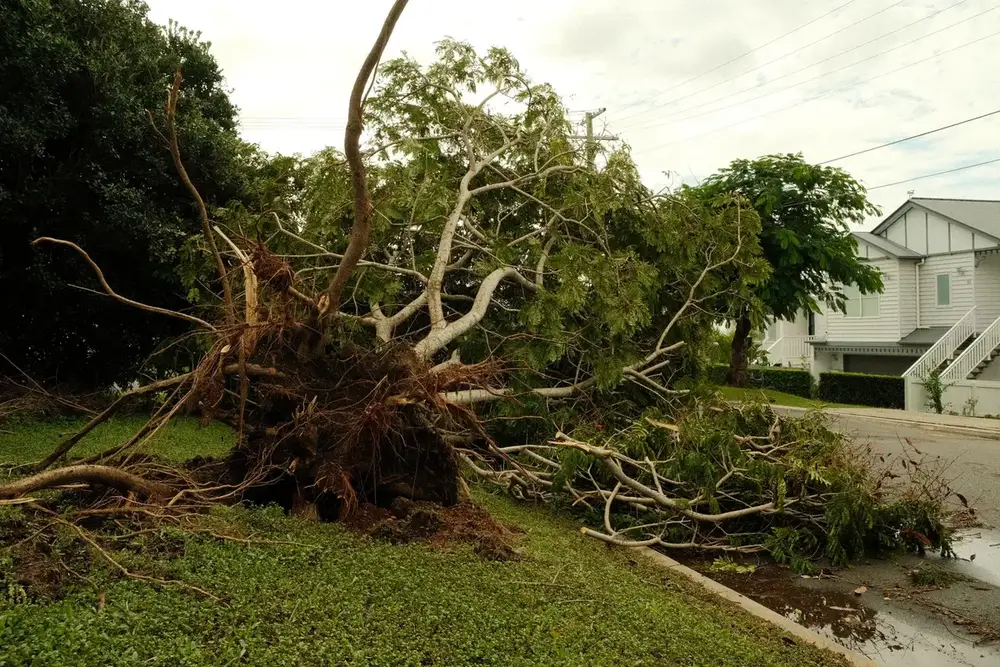
The first hour on site is assessment: where the load is bearing, what is carrying it, whether the trunk is under tension or compression, whether the root plate is still attached, whether the roof structure has been pushed off a wall. A tree leaning on a roof can be holding part of the roof up as easily as crushing it, and cutting the wrong piece first can drop a section through the ceiling.
From there the work runs in a specific order: stabilise what can be stabilised, remove the load from the structure from the top down in small pieces, and only then deal with the trunk. Ropes and rigging are used to control every piece, because the drop zone in a residential lot is usually a flower bed and a fence.

What the insurance conversation needs
Most policies distinguish between the cost of removing the tree from the structure and the cost of removing the rest of it, and many cap what they will pay for the wood once it is on the ground.
The adjuster will want to know what failed and why: a dead tree that fell is a maintenance question, a live tree that failed in a storm is a weather event, and the difference can affect the claim. Photographs of the stump, the root plate and the break face are the evidence for that.
Keep the receipts for the tarp, the emergency call-out and any temporary repairs. Document the date and time of every call. And get the removal scope in writing before the crew starts, because emergency work is the one time a homeowner is least able to compare prices and most likely to be charged for scope they did not agree to.
If a tree is down on a structure now, call the emergency line rather than filling in a form — the crew that answers is the one that triages. If the tree is down but clear of the building, storm cleanup is the ordinary path, and if you are reading this before the storm, the storm plan is the ten minutes worth spending now.