What Your Insurer Actually Asks About the Trees
Quick answer: What Your Insurer Actually Asks About the Trees — The crew that answers the phone is the crew that climbs the tree: locally based, insured, and working to the industry standards rather than to whatever the last job allowed. That matters most where the work is delicate — over a roof, beside a wire, or on a slope where the wood has to be lowered rather than dropped.
Field note. What we see is that the questions worth asking are the same on every property: who is climbing, what happens to the wood, and what the tree looks like in five years — so we answer those before we talk about dates.
On the other hand, credentials are a floor rather than a guarantee: what a tree gets is the judgment of the person in it, which is why we keep the same small crew on this coast.
In this county, a renewal can depend on a photograph taken from the street. Carriers are not botanists; they are looking for a small number of visible conditions that correlate with claims. Knowing what those are is the difference between a letter you answer in an afternoon and a non-renewal.
The four things on the form
Roof clearance. Limbs over or touching the roof. The usual ask is ten feet of clearance from the chimney and a clear gap above the ridge.
Deadwood. Visible dead limbs, especially over structures or the driveway.
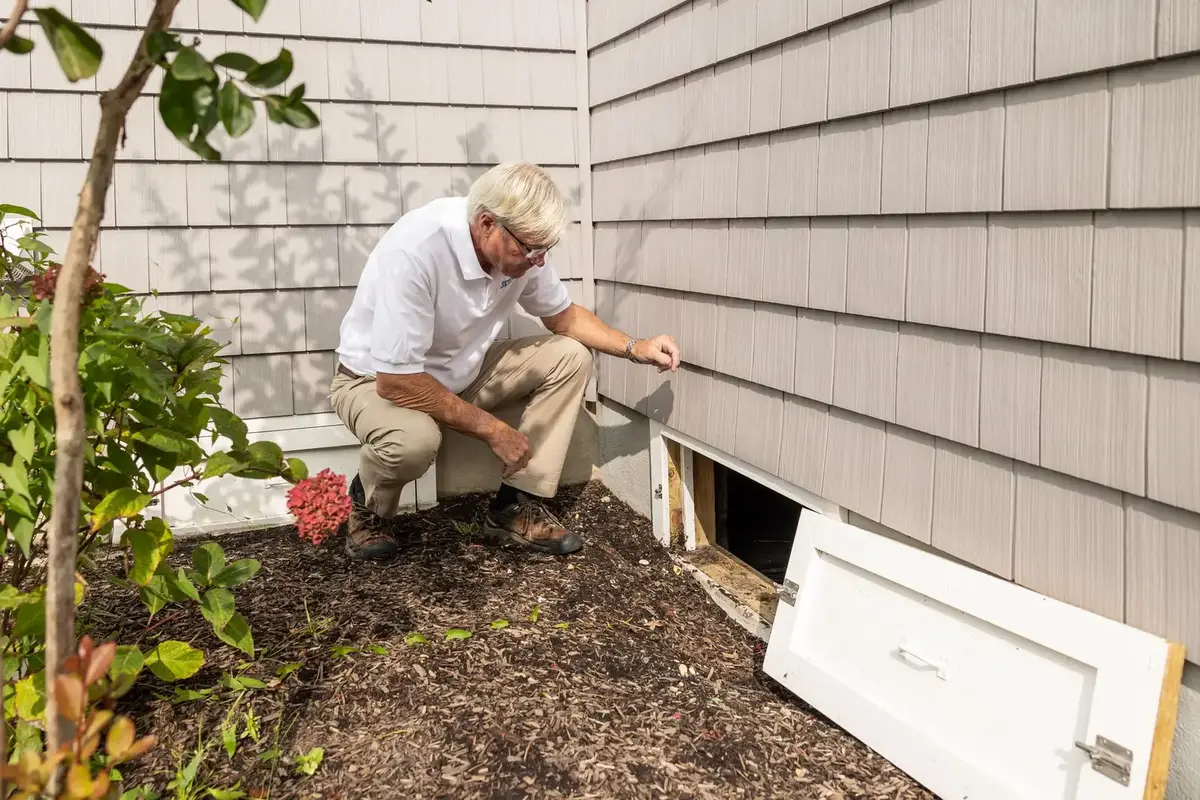
Defensible space. The first five feet non-combustible, and reduced fuel within thirty feet. Photographs of a bark bed against the siding are the classic finding.
Trees in contact with the structure. Branches against the siding or the roof, and roots heaving a walkway or a slab.
What an inspection letter is really saying
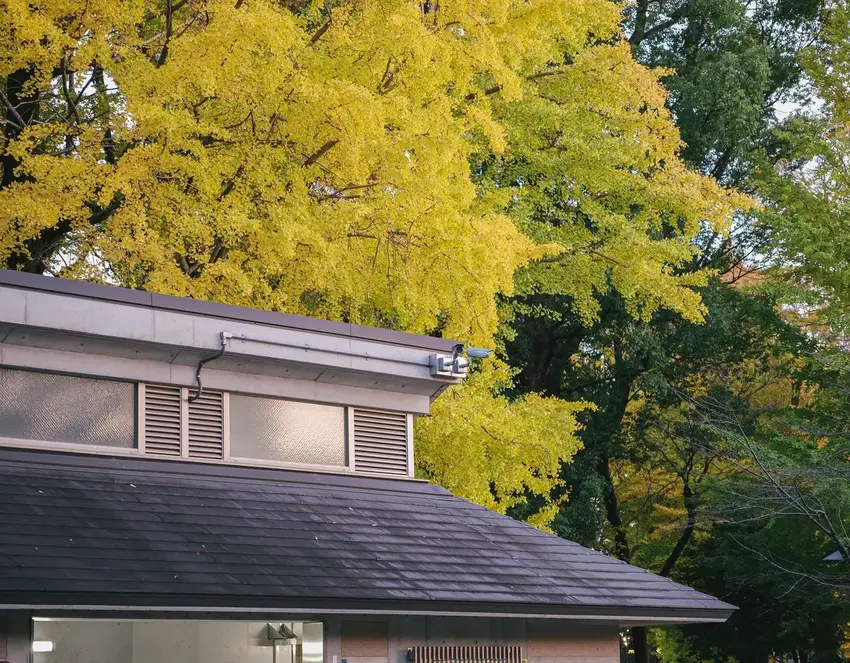
It is a request for evidence that the risk is managed. It is rarely a demand for a specific contractor or a specific cut. A written assessment plus photographs of the completed work usually closes it, and the carrier keeps the file.
If the letter names a condition you disagree with — a tree the inspector called dead that is not — get an arborist’s letter. A short, specific document with photographs beats an argument on the phone.
The documentation that helps at renewal
Keep an annual record: date, what was inspected, what was done, who did it, and before-and-after photographs. It does not need to be elaborate. A folder with five years of invoices and a dozen photographs is more persuasive than any single report, because it shows a pattern rather than a reaction.
Keep the certificates of insurance for anyone who worked on the property. If a contractor damages a roof or a fence and is uninsured, the claim can follow the homeowner.
The claim conversation
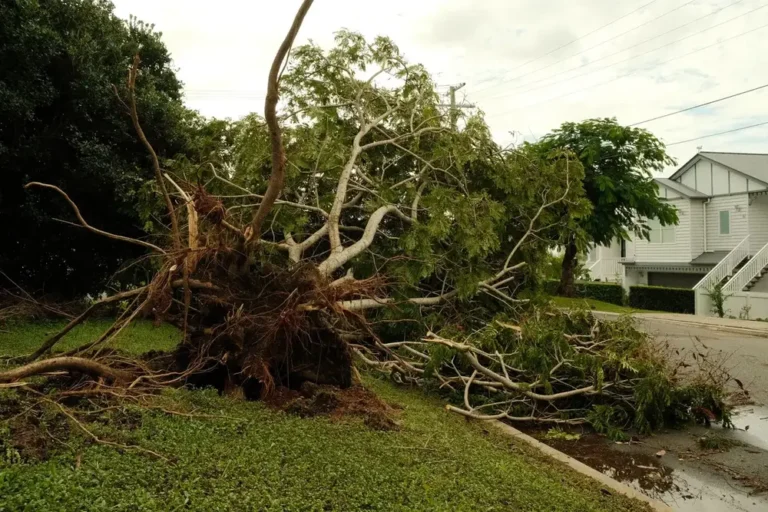
If a tree does come down on the house, the adjuster will ask when it last rained, whether the tree was dead, and whether anyone had looked at it. The answers are easier with a maintenance record and photographs taken before the storm. Policies generally cover a sudden failure onto a structure and exclude neglect; the difference between the two is largely documentary.
Photograph the failure before cleanup, keep the receipts for emergency work, and do not move the wood until the adjuster has seen it if the claim is significant.
The first five feet, on the ground
The zone against the wall is where most findings are written, and it is the cheapest to fix. Within five feet of the siding: no bark, no chip bed, no firewood, no bamboo, no rosemary hedge, no wooden fence panel touching the wall. Gravel, stone, concrete or bare mineral soil. A metal gate is fine; a wooden one is not.
The items people miss are the ones that are not plants: the firewood stack under the deck, the recycling bins against the siding, the wooden planter box, the trellis, the shade cloth draped over the fence. All of them are fuel with a direct path to the structure.
Then the thirty-foot band, which is about reducing continuity rather than clearing it. Separate shrubs so a fire cannot travel crown to crown. Lift the lower limbs of trees to six feet. Remove the dead material, which burns hotter than live growth. Keep the grass mown and the leaf litter off the roof and out of the gutters — a gutter full of pine needles is a wick along the most vulnerable edge of the house.
And keep the receipts. A photograph of the five-foot zone before and after, with the date, answers the letter faster than any description.
One distinction worth checking before the storm rather than after: most policies cover the removal of a tree that has fallen on a structure, and many cap what they will pay to haul the debris away — often a few hundred to a thousand dollars, well under the cost of a large oak.
The difference is not usually in the policy summary; it is in the endorsements. Read the debris line, and if the cap is low, know in advance that the wood is your problem.
None of this is a reason to cut a healthy tree. It is a reason to keep a file, clear the roof, and take the five feet by the wall seriously. The insurer is asking a simple question, and the answer is a folder.