When the Whole Tree Is the Hazard: Assessing Before You Cut
Quick answer: When the Whole Tree Is the Hazard: Assessing Before You Cut — Removing a tree is planning before it is cutting: where the wood lands, what is under it, whether a rope or a crane takes the weight, and what is left when the crew drives away. A removal is finished when the drop zone is clear and the stump is dealt with, not when the trunk hits the ground.
Field note. What we see here is that access decides the price more than height does: a pine over a fence on a slope with no driveway costs more to take down safely than a taller tree with a clear drop, and the plan is where that shows up.
On the other hand, removal is not the only safe answer — a tree with one failing limb, or a lean that can be corrected by reduction, is often better kept and managed than gone.
A tree that has already started to fail is the most dangerous object on the property, and the instinct to deal with it immediately is the thing that hurts people. The tree has told you it is unstable. Cutting it is the moment when the remaining stability is removed.
The five-minute assessment
The target. What is under it, and can it be moved? A car, a patio set, a dog run — anything movable changes the urgency. A bedroom does not.
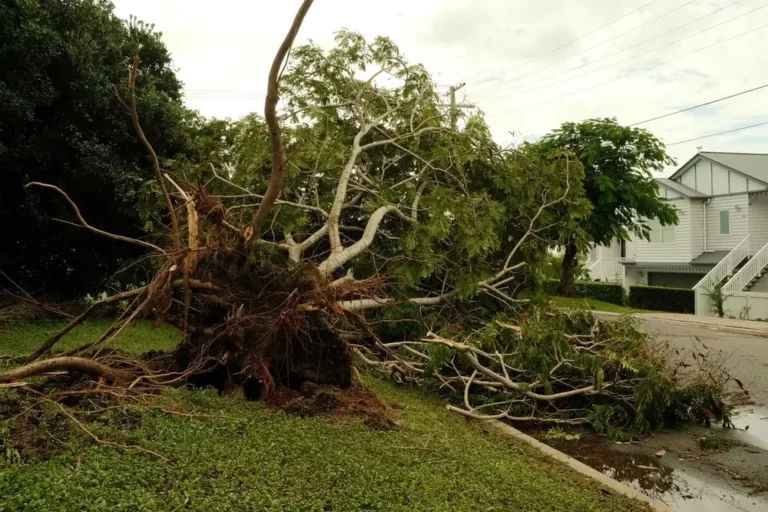
The lean. Has it changed since the storm, or has it been there for years? A new lean with a soil crescent is a root-plate failure in progress.
The base. Sounding the trunk with a mallet, looking for a conk, checking whether the root flare is intact. If the base is compromised, the tree cannot be climbed.
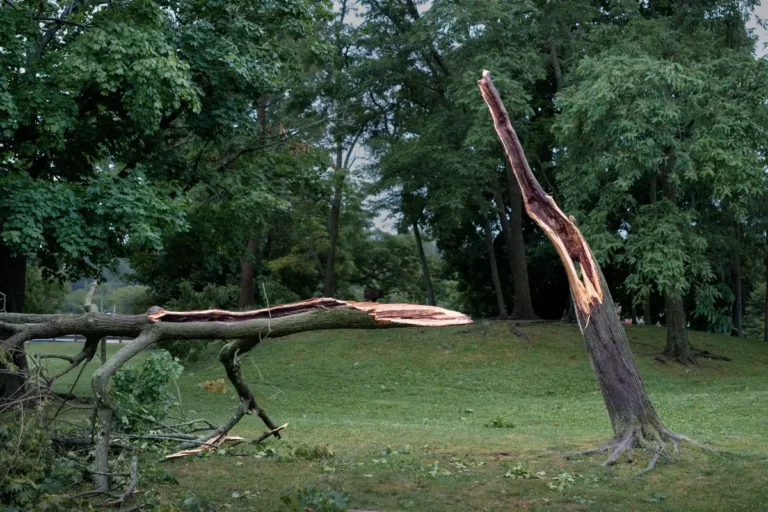
The load. Is the tree hung up on another tree, on a roof, on a fence? A tree under tension stores energy, and the cut that releases it can throw the trunk.
The escape route. Two, at right angles to the expected fall line, cleared before the saw starts.
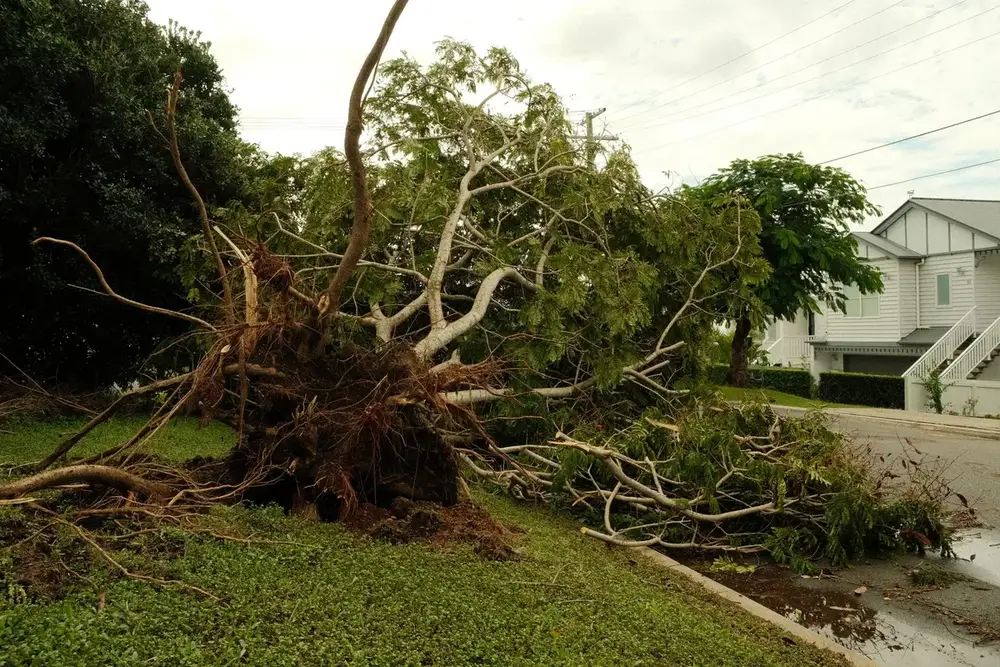
The trees that should not be cut today
A tree resting on a power line. A tree with a root plate lifted on a slope above a structure. A tree hung up in another tree with the butt off the ground. A tree whose base is hollow and whose crown is still heavy. In each case the correct action is to cordon the area, call the utility or a crane-equipped crew, and wait. The tree has been there for a week; it will be there for another day.
The exception is fire or a gas leak, where the risk of waiting is higher than the risk of cutting. Those are calls for the fire service, not for a homeowner with a saw.
Tension and compression, in plain terms
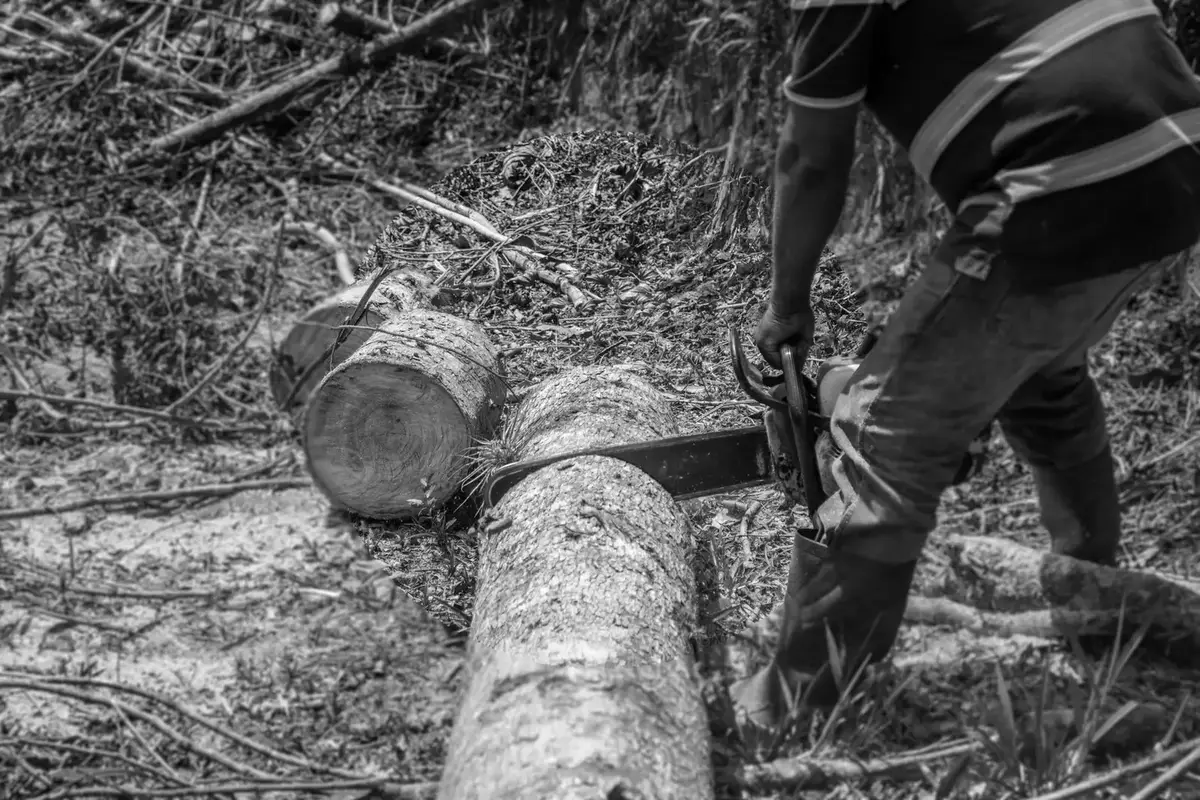
A leaning or hung-up tree has wood in tension on one side and compression on the other. Cut from the wrong side and the saw binds; cut the compression wood first and the trunk can split or kick. The rule for a professional is a sequence of cuts that releases the tension gradually, often with a rope holding the piece. For a homeowner, the rule is simpler: do not cut a tree that is under load.
What to do while you wait
Cordon the area with something visible. Photograph the tree from two angles for the insurer. Move what can be moved. Call the utility if any conductor is involved, and the county if a road is blocked. Do not stand under it to look up, and do not send anyone up it.
Then call a crew that has done this before and ask one question: “Is this a climb, a crane, or a wait?” The answer tells you what kind of company you are talking to.
After it is down
The tree on the ground is not the end of the risk. Limbs under tension can release when a supporting branch is cut, root plates can roll, and a trunk that looks stable can pivot on a hinge of torn wood. The cleanup is a second operation and it deserves the same assessment as the first.
Work from the outside in and from the top down. Clear the small material first so you have a place to stand and a route to leave. Never cut a limb that something else is resting on until you know which way it will move. Never put a saw into a piece that is under load from the ground; that is what a rope and a second person are for.
Then the paperwork, while it is still fresh. Photograph the failure in place, the damage to the structure, and the stump or root plate. Note the date and the weather. Call the insurer before the wood is moved if the claim is significant, because an adjuster who can see the tree can judge the cause, and one who sees a tidy lawn has to take your word for it.
Decide about the wood early. A big oak is worth milling if it is sound and accessible; most storm wood is firewood at best and a disposal cost at worst. Leaving it stacked against the house for a year is how a beetle problem starts.
One last thing about the site afterwards. A root plate that lifted leaves a hole and a loosened slope. Fill it, but do not compact it, and do not replant the same species in the same spot in the same year. The soil needs a season, and the replacement needs a place where the wind does not funnel through the gap the old tree left.
The uncomfortable truth: most emergency tree injuries happen to people who were trying to help. The tree is not going anywhere in the next hour. Treat the hour as assessment, not action.