Inspecting a Tree Older Than the House
Quick answer: Inspecting a Tree Older Than the House — Trees on this coast live with fog, salt, wind and thin soil, and the work that keeps them healthy is decided by those conditions rather than by a calendar written inland. Structure, clearance and the root zone are what a tree here needs looked at, and small work done early is what keeps a tree out of the emergency list.
Field note. What we see on this coast is that the trees people worry about are usually not the ones in trouble: the pine with a clean crown and a lean that predates the house is often sounder than the tidy tree that has been quietly drowning in its own root zone.
On the other hand, there is no schedule that suits every tree — the same species on two sides of one street can need opposite care, which is why we look before we recommend.
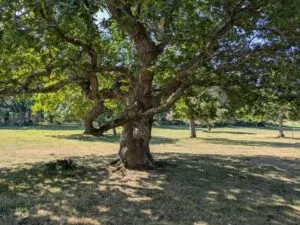
A hundred-year-old oak is not a big young oak. It has a different ratio of living wood to dead wood, a root system that has been damaged and repaired many times, and a centre that may be hollow. Judging it by the standards applied to a thirty-year-old tree is how people remove trees that would have stood another century — or keep ones that will not.
Start with the base, always
On a mature tree most of the risk is within three feet of the ground. Look for a conk at the root flare, a hollow that reaches below grade, a soil mound on one side, and a lean that has changed. Measure the trunk diameter and photograph the flare with a scale. If you can push a screwdriver into the flare, the wood is not sound.
The hollow question, with a number
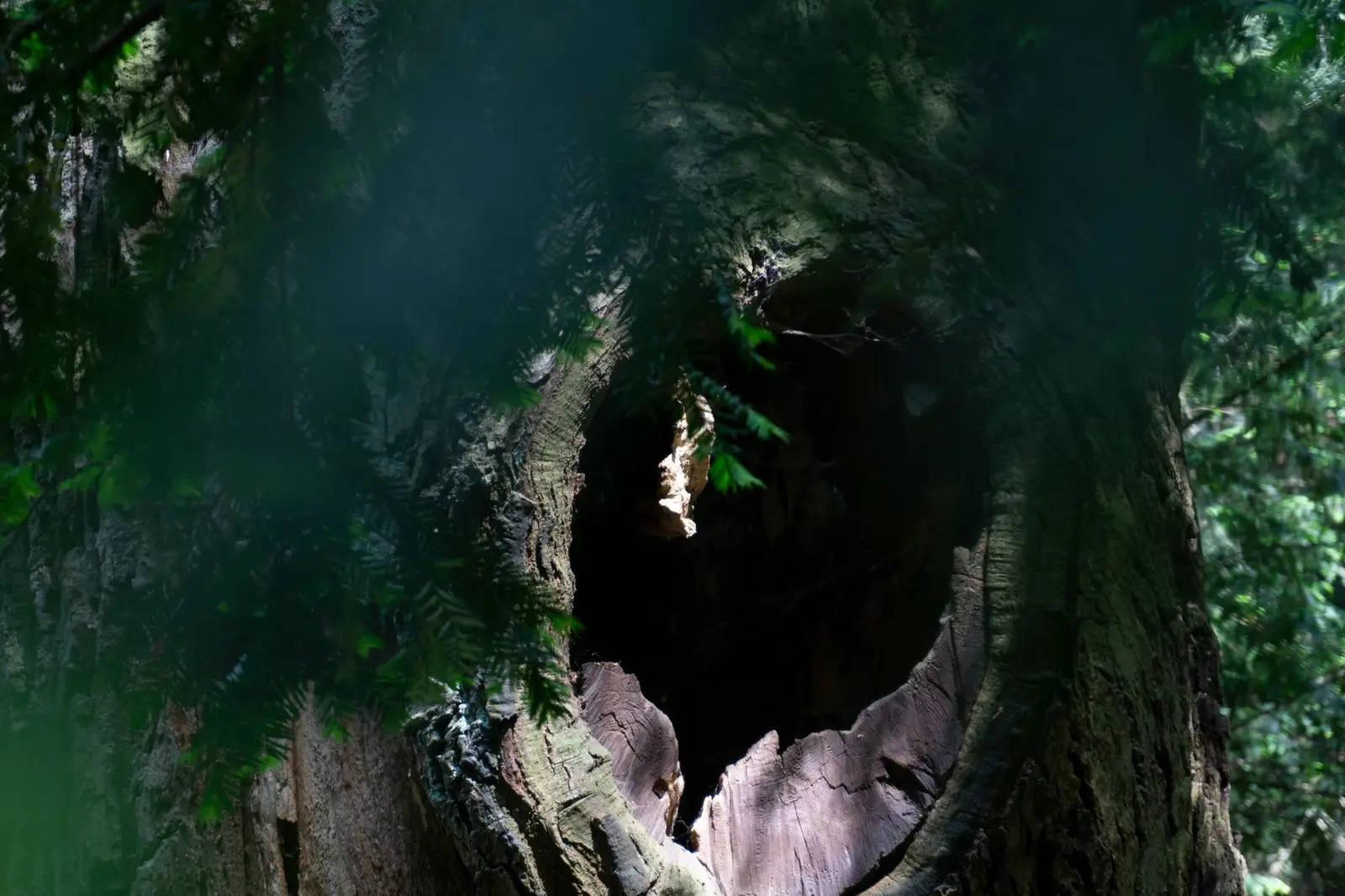
A hollow centre is normal in an old oak and not automatically a defect. What matters is the thickness of the sound wall relative to the radius. When the wall is thick, the tree is a pipe and pipes carry load. When the wall thins, capacity falls quickly. An arborist can measure it with a resistograph or a tomograph; the answer is a ratio, not a yes or no.
The other half of the equation is the target. The same hollow tree over a meadow and over a bedroom are different risks. Move the picnic table before you remove the tree.
Root loss is the slow killer
An old tree near a house has usually had its roots cut by a trench, buried by fill, or compacted by a driveway. The decline shows up years later as a thinning crown and dead tips. The critical root zone is roughly one foot of radius per inch of trunk diameter; a thirty-inch oak has a thirty-foot radius, and most of the damage inside it happened long before anyone noticed.
What a real inspection includes
A walk of the whole root zone, a sounding of the trunk and major limbs, a measurement of the flare, a look at the unions, a check for included bark, and a written note of the target. It takes an hour and it produces a document, not an opinion. If someone tells you a tree is safe from the driveway, they have not inspected it.
Old trees are worth the trouble. They cannot be replaced in a human lifetime, and most of them are lost to a decision made in ten minutes by someone who did not measure anything.