Dyed Mulch and Heat: The Colour Question
Quick answer: Dyed Mulch and Heat: The Colour Question — A stump is the part of the problem that is still in the ground: it holds the roots that lift pavement, keeps a species alive if it re-sprouts, and occupies the spot where the next planting goes. Grinding removes it below the surface so the ground can be worked again, and the roots that matter are the ones under the driveway rather than the ones beside the trunk.
Field note. On this coast the stump is rarely the end of the job: Monterey pine and eucalyptus both keep enough energy in the roots to push new growth, so we are looking at the species before we quote the grind rather than after.
On the other hand, a stump left in a garden bed is sometimes the better answer — it decays, feeds the soil and costs nothing — so grinding is a choice, not a rule.
Mulch is sold in black, red, brown and natural, and the colour is the first thing anyone notices. It is also the last thing that matters to the soil. What matters is what the colour is made of, and how much heat the surface absorbs.
What the dye is
Most coloured mulch uses iron-oxide or carbon-based pigments. Iron oxide is essentially rust and is not a concern in a landscape bed. Carbon black is inert. The pigments themselves are not the problem.
The feedstock may be. Some inexpensive coloured mulch is made from recycled pallets and construction wood, which can include treated material. The dye hides the wood, so you cannot see what you bought. If the bag does not name the feedstock, treat that as information.
The heat effect
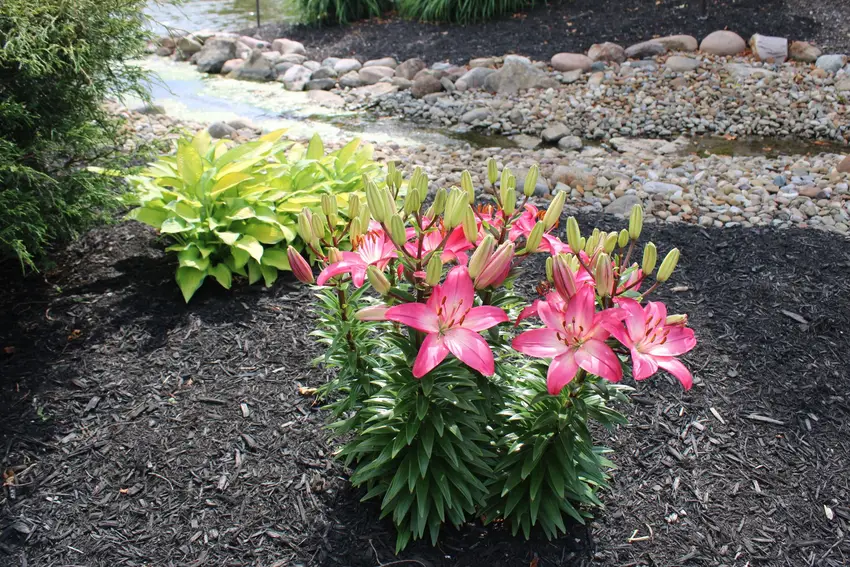
Dark surfaces absorb more solar radiation. On a sunny afternoon a black mulch bed can run several degrees warmer at the surface than a natural bark bed next to it. In a coastal garden that is usually harmless. Around shallow-rooted plants, young trees and anything planted against a south-facing wall, it is not: the root zone gets pushed toward the top of its tolerance in exactly the season when water is scarcest.
The effect is smaller than the difference between mulched and bare ground, so this is not an argument against dark mulch. It is an argument against using black mulch as a design statement in the hottest, driest corner of the property.
Fading, and what it tells you
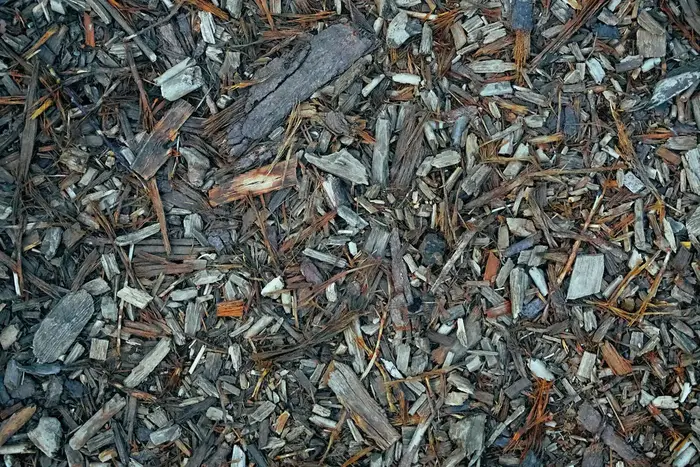
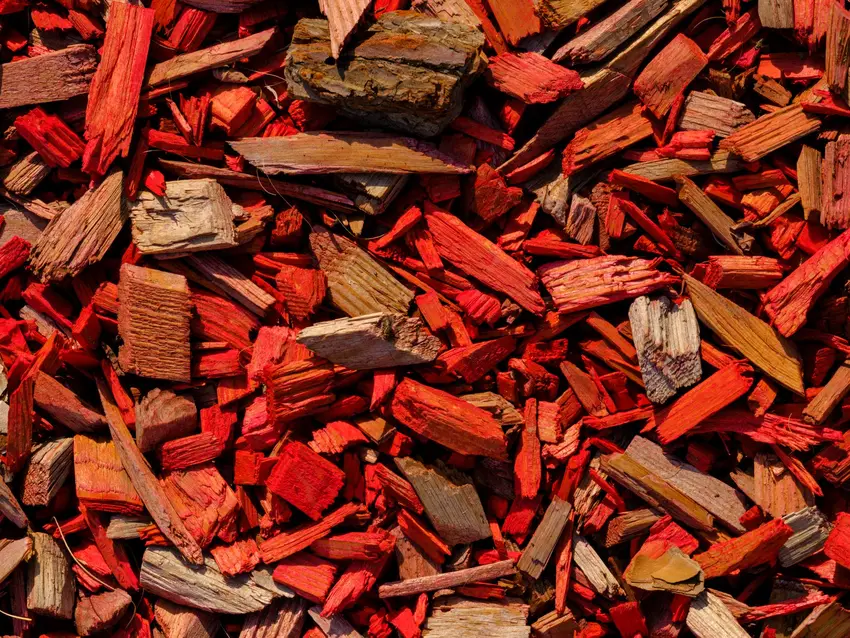
Red mulch fades to pink-brown within a season or two on this coast, and the faded material looks worse than natural bark would have. Brown dyes last longer. Natural bark silvers and then disappears into the bed, which is the outcome most gardens actually want.
If the colour is the reason for the purchase, buy the smallest quantity that solves the design problem and use natural material everywhere the colour will not be seen.
The rules that matter more than colour
Three inches, not six. Off the trunk by a hand’s width. Out to the drip line, not in a collar. Kept away from the siding and the deck. Wet it down after spreading so it does not blow or shed. Those five rules do more for the tree than any pigment.
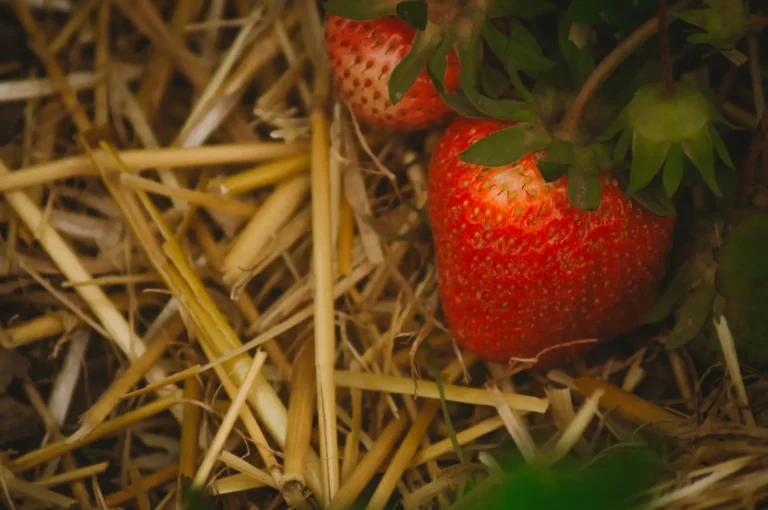
And in a vegetable bed, use compost or straw rather than dyed bark. Whatever is in the wood ends up in the soil you are growing food in.
The stain problem
Dyed mulch bleeds. The first hard rain moves pigment onto pale paving, concrete edging and pool surrounds, and on porous stone the stain can outlast the mulch itself. If the bed borders a light-coloured drive, either keep a gravel strip between the two or choose natural bark.
It also marks pets and shoes, which sounds trivial until a client mentions it. The dye is not hazardous; it is simply persistent, and persistence is the whole reason to think about placement before the delivery rather than after.
The honest summary: colour is a surface decision with a small heat cost and a short lifespan. Buy it for the photograph if you like, but buy the material for the soil.