Where the Water Goes: Mulch, Infiltration and the Dry September
Quick answer: Mulch and Moisture: Where the Water Actually Goes — A stump is the part of the problem that is still in the ground: it holds the roots that lift pavement, keeps a species alive if it re-sprouts, and occupies the spot where the next planting goes. Grinding removes it below the surface so the ground can be worked again, and the roots that matter are the ones under the driveway rather than the ones beside the trunk.
Field note. On this coast the stump is rarely the end of the job: Monterey pine and eucalyptus both keep enough energy in the roots to push new growth, so we are looking at the species before we quote the grind rather than after.
On the other hand, a stump left in a garden bed is sometimes the better answer — it decays, feeds the soil and costs nothing — so grinding is a choice, not a rule.
Mulch is sold on moisture retention, and the claim is real but conditional. A layer of organic material reduces evaporation from the soil surface. It can also, if it has dried through, become hard to wet and shed water sideways — which is why some mulched beds are drier than bare ones.
The two mechanisms
Evaporation. Bare soil loses water to the air from the top few inches. A three-inch layer interrupts that, and the difference is largest exactly when it matters: hot, windy afternoons in September and October.
Infiltration. Mulch slows the velocity of water at the surface, gives it time to enter, and protects the soil from the crusting that follows a hard rain on bare ground. On a slope this is the bigger effect, because water that crosses the surface has left the root zone entirely.
The hydrophobic problem
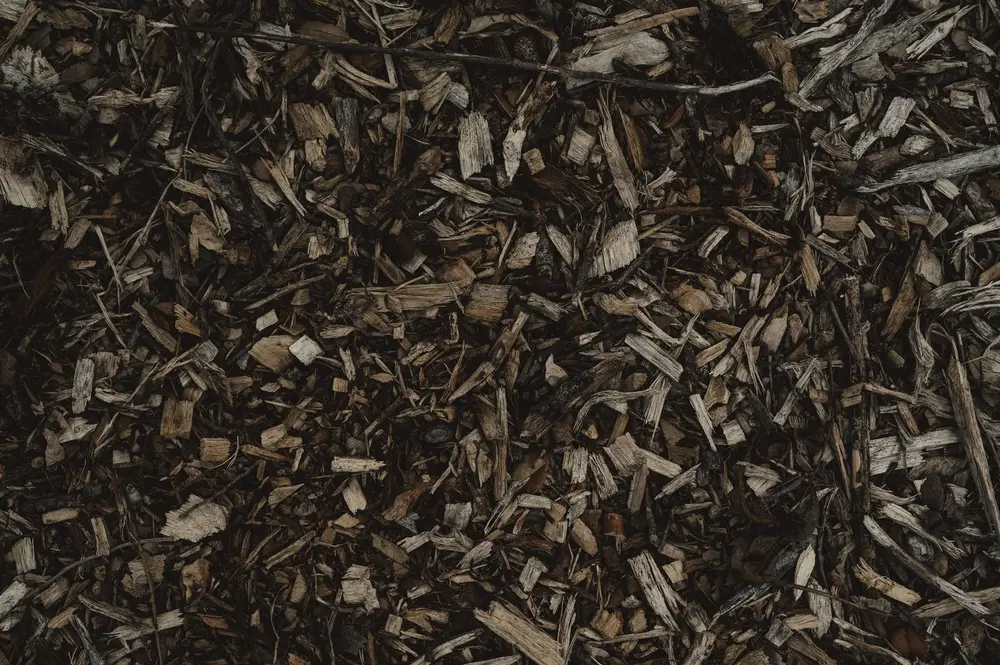
Some organic materials become water-repellent as they dry. Fresh bark, certain composts and eucalyptus chips are the usual suspects. The water beads and runs to the edge. The plant underneath is in a drought inside a mulch ring, and the owner concludes the tree needs more water.
The test is a hose and thirty seconds. Put water on the surface and watch. If it pools and runs, wet the layer slowly in two or three passes until it stops shedding, then water the soil beneath. Once wet, the material usually behaves.
How to measure it instead of guessing
Set a tuna can under the hose or sprinkler and time how long it takes to fill one inch. That is your inch, in minutes, for that emitter. Then water and check the soil a foot down with a screwdriver. If it slides in, you are done; if it stops, the water never reached the roots regardless of what the surface looks like.
Two passes of half an inch, an hour apart, put more water into a sandy soil than one pass of an inch. On this coast, with sandy loam over a shallow water table, most of a single long pass runs past the roots.
The counter-intuitive part
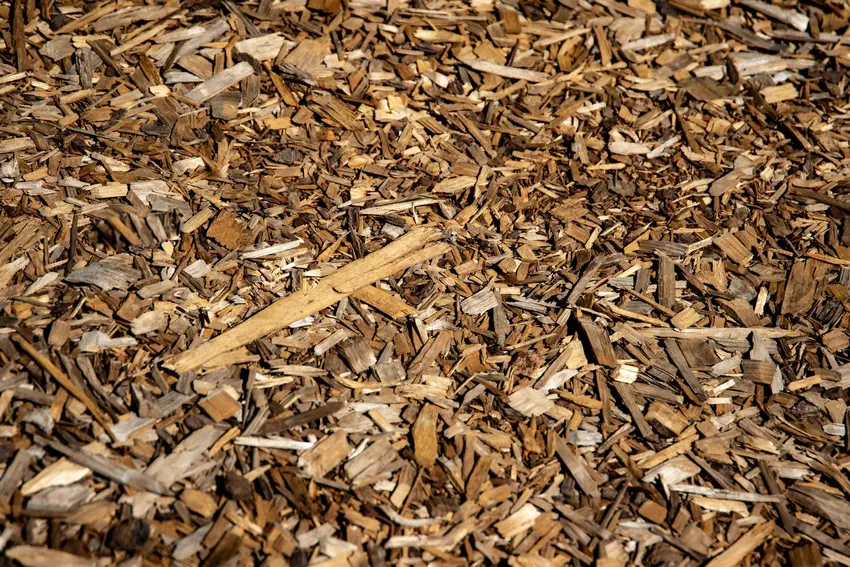
Mulch over bone-dry soil can keep it bone-dry, because the layer intercepts light rain and the soil below never gets wet. If a bed has gone hydrophobic, remove a small patch, soak the soil directly, and put the mulch back. Then keep the layer topped up so it does not dry through again.
Mulch is a tool for keeping water in, not for putting it in. The two jobs are different and the confusion costs trees every autumn.
Three mistakes that undo it
Mulching over dry soil and walking away. The layer insulates the dryness in. Wet the ground first, then mulch.
Spreading it thin to save material. An inch dries through in a week and stops behaving like a mulch at all. Three inches over a smaller area beats one inch over the whole bed.
Watering the trunk. The hose at the base keeps the flare wet and misses the roots that absorb. Move the water out to the drip line, where the mulch is doing its work.