How Much Mulch: The Coverage Arithmetic Nobody Does
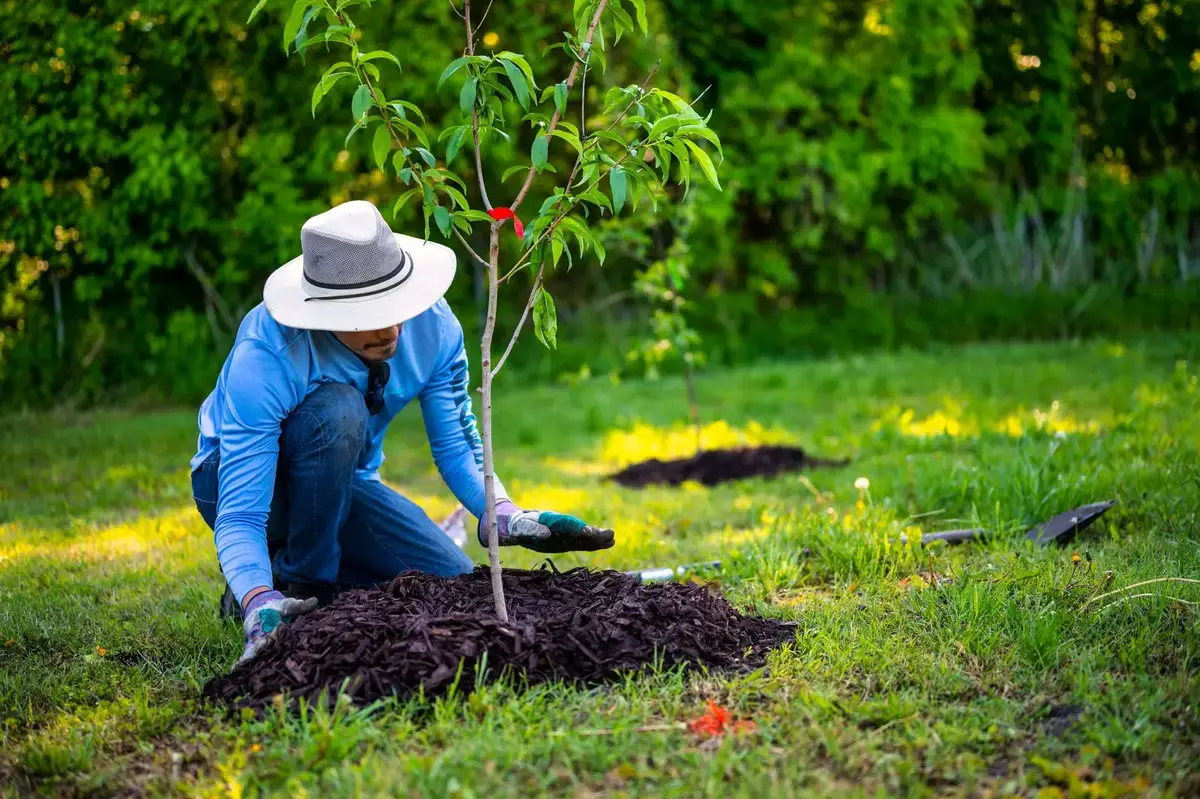
Quick answer: How Much Mulch: The Coverage Arithmetic Nobody Does — Mulch is the cheapest thing that happens to a tree: a flat layer over the root zone holds moisture through the dry season, keeps the soil temperature steady and feeds the soil life the tree depends on. Almost every mulch problem is a depth problem or a contact problem — too thick, or piled against the trunk where the bark has to stay dry.
Field note. What we see most on this coast is not too little mulch but too much, in the wrong place: the volcano against the trunk that keeps the bark wet through the fog season and invites rot where the tree cannot show it until the canopy thins.
On the other hand, a thin ring of the wrong material is worse than none at all — matted, water-repellent mulch sheds the rain it was meant to store.
The instruction is always the same: three inches, out to the drip line, keep it off the trunk. It is correct and it is useless at the point of purchase, because mulch is sold in cubic yards and bags, and the gap between a tree and a number is where people either under-buy by half or end up with a pile in the driveway for a year.
Here is the arithmetic, once, with the numbers you will actually use.
The coverage constant
One cubic yard spread three inches deep covers about 108 square feet. That is the only constant you need. Two inches deep and it covers 162; four inches and it covers 81. Everything else is area.
A tree with a canopy thirty feet across covers a circle of roughly 700 square feet. At three inches that is 700 divided by 108, or about 6.5 cubic yards. A tree with a fifty-foot spread covers about 1,960 square feet, which is 18 cubic yards. That is not a bag purchase; that is a delivery and probably two.
Bags, and why the math surprises people
A standard bag is two cubic feet. There are 27 cubic feet in a yard, so it takes 13.5 bags to equal one cubic yard. The 6.5 yards for that thirty-foot tree is 88 bags. At the price most garden centres charge, the bag route costs several times the bulk route for the same material, and it arrives in a stack of plastic.
Bulk is sold by the yard with a delivery minimum, usually three to five yards. If your total is under that, split a load with a neighbour or buy bags for the difference — but do the sum first, because the minimum is often cheaper than the bags it replaces.
The ring versus the bed
A ring around a trunk is easy to calculate and usually the wrong shape. Roots extend well past the canopy, and a narrow ring feeds only the least important part of the root system. Where the planting allows it, mulch the whole bed between trees rather than a collar around each one: the area is what you are buying, so spend it where the roots are.
If you must choose, extend the ring outward rather than making it deeper. Four inches in a narrow ring does less than three inches over twice the area, and the deeper version is the one that suffocates the flare.
Weight, delivery and where the pile goes
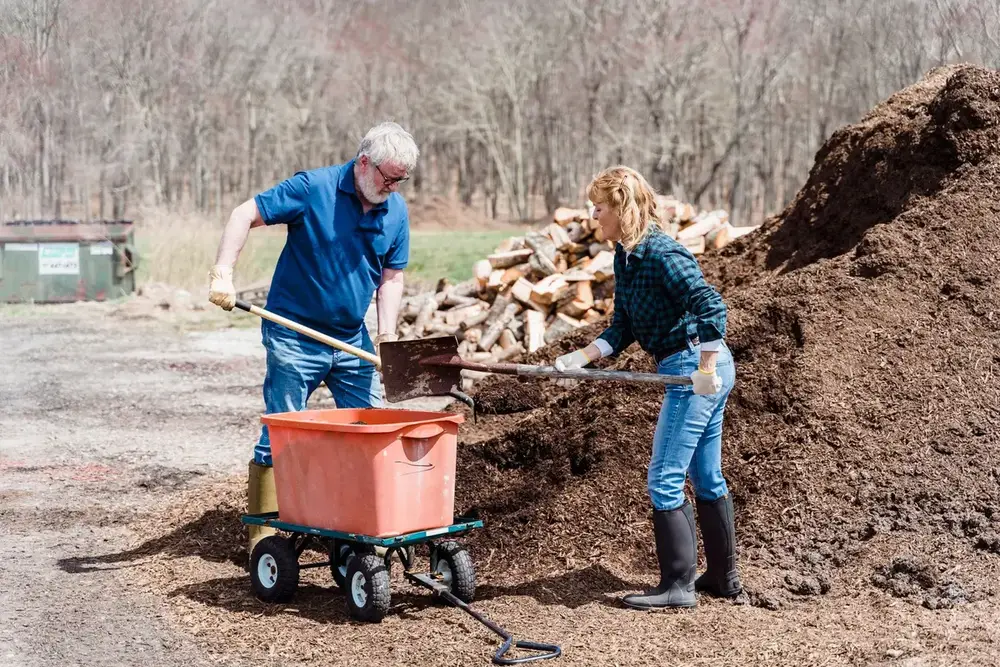
A cubic yard of bark mulch weighs roughly 800 pounds dry and closer to 1,000 wet. Six and a half yards is therefore four to six tons, which is a delivery truck, not a trailer. Ask where the driver will drop it: a pile on the driveway blocks the car for a month, and a pile on the lawn kills the grass underneath it. A tarp under the pile saves the paving.
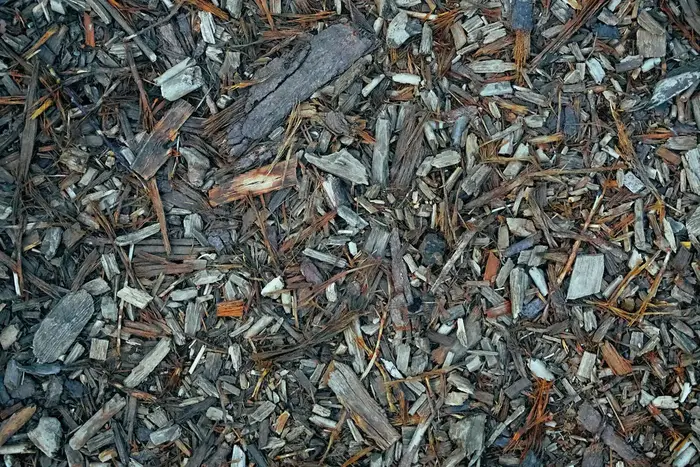
Also ask what the material is. Bulk “mulch” can be bark, wood waste, composted green material or a blend, and the difference matters more than the price per yard. If the answer is vague, buy from someone who can name it.
The short version: measure the canopy radius, square it, multiply by 3.14, divide by 108, and round up. That number, not a bag count, is what the job needs.