The Stump You Leave Behind Is a Ten-Year Decision
Quick answer: The Stump You Leave Behind Is a Ten-Year Decision — A stump is the part of the problem that is still in the ground: it holds the roots that lift pavement, keeps a species alive if it re-sprouts, and occupies the spot where the next planting goes. Grinding removes it below the surface so the ground can be worked again, and the roots that matter are the ones under the driveway rather than the ones beside the trunk.
Field note. On this coast the stump is rarely the end of the job: Monterey pine and eucalyptus both keep enough energy in the roots to push new growth, so we are looking at the species before we quote the grind rather than after.
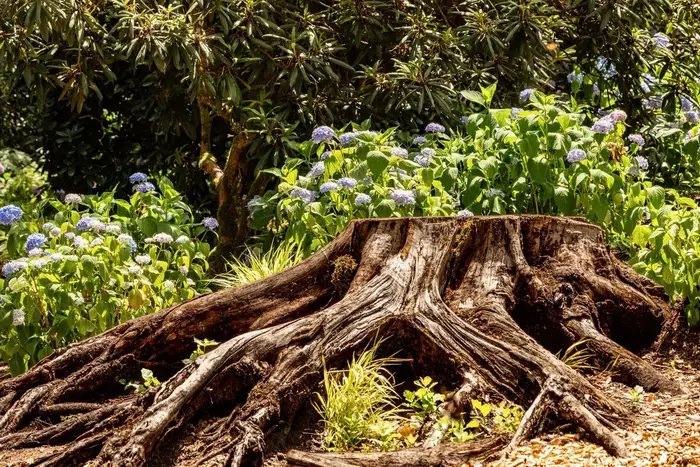
On the other hand, a stump left in a garden bed is sometimes the better answer — it decays, feeds the soil and costs nothing — so grinding is a choice, not a rule.
In a garden, nothing is ever finished. Removing a tree takes a vertical object out of the view and leaves a horizontal one in the ground, and that horizontal object goes on making decisions on your behalf for a decade. I have designed around enough of them to have a firm opinion: grind it, and grind it deeper than the man with the machine suggests.
This is not a maintenance preference. It is arithmetic about what a stump does to the space it occupies.
What a stump does to the ground around it
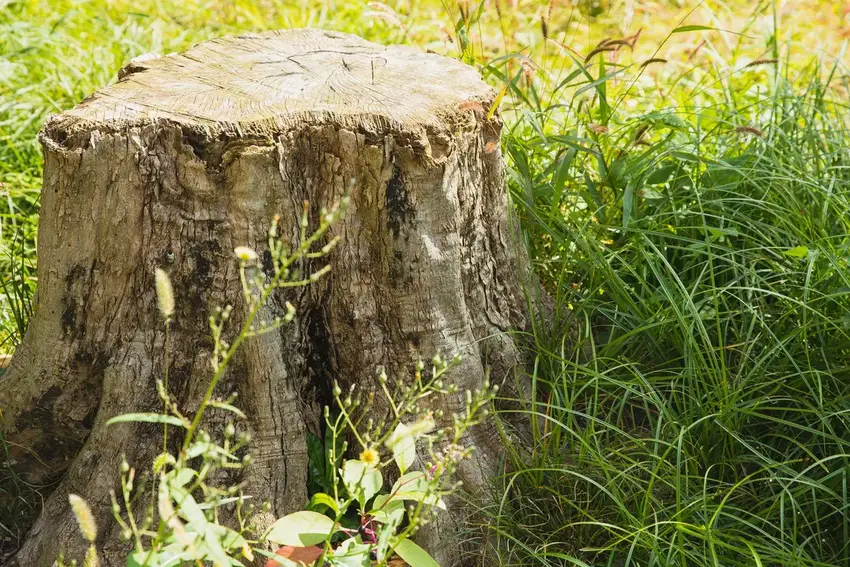
A dead stump is a slow machine for changing soil chemistry. As the wood decays it feeds a fungal community that is entirely appropriate in a forest and frequently inappropriate under a rose bed. Some species are worse than others: the decay column can extend well beyond the visible stump into the root plate, and that column is not where you want to put a new plant’s roots.
There is also the physical problem. A stump is an obstacle in the one layer of soil that matters for planting, which is the top foot or so where most fine roots and most garden decisions live. You can plant around it, but you will be planting around it in every plan you draw for that bed for as long as it is there.
The resprout problem
Many of the trees people remove in Cambria resprout from the cut surface or from roots, and a stump left in place is a nursery for exactly that. You cut it once and get a hedge of shoots; you cut the shoots and get more of them, because you have removed the growth without removing the energy stored in the root system that produced it. Grinding removes the stored energy along with the wood.
How deep is deep enough
The customary grind goes four to six inches below grade, and that is sufficient for one outcome: covering the spot with turf, where a mower will never find it. It is not sufficient for another: planting a tree in that position, because the remaining root mass will continue to decay and settle, and your new tree will sink into a hollow.
If you intend to plant, ask for the grind to go deeper than the standard depth and say why. If you intend to pave or build, the requirement is different again and belongs to whoever is designing the slab.
What grinding does not do
Grinding does not remove the root plate. The stump goes, the flare goes, and the lateral roots that ran under your lawn stay where they are and decay in place. On most properties this is fine and the ground settles over a season or two. On a driveway or a patio it can matter, and the honest answer is that the surface may settle slightly regardless of how the stump was handled.
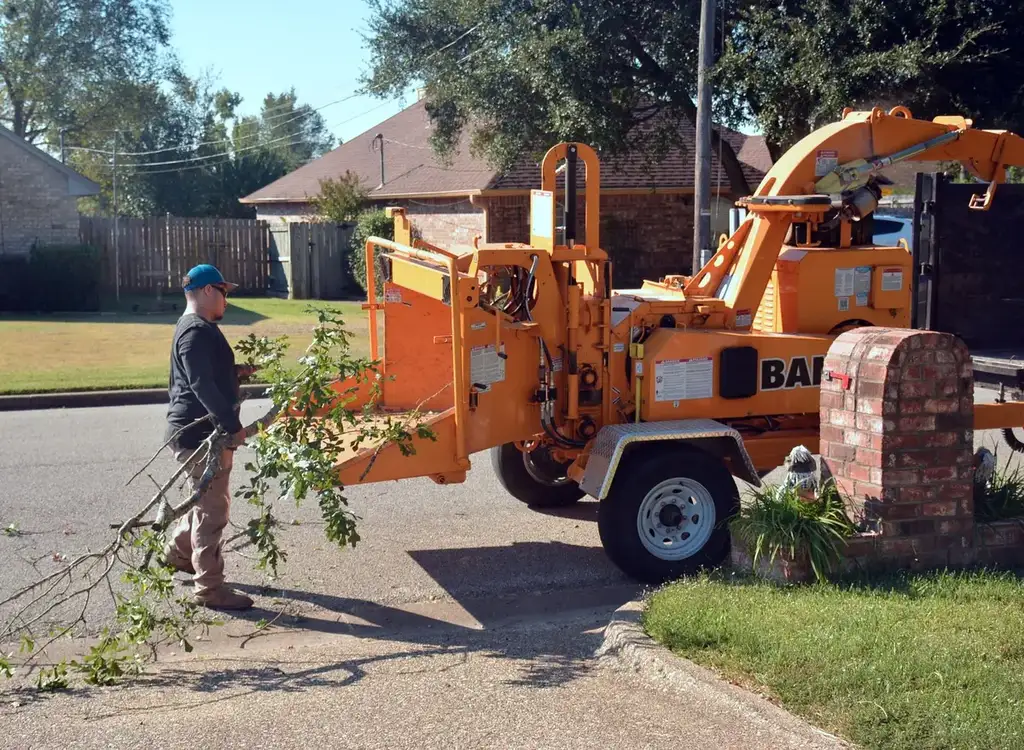
Grinding also produces a volume of chips and soil that has to go somewhere. Chips are useful as surface mulch, not as a planting medium: they are not soil, they tie up nitrogen while they break down, and a hole filled with them is a hole a new plant will struggle in. If the grinder leaves the spoil in the hole, ask for it removed and the hole backfilled with soil.
The design argument
When I draw a bed over a removed tree, the stump is the first thing I resolve, because everything else follows from it. If it stays, the planting must accommodate an obstruction and a fungal column, which means choosing plants that tolerate both and accepting that the bed will be revised in five years when the stump has rotted to a hollow. If it goes, I have a clean volume of soil and one decision instead of three.
Grinding costs a few dollars per inch of diameter. Designing a decade of a garden around a stump costs considerably more, and it is paid in the currency nobody budgets: the small daily friction of a space that never quite works.