The First Hour of a Tree Emergency
Quick answer: The First Hour of a Tree Emergency — Removing a tree is planning before it is cutting: where the wood lands, what is under it, whether a rope or a crane takes the weight, and what is left when the crew drives away. A removal is finished when the drop zone is clear and the stump is dealt with, not when the trunk hits the ground.
Field note. What we see here is that access decides the price more than height does: a pine over a fence on a slope with no driveway costs more to take down safely than a taller tree with a clear drop, and the plan is where that shows up.
On the other hand, removal is not the only safe answer — a tree with one failing limb, or a lean that can be corrected by reduction, is often better kept and managed than gone.
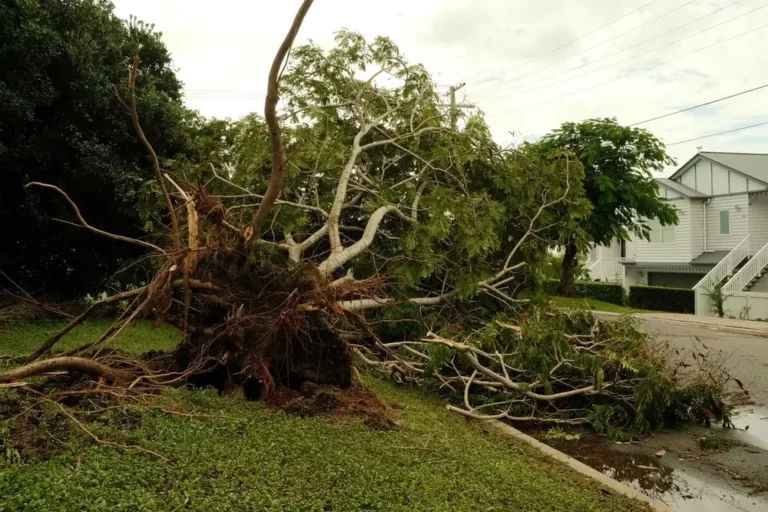
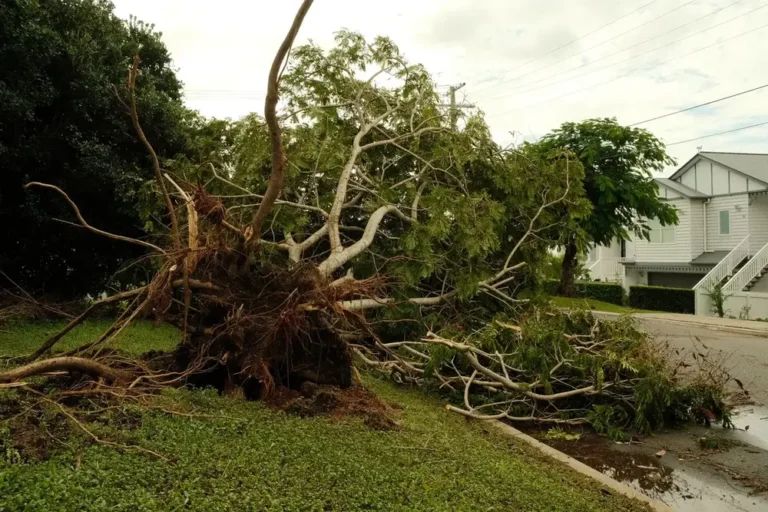
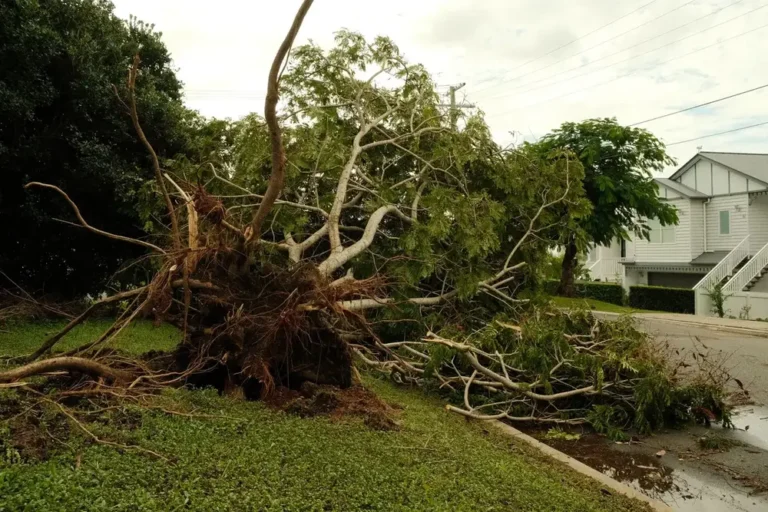
It is ten past midnight and a Monterey pine is lying across the corner of a roof on Lodge Hill. The rain has stopped, which sounds like good news and is not, because the ground is now heavy and the rest of the tree is still standing there deciding what to do. The person on the phone wants to know one thing: who do I call.
The honest answer is that the first hour has an order, and the order is not the one most people follow.
Nobody in that moment needs a lecture. What they need is five steps they can hold in their head while the dog is barking.
- Right now
Get people out of the room under the tree, and out of the house if the roof has moved. Do not go outside to look at it in the dark with a flashlight.
- Next five minutes
If any wire is down or touching the tree, stop. Call 911, then the utility. Nothing else happens until the utility says the line is dead.
- Next fifteen minutes
Photograph everything you can see from a safe distance, including the sky above the tree. This is the record your insurer will ask for first.
- Next thirty minutes
Call your insurer's claims line, not your agent's office. Ask for a claim number before you call any contractor.
- Within the hour
Call a tree service and describe three things: what the tree is touching, whether anyone is hurt, and whether the ground is still moving under it.
The wire is the whole story
Almost every preventable death in a storm like this involves a conductor the homeowner believed was dead. A downed line can be energised by a generator two houses away, and a tree in contact with it can carry current into a fence, a gutter, or a puddle that looks like a shadow. The service drop from the pole to your own meter is usually the utility’s responsibility; the weatherhead and everything past it is usually yours.
You do not need to resolve that distinction at midnight. You need to stay away from all of it and let the utility make the call.
What the tree is still doing
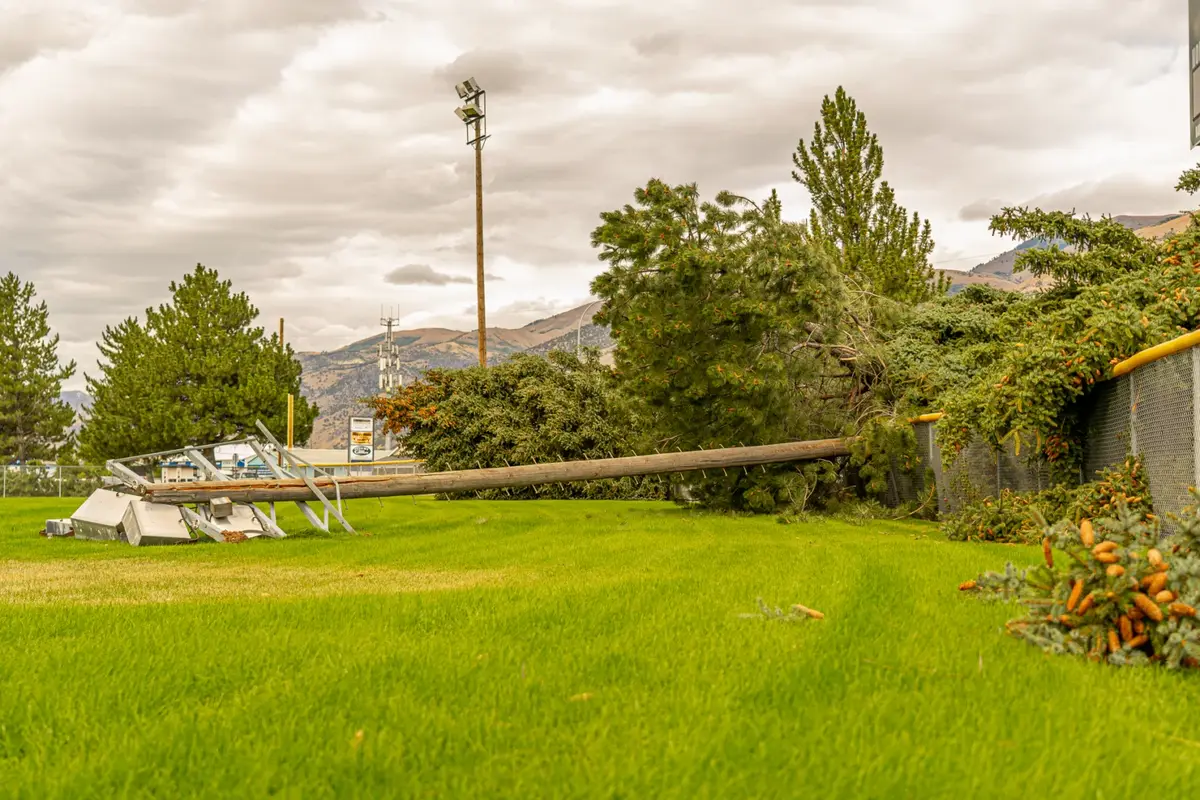
A tree that has already failed is not necessarily finished failing. Roots that tore out of saturated soil leave the remainder of the root plate in a state that engineers call marginal, and the next gust is the test. This is why a crew will often refuse to start until they have looked at the standing portion in daylight, and why a good emergency response sometimes consists of doing very little for six hours.
If the trunk is under tension against a structure, cutting anything is a way of releasing stored energy into the thing you were trying to protect. That is the specific reason emergency removal is not a homeowner task with a chainsaw and a helpful neighbour. The tree has already demonstrated what it does when it moves.
What it will cost, and why
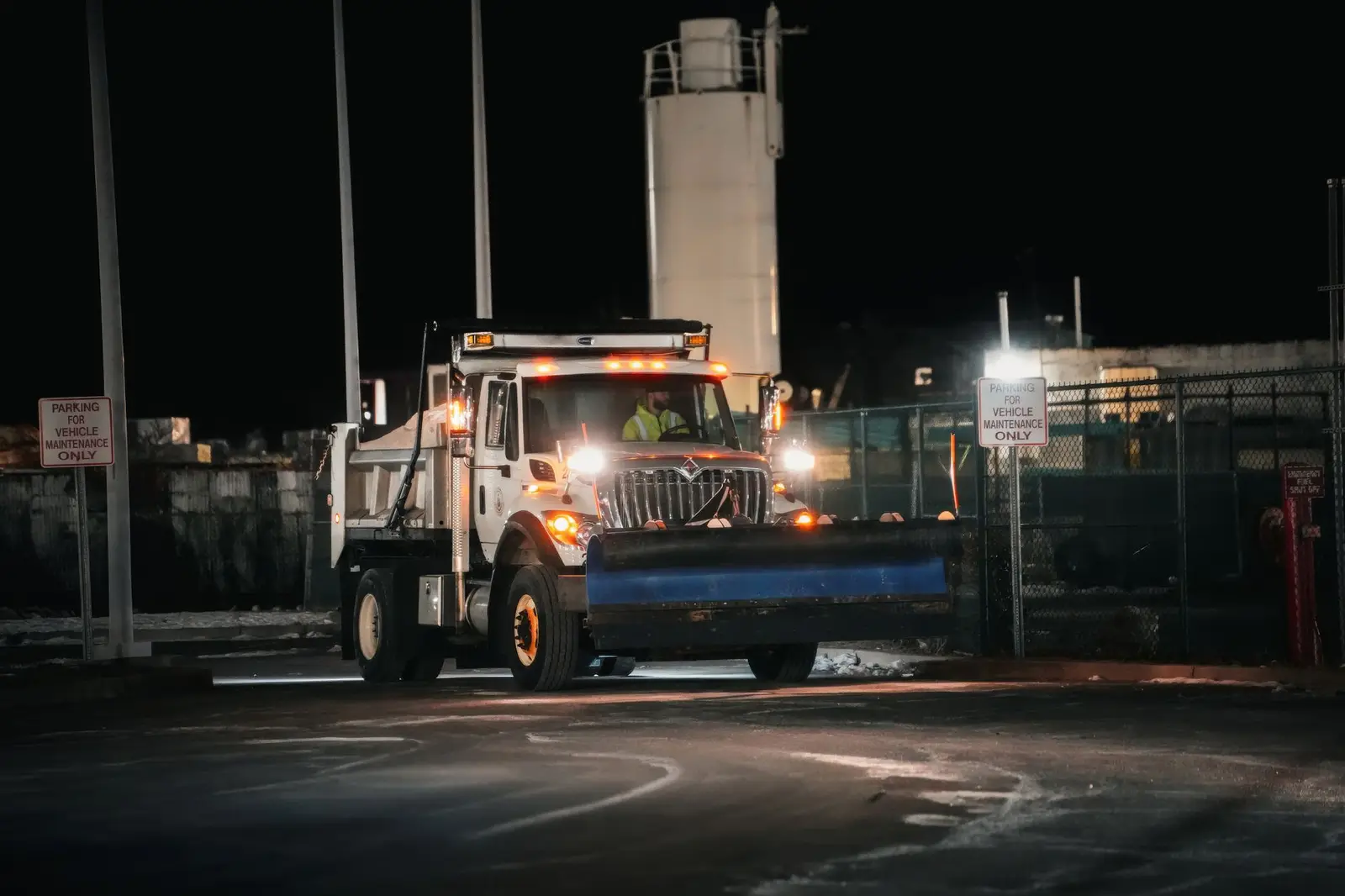
Published guides put same-day or next-day removal at two to three times the standard rate, with emergency removals reported across a broad $450 to $5,000 range. That multiplier is not opportunism. It is a crew pulled off a scheduled job, mobilised in the dark, working under lights on ground that has already proven unstable, with the equipment that was on the truck rather than the equipment they would have chosen.
What you should insist on anyway: a written scope before work begins, even if it is a text message, and confirmation that the company carries liability coverage. An emergency is exactly when paperwork gets skipped and exactly when it matters most.
The morning after
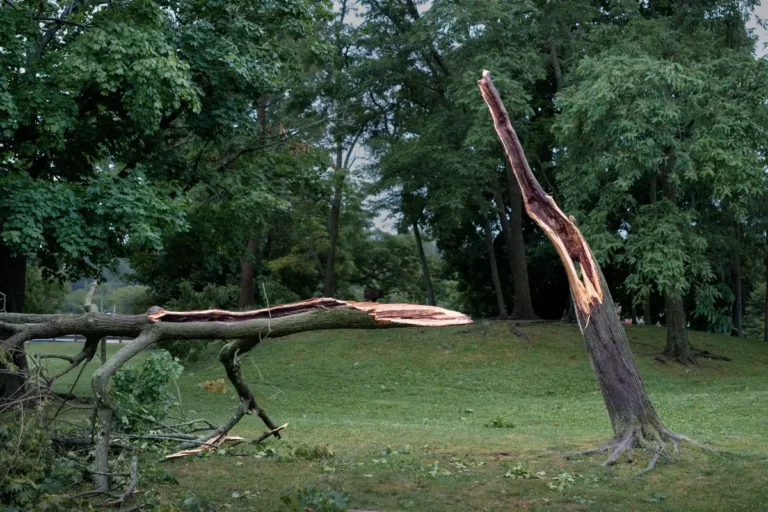
When the light comes back, walk the property before you call anyone else. Look up, not down. A crack running across a limb union, soil heaved into a crescent on the uphill side of a trunk, a lean that was not there last week, fresh sawdust at the base of a tree nobody cut: each of those is a tree telling you it has moved into a different category. Photograph them.
Then call someone who climbs for a living and ask them to look at the standing trees, not only the one that fell. The one that fell is a cleanup. The ones still standing are the actual question.