The Paperwork That Pays a Storm Claim
Quick answer: Storm Damage Insurance Claim: The Paperwork That Pays — Removing a tree is planning before it is cutting: where the wood lands, what is under it, whether a rope or a crane takes the weight, and what is left when the crew drives away. A removal is finished when the drop zone is clear and the stump is dealt with, not when the trunk hits the ground.
Field note. What we see here is that access decides the price more than height does: a pine over a fence on a slope with no driveway costs more to take down safely than a taller tree with a clear drop, and the plan is where that shows up.
On the other hand, removal is not the only safe answer — a tree with one failing limb, or a lean that can be corrected by reduction, is often better kept and managed than gone.
The claim is not decided by the adjuster who visits three days later. It is decided by the file, and the file is made of what somebody photographed in the rain. Every storm on this coast produces the same two homeowners: the one who has thirty pictures, a dated note and a contractor’s written description, and the one who has a memory. The difference between them is under an hour of work, and it is the cheapest insurance there is.
What to do before you touch anything
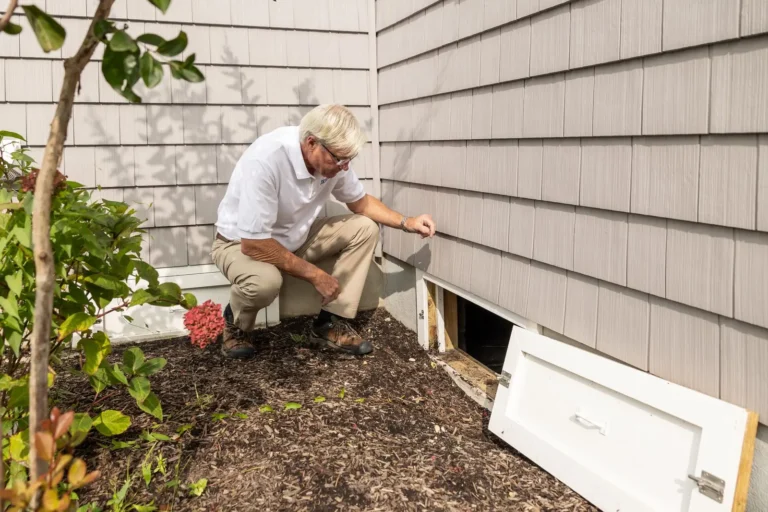
Make the site safe first. People out of the fall zone, nobody near a wire, the utility called if anything is on the line, and no cutting until that is settled. Then, before a single saw starts: photograph wide, photograph close. Wide, so the relationship between the tree, the house and the property line is legible in one frame. Close, so the break itself is readable — the hinge, the root plate if it lifted, the torn union, the wound.
Then photograph the damage the tree did, from two angles, and photograph anything that was already damaged separately, because mixing the two is the fastest way to have the whole claim questioned early.
Write down the date and the time, where the tree stood, and the direction it came from. Note the weather in plain words: which night, how much rain, whether the ground was already saturated. Keep every estimate and every invoice. And photograph the debris at the curb before it is chipped — that is not sentiment, it is the only durable evidence of how much material came off the property.

The two removal lines most policies separate
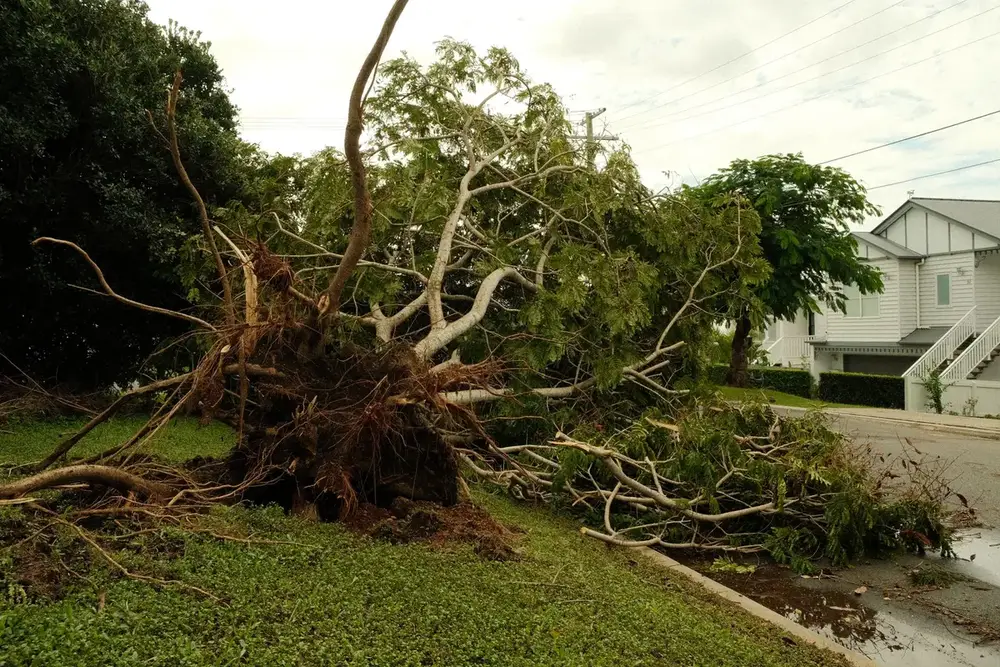
This is the part that surprises people, and it is worth understanding before anybody argues with anybody. In the standard homeowner forms there are usually two different questions. If a tree hits a covered structure — the house, the garage, a fence — the cost of removing the part that struck it is generally part of the claim, often with a cap per tree and a total cap for the event.
If a tree falls in the open and damages nothing it was not supposed to damage, most policies pay nothing for its removal, because a tree falling in an empty yard is not a loss the policy was written to cover.
And a tree that is merely hazardous — leaning, dead, dropping limbs, still standing — is almost never a claim at all. Maintaining the trees on your lot is a homeowner obligation in the same way the roof is: the policy responds to an event, not to a risk. The exception people hope for is the neighbour’s tree, and the usual answer is that where a tree was rooted rarely decides the claim.
The damage happened on your property, so it is your claim, and any conversation with the neighbour happens after you have been paid rather than instead of it.
Your own policy language is the authority on all of it, and the page to read is the one about removal of trees — it is usually a short endorsement, and it is usually the only place the limits appear.
What a contractor can put in the file
We are not adjusters and we do not interpret your policy. What we can do is produce the document an adjuster reads fastest: dated photographs, a written description of what we found, whether the cause was visible, and the sequence of the work.
On this coast the cause is usually legible — a dead pine with beetle galleries under the bark, a root plate lifted out of saturated sand, a union broken with old decay in it — and naming it in plain language is what separates a paid claim from a question mark.
Two habits make that easier. Photograph your trees from the same two or three places once a year, so a tree’s condition before the storm is a document rather than an opinion. And if a tree has already been assessed, keep the written risk assessment.
A dated report that said this tree should come out within thirty days is a hard document to argue with, and it is also why we recommend the assessment rather than the assumption for anything near a structure.
The parts that are your job, not the policy’s
Clearance obligations are the clearest example. Defensible space and vegetation clearance are a homeowner duty here, and their cost is normally not a claimable loss — it is maintenance you either did or did not do.
If you have received a notice from the county, from Cal Fire, or from your own insurer asking for documentation of the work, that is a fire clearance file, and it is far easier to build in the calm months than in the week a notice arrives.
The emergency call and the claim are two different lines, and they run in a fixed order. When a tree is on the roof: people, then the utility if a wire is involved, then make the site safe, then photograph. That first response is our emergency work, not the adjuster’s, and nobody should wait for a claim number to make a house safe.
The claim follows the safety — and the paperwork we hand over when we leave is the same paperwork the claim needs.