Rigging a Leaning Pine Above a Roof: What the Rope Is Actually Holding
Quick answer: Rigging a Leaning Pine Above a Roof: What the Rope Holds — Trees on this coast live with fog, salt, wind and thin soil, and the work that keeps them healthy is decided by those conditions rather than by a calendar written inland. Structure, clearance and the root zone are what a tree here needs looked at, and small work done early is what keeps a tree out of the emergency list.
Field note. What we see on this coast is that the trees people worry about are usually not the ones in trouble: the pine with a clean crown and a lean that predates the house is often sounder than the tidy tree that has been quietly drowning in its own root zone.
On the other hand, there is no schedule that suits every tree — the same species on two sides of one street can need opposite care, which is why we look before we recommend.
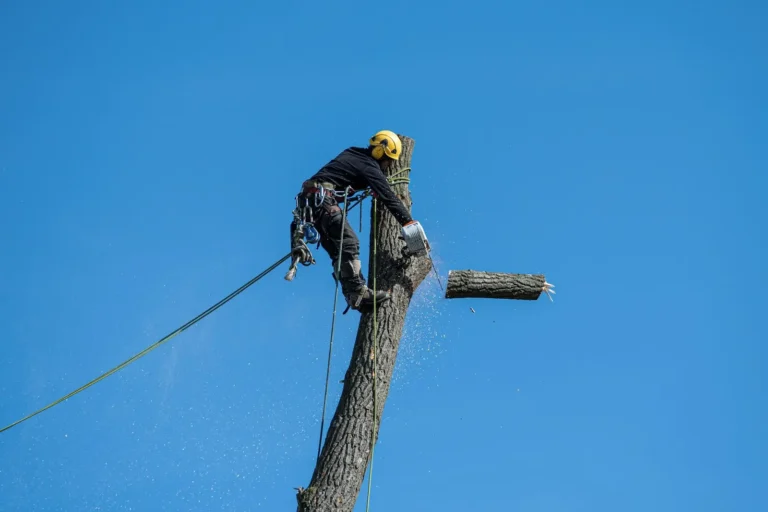
A leaning pine over a roof is not a cutting job that happens to be difficult. It is a rigging job that happens to include cutting. The moment you see it the other way round, the weight ends up somewhere unplanned, and unplanned weight is how roofs and people get hurt.
First, what the rope is holding
The whole craft is answering one question honestly: where does the load go when this piece separates from the tree? In a rigged removal, a section is cut so that it is still held – by the hinge, by a sling, by a lowering line through a block or a friction device – and then it is delivered to the ground under control. The rope does not make the piece weightless. It decides the path.
When I set a rigging point, I am choosing an anchor for a load I can calculate, and choosing where the shock load lands – because a load that swings or drops an inch is suddenly heavier than the piece of wood it is attached to.
The hinge is a decision, not a formality
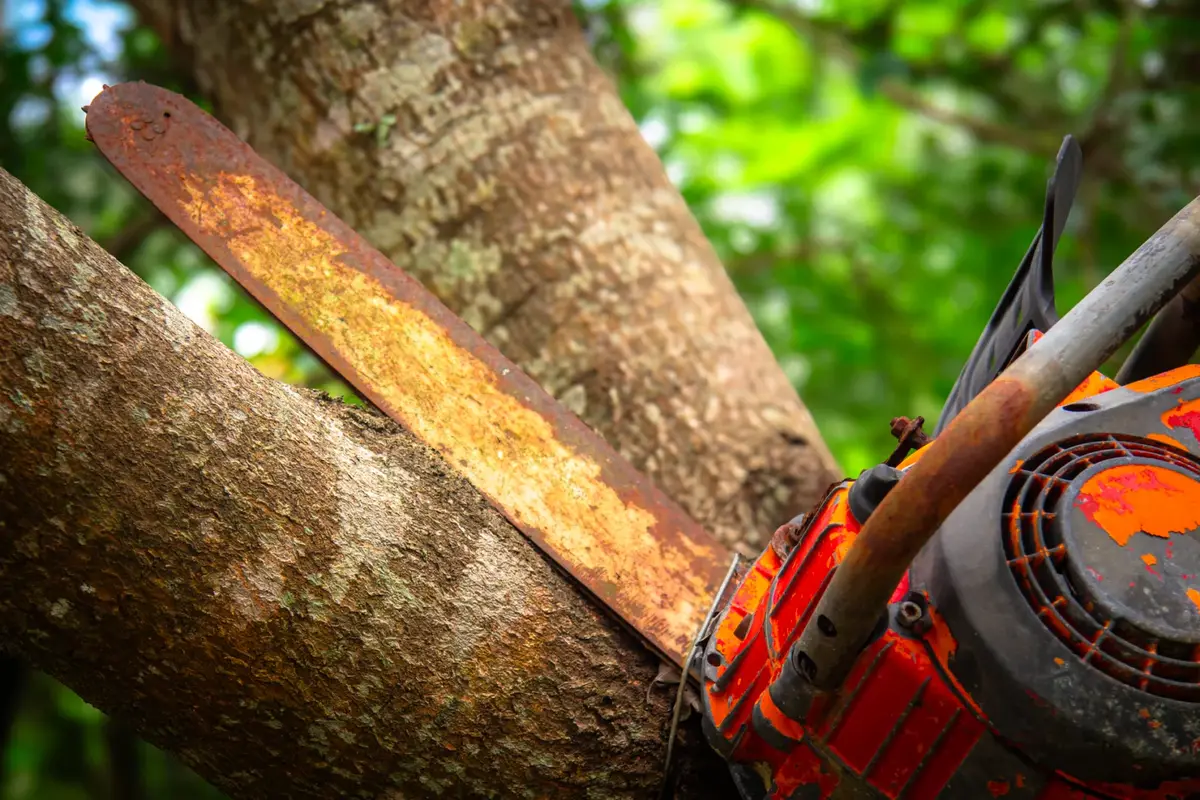
On a leaning tree the hinge behaves differently than on a plumb one, because gravity is already committed to a direction. The back cut and the hinge depth have to account for the lean, not argue with it. If the hinge is too thin, the piece peels and drops early; too thick, and it will not commit and you are left holding a standing problem.
Either way, you want the fall zone empty of people, always, because the plan and the tree are not always in agreement.
Over a roof, the tolerances shrink
The safety lesson
Do not attempt a leaning tree near a structure, and specifically not near a conductor, yourself. A homeowner with a chainsaw can often fell a simple tree safely. A leaning tree with the roof behind it is a different problem, and it is the one that produces the injuries.
The specific trap is the barber-chair and the kickback that comes with cutting under tension – a pinched bar in a leaning piece can throw the saw and the piece together, and neither goes where you pointed. Two people working a rigged removal also need to be able to talk over the sound of the saw; if you cannot, you are not working a system, you are guessing.
What it looks like when it is done right
It looks slow and uneventful. A series of small, controlled pieces arriving one at a time on the lawn, a rope taking the weight, and a roof that never gets touched. The absence of drama is the whole product. If a crew offers to “just drop it fast” over your house, that is not confidence, it is a coin flip with your roof.
A proper removal over a structure is planned before the first cut and executed in a set order. If you are not sure whether your tree needs one, send us a photo from the street and we will tell you honestly whether it is a felling job or a rigging job – and we will not pretend it is the easy one.