Eucalyptus: The Tree That Drops What It Cannot Afford
Quick answer: Eucalyptus: The Tree That Drops What It Cannot Afford — The tree that thrives here is the one chosen for this coast: fog, salt, wind and shallow soil are the local constraints, and mature size is the constraint most often ignored. Planting is a matter of putting the right species in a site that can hold it, then keeping the root flare visible and the first summers watered.
Field note. What we see is that the coast is forgiving to the right species and unforgiving to the wrong one: the same tree that looks comfortable four streets in will burn on the windward side of a Cambria lot.
On the other hand, natives are not automatically the answer at every address — a species that belongs in the watershed can still be the wrong size for the garden it is standing in.
Eucalyptus arrived here to be planted fast, and it is very good at that. It is also the tree most likely to drop a limb on something expensive, because its growth strategy is to put wood on quickly and shed whatever it cannot support. Understanding that is most of caring for one.
What it wants
Sun, space, and no summer water once established. It is drought-adapted and shallow-rooted — the roots spread wide rather than deep, which is why a eucalyptus is more likely to fail at the root plate than to snap at the trunk. On this coast it tolerates salt and wind, and it grows in soil that would starve an oak.
What it does not want is a lawn. Irrigation in the root zone produces fast, soft growth that the tree cannot stiffen, and that is the growth that comes down in the first autumn wind.
The dead wood is the work
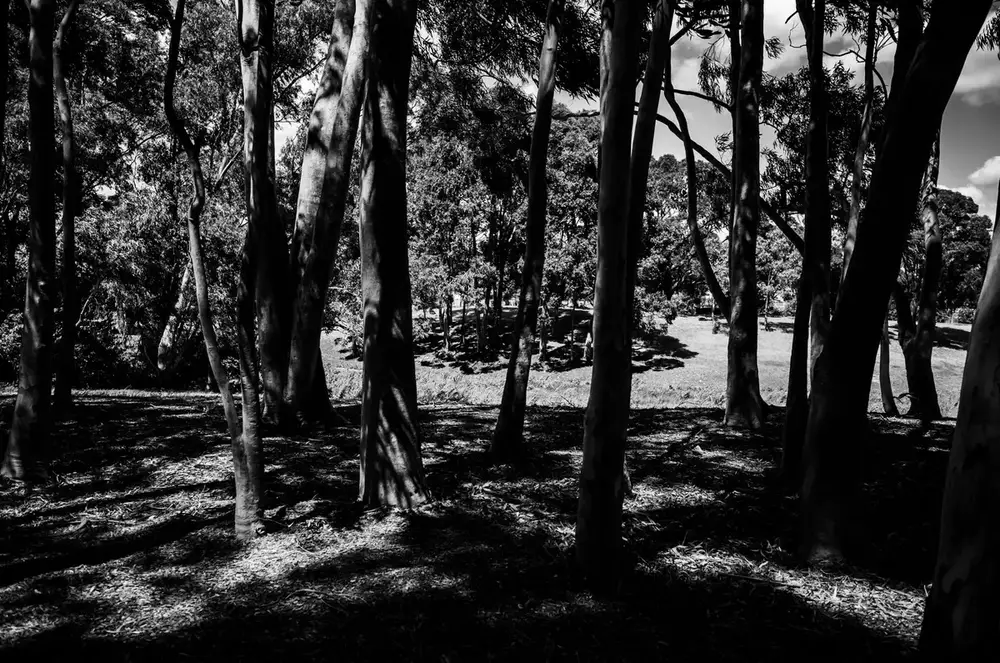
A eucalyptus carries a lot of dead material in the crown, and it holds it longer than most species. Removing deadwood every two or three years is the single most valuable thing you can do, because a dead limb in a eucalyptus is heavier and more brittle than it looks.
Inspect after every significant wind. The tree will have dropped something, and what is left hanging is the hazard. Look up the trunk for a limb at an odd angle with a torn underside — that is a hanger, and it comes down on its own schedule.
Pruning: little, and carefully
Do not top it. A topped eucalyptus produces a dense head of weakly attached shoots on a species that already sheds limbs — the worst combination available. Do not lion-tail it either: stripping the interior and leaving weight at the ends is how a eucalyptus becomes a lever.
What is appropriate is raising the canopy for clearance and removing dead, damaged and crossing branches. If the tree needs to be substantially smaller, that is a removal decision, not a pruning one.
The root plate question
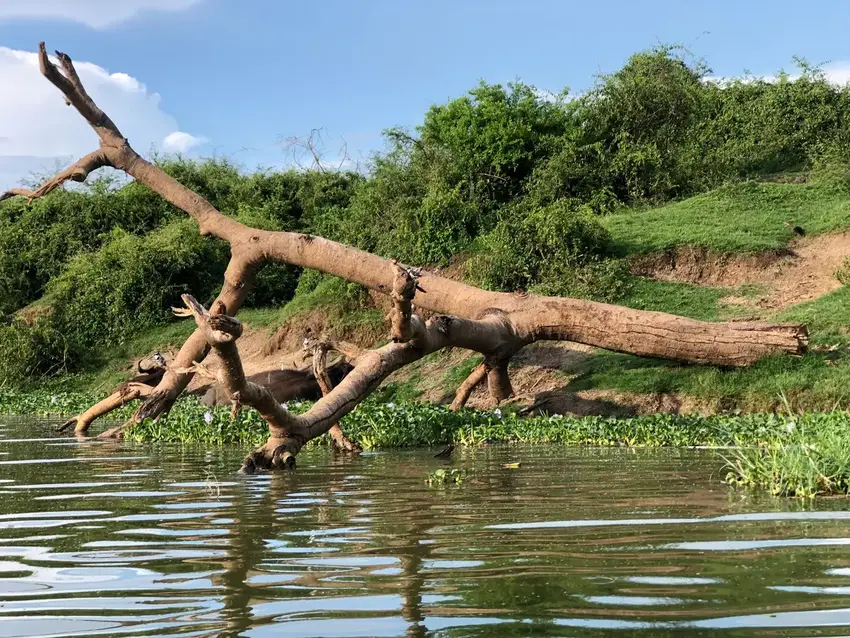
Eucalyptus fails by the root plate lifting, especially on a slope or in saturated soil. The signs are a new lean, a crescent of cracked soil on the far side, and a gap opening at the base. Any of those, on a tree within falling distance of a structure, is an assessment now rather than a monitoring plan.
Do not cut roots on the house side to make room for a path or a drive. A eucalyptus has little margin in its root plate, and a third of it removed is a tree that will lean within a few years.
If you are choosing one
Plant it where it can be big, and at least one and a half times its mature height from anything you care about — the height is roughly the radius of the plate. Do not plant it over a sewer, a drive or a foundation. And accept the litter: bark strips, leaves and capsules are a year-round job, and the oils in the leaves suppress a lot of what you might plant underneath.
Wind, salt and the limb that comes down
Eucalyptus wood is dense and brittle, and the tree grows it fast. A limb that is carrying more weight than the union can hold lets go in a gust rather than bending, which is why a eucalyptus drops branches on still-looking days as well as in storms. The tree is not failing; it is shedding.
The practical consequence is location. Do not park under one, do not put a bedroom under one, and do not plant one where a dropped limb would land on a roof. If the tree is already in that position, the work that helps is deadwood removal every two or three years and a reduction of the longest overhanging limb — not a hard prune of the whole crown, which produces exactly the regrowth you do not want.
None of this is an argument against the tree. A eucalyptus is a fast, tough, distinctive thing on a coast that suits it. It is an argument for planting it where its failure would be a nuisance rather than an event.
One caveat on that spacing: eucalyptus grows fast enough that a plant five metres from a fence can be over it in six years. Plant for the tree at twenty, not the sapling you are carrying home. Measure the space, then halve your ambition.