Roots and Foundations: What the Evidence Actually Shows
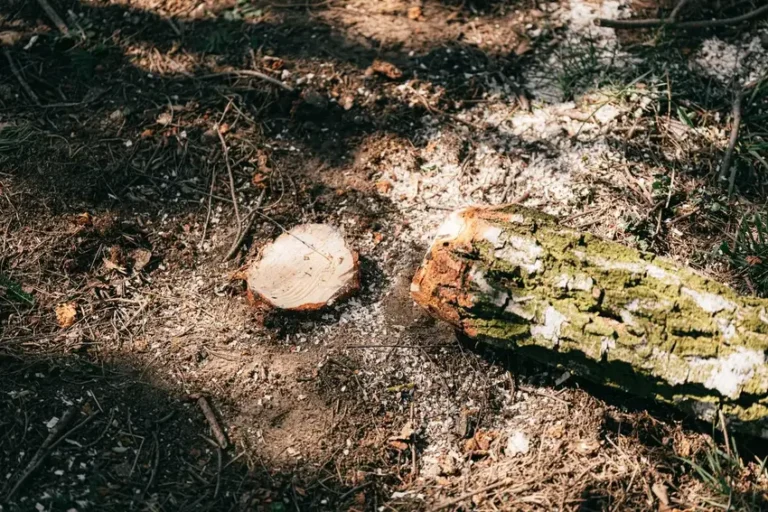
Quick answer: Roots and Foundations: What the Evidence Actually Shows — A stump is the part of the problem that is still in the ground: it holds the roots that lift pavement, keeps a species alive if it re-sprouts, and occupies the spot where the next planting goes. Grinding removes it below the surface so the ground can be worked again, and the roots that matter are the ones under the driveway rather than the ones beside the trunk.
Field note. On this coast the stump is rarely the end of the job: Monterey pine and eucalyptus both keep enough energy in the roots to push new growth, so we are looking at the species before we quote the grind rather than after.
On the other hand, a stump left in a garden bed is sometimes the better answer — it decays, feeds the soil and costs nothing — so grinding is a choice, not a rule.
The call usually goes like this: there is a crack above the door, there is a big tree in the garden, and the tree is the suspect. Most of the time the tree is not the cause, and removing it is an expensive way to leave the actual cause in place.
Here is what the evidence supports, and what it does not.
Roots do not break concrete — they find it broken
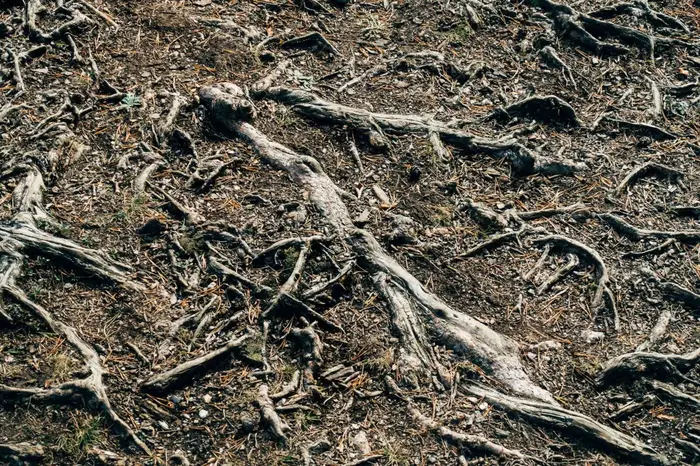
A root tip exerts a few pounds per square inch. Concrete resists hundreds. A root does not crack a sound slab or a sound footing; it enters a crack that is already there, widens it slightly as it grows, and makes an existing defect visible. That distinction matters because it points at the real cause: the crack came first.
Where roots genuinely contribute is in the shallow zone under a path, a drive or a patio, where the soil is thin and the root has nowhere to go but up. Even there, the surface fails because it was under-built, not because the tree was strong.
Shrinkable clay is the real mechanism
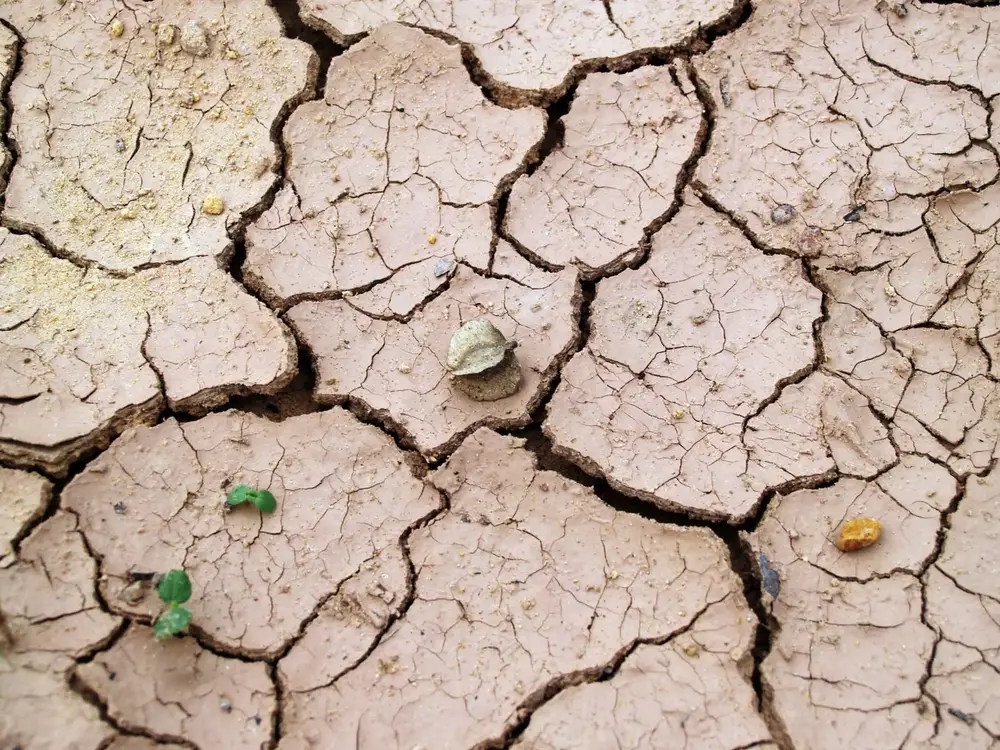
On clay soils, a large tree can dry the ground under and beside a footing to a depth of several feet in summer. The clay shrinks, the soil settles, and the footing moves. In winter the clay re-wets and swells, and the movement reverses. That cycle, repeated, is what cracks a wall — and it happens whether or not a root ever touches the concrete.
The clue is seasonal: cracks that open in late summer and close in the wet months, doors that stick in September and free themselves in January. If that is the pattern, the tree is contributing to a soil-moisture problem, and the answer is water management, not necessarily the saw.
Three causes that get blamed on trees
A leaking drain or water main. Water softens and washes out the soil under a footing. The tree is often growing toward the leak because that is where the water is, which makes it look guilty.
Fill that was never compacted. A house built on a graded pad with loose fill at the edge will settle regardless of the planting. Roots in the fill are a symptom of loose soil.
Drainage that sends water to the wrong corner. A downpipe discharging beside the footing does more damage in five years than a mature oak does in fifty.
What to do before you remove anything
Get two opinions, and make sure they are different disciplines. A structural engineer reads the building and the soil; an arborist reads the tree and the root zone. If both say the tree is contributing, the options are root pruning on the far side, a root barrier, irrigation to stabilise the clay moisture, or removal — in roughly that order of cost and reversibility.
If neither can find a mechanism, the crack is a maintenance issue and the tree is not the problem. Removing a healthy tree to fix a crack that was caused by a downpipe is the most expensive way to not solve something.
Monitoring, with a number attached
If the decision is to watch rather than cut, watch properly. Fix a small glass or plastic gauge across the crack, or mark two reference points either side and measure the gap with a calliper. Record the number, the date, and the temperature trend for the week before.
Measure again after the first big wind of the season and again at the end of summer. A change under half a millimetre over a year is normal movement in a timber frame. A change over two millimetres, or any change that happens suddenly after a storm, is the signal to act.
The point of the gauge is not precision for its own sake. It is that a monitored defect has an owner and a date, and a defect that is merely worried about has neither.
One thing to avoid in all cases: cutting roots on the house side to reassure yourself. A tree that loses a third of its root plate on one side can lose its stability, and then the problem is not the foundation. It is the roof.
And if the crack is new, wide, or accompanied by a sticking door, call the engineer first. The tree can wait a week; the building may not.
Movement is the variable that matters, and the tree is only one of the things that can cause it. Find the cause first, and the tree keeps its place in the garden.