Seven Mistakes That Take Five Years to Surface
Quick answer: Seven Mistakes That Take Five Years to Surface — Trees on this coast live with fog, salt, wind and thin soil, and the work that keeps them healthy is decided by those conditions rather than by a calendar written inland. Structure, clearance and the root zone are what a tree here needs looked at, and small work done early is what keeps a tree out of the emergency list.
Field note. What we see on this coast is that the trees people worry about are usually not the ones in trouble: the pine with a clean crown and a lean that predates the house is often sounder than the tidy tree that has been quietly drowning in its own root zone.
On the other hand, there is no schedule that suits every tree — the same species on two sides of one street can need opposite care, which is why we look before we recommend.
I have never met a homeowner who set out to hurt a tree. Every mistake below is made by someone trying to help, which is why they persist: the consequence arrives years later, when the person who made the cut is no longer connected to the result.
One: the mulch volcano
Piling mulch against the trunk keeps the bark wet, hides the root flare, and invites decay at the base — the one place a tree cannot afford it. The fix costs nothing: pull the mulch back until the flare is visible, and keep a hand’s width of bare soil around the trunk.
Two: the flush cut
Cutting a branch flat against the trunk removes the collar, the tree’s own chemical barrier. The wound is larger, the seal is slower, and decay has a door. Cut just outside the collar and leave the slight swelling. It looks untidy for a season and it is the difference between a sealed wound and a hollow.
Three: topping
Topping removes the ends of limbs and leaves stubs. The tree responds with a burst of weakly attached shoots at the worst possible point, and the new growth is heavier than what was removed within a few years. Every topped tree becomes a hazard tree with a shorter lifespan. There is no version of topping that is good practice.
Four: watering the trunk
Daily sprinkling at the base keeps the root flare wet and the fine roots oxygen-starved. Deep, infrequent watering at the drip line is the opposite of what most people do, and it is what the tree needs.
Five: staking a tree for years
A young tree needs support for one or two seasons, not five. Ties left on too long girdle the trunk, and a tree that never moves never thickens. Loose ties, removed after the second summer, produce a stronger tree than a rigid stake left in place.
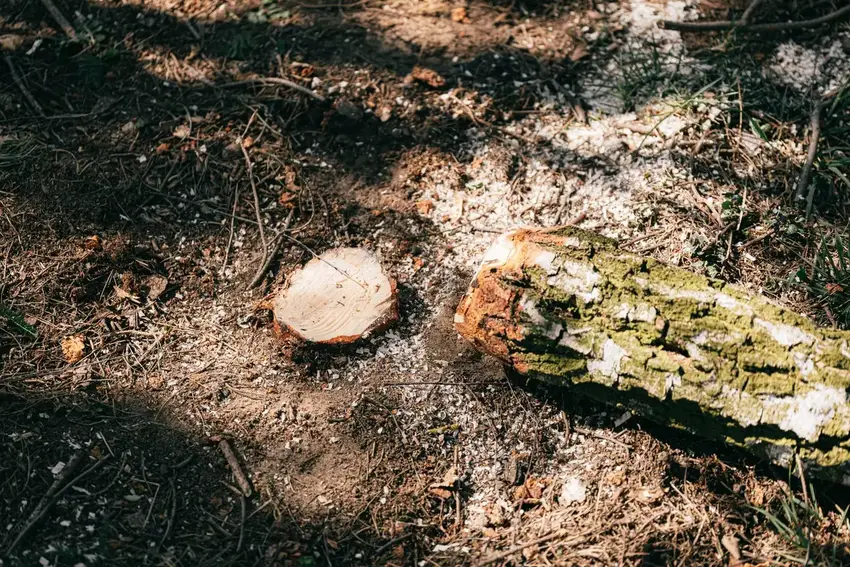
Six: pruning everything in spring
Spring is when the tree is spending its stored energy on new leaves. Heavy pruning then removes the leaves that were going to pay for the repair. Late winter or late summer are better windows on this coast, and the oaks should wait for the dry gap after the rains.
Seven: treating a symptom
Yellow leaves get fertilizer. A thinning crown gets more water. A cavity gets filled with concrete. In each case the treatment addresses the visible symptom and not the cause, which is usually soil, water or root space. A diagnosis costs less than a season of the wrong remedy.
None of these are exotic. They are all avoidable with one rule: before you cut, water, feed or fill anything, ask what the tree is actually doing and why. The tree has been answering that question for decades. Most of the damage comes from not listening.