Can a Storm-Damaged Tree Be Saved?
Quick answer: Can a Storm-Damaged Tree Be Saved? — Removing a tree is planning before it is cutting: where the wood lands, what is under it, whether a rope or a crane takes the weight, and what is left when the crew drives away. A removal is finished when the drop zone is clear and the stump is dealt with, not when the trunk hits the ground.
Field note. What we see here is that access decides the price more than height does: a pine over a fence on a slope with no driveway costs more to take down safely than a taller tree with a clear drop, and the plan is where that shows up.
On the other hand, removal is not the only safe answer — a tree with one failing limb, or a lean that can be corrected by reduction, is often better kept and managed than gone.
After a storm the same conversation happens on every street: is it worth saving? The answer depends on which part of the tree was hurt, and the difference between a recoverable injury and a structural one is visible within a week — if you know what you are looking at.
Recoverable: a broken limb, a torn branch
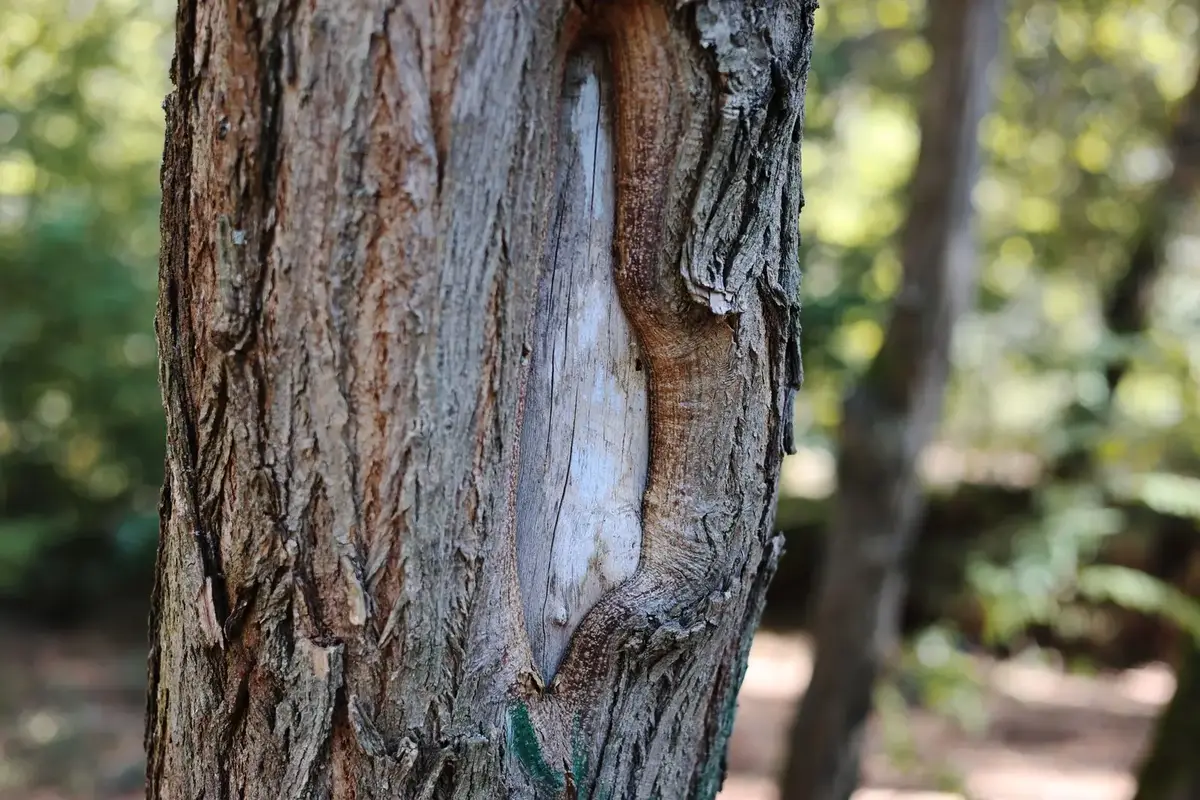
A limb that broke at a branch collar can be cut cleanly at the collar and the tree will seal it. A limb that tore a strip of bark down the trunk is a different injury: the tear is a wound the tree cannot close, and the exposed wood becomes an entry point.
Trim the torn flap back to where it is attached, do not paint it, and watch the edges for a year. If the woundwood rolls in from both sides, the tree is winning.
Borderline: a split crotch
A fork that has split partway down is the most common serious storm injury on this coast, and it is the one where cabling can genuinely help. If the split is short, the two stems are still sound, and the tree has a reason to exist, a brace and cable can hold the union while the tree adds wood. If the split runs into the main trunk, or the crack opens when the wind blows, no hardware will save it.
The test is simple: mark the crack with a pencil, photograph it, and look again in a month. A crack that has moved is a removal.
Not recoverable: a lifted root plate
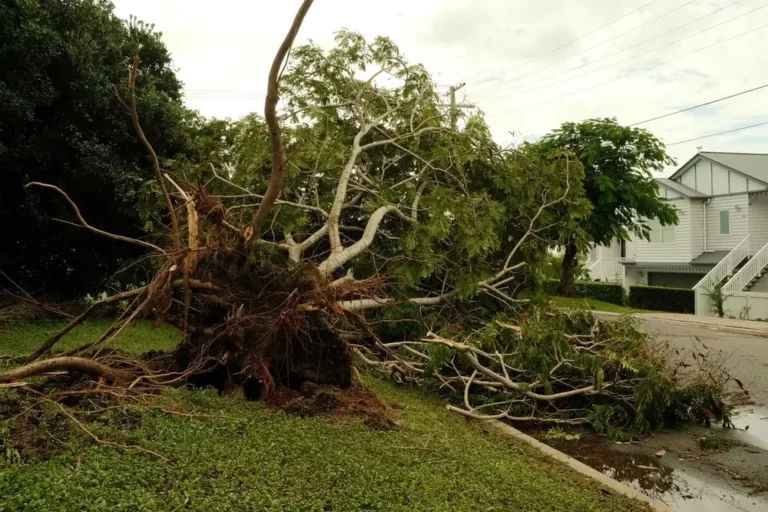
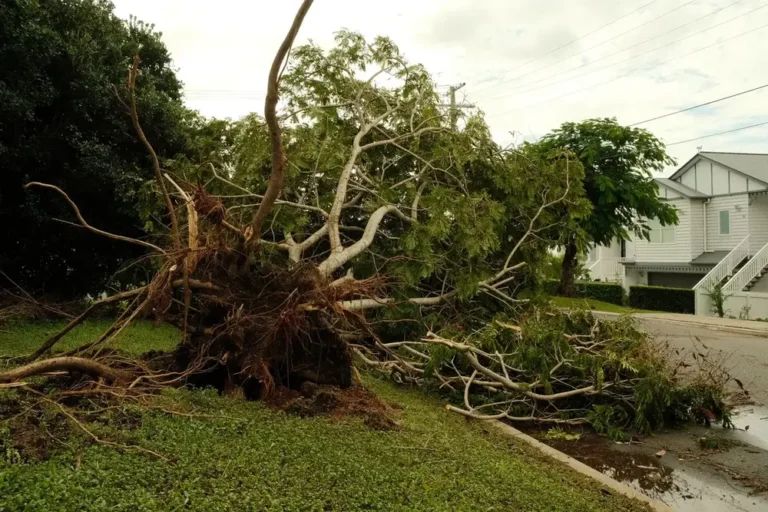
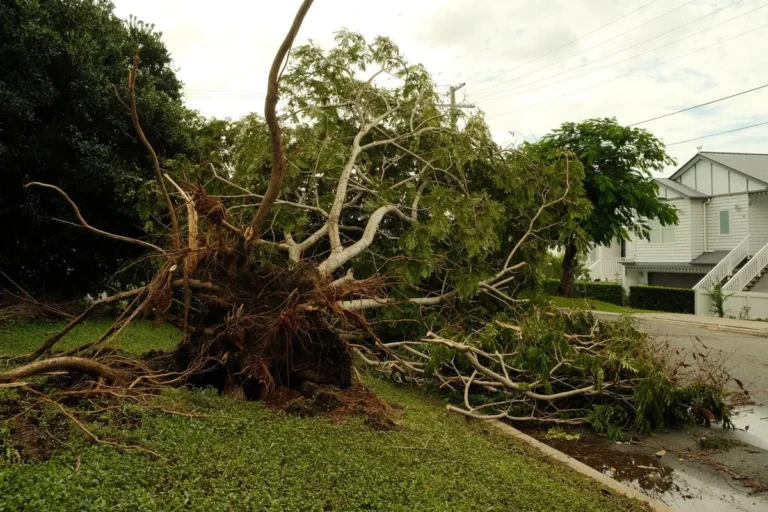
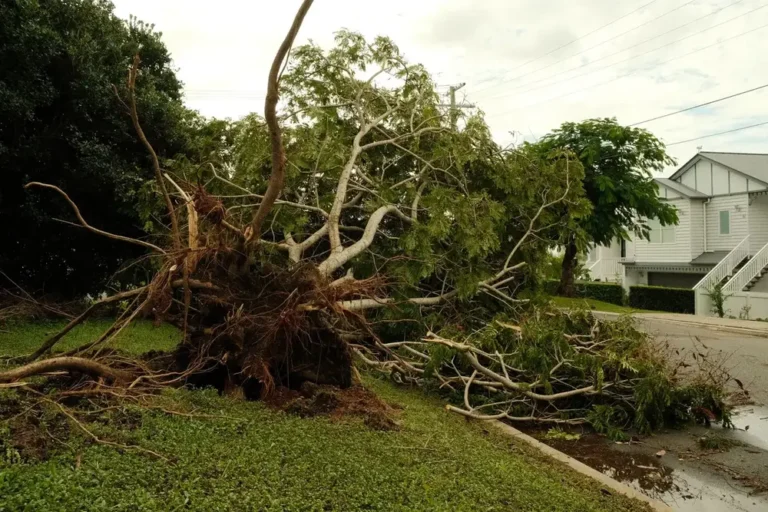
A tree that has tipped and lifted its root plate has lost its anchorage. It can look almost upright, and it can leaf out in spring, which is what makes it dangerous. The roots that held it are broken, and the ones that remain are on one side. There is no brace, no cable and no amount of watering that restores a root plate. Remove it.

The five-day assessment
Within a week of the storm, look for five things: a soil crescent at the base, a crack that has moved, bark torn below the first major limb, a lean that is new, and a canopy that is thinner on one side than the other. Three of those five together is a removal conversation. One is a trimming conversation.
And do not fertilize a damaged tree. Nitrogen pushes growth the tree cannot support and attracts the insects that follow stressed wood. Water if the soil is dry, mulch if it is bare, and wait for the spring flush before deciding anything else.
The trees that survive storms best are the ones that were pruned for structure a decade earlier. Damage repair is the expensive way to learn that.