What Happens During a Tree Removal: Where the Tree Goes
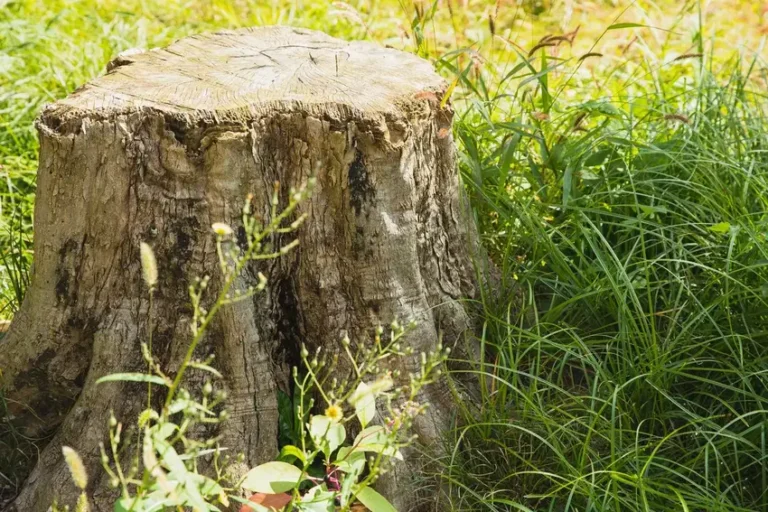
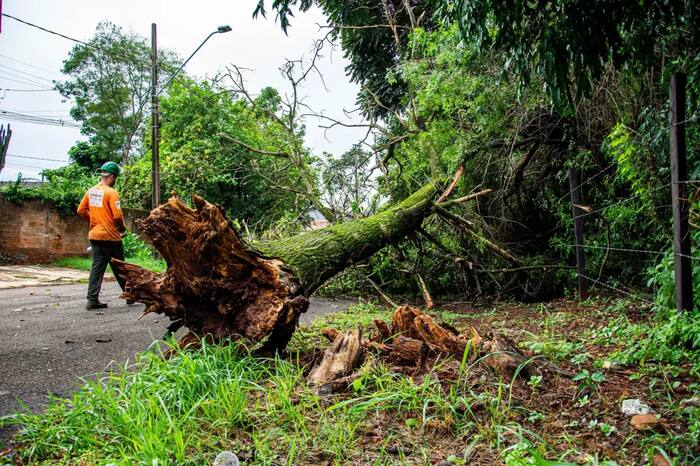
Quick answer: What Happens During a Professional Tree Removal — Removing a tree is planning before it is cutting: where the wood lands, what is under it, whether a rope or a crane takes the weight, and what is left when the crew drives away. A removal is finished when the drop zone is clear and the stump is dealt with, not when the trunk hits the ground.
Field note. What we see here is that access decides the price more than height does: a pine over a fence on a slope with no driveway costs more to take down safely than a taller tree with a clear drop, and the plan is where that shows up.
On the other hand, removal is not the only safe answer — a tree with one failing limb, or a lean that can be corrected by reduction, is often better kept and managed than gone.
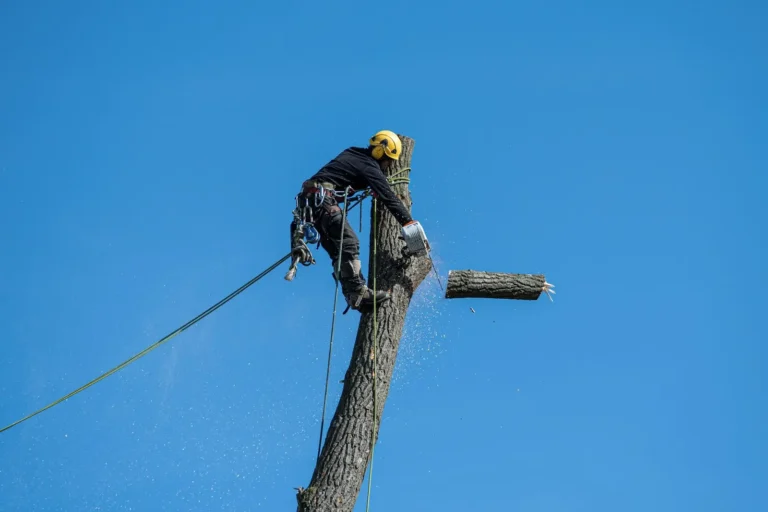
People watch the climber. I understand why: he is forty feet up with a running saw, and everything else on the property looks very still by comparison. But the climbing is the visible half of a removal, and it is usually the cheaper half.
The half that decides whether the invoice says $1,900 or $3,400 happens on the ground, after the last piece is down, and it is a logistics problem with a truck, a scale and a landfill on Highway 1.
Here is the part of the job that starts before anyone leaves the yard: what happens to the wood.
The log is the only part with a buyer
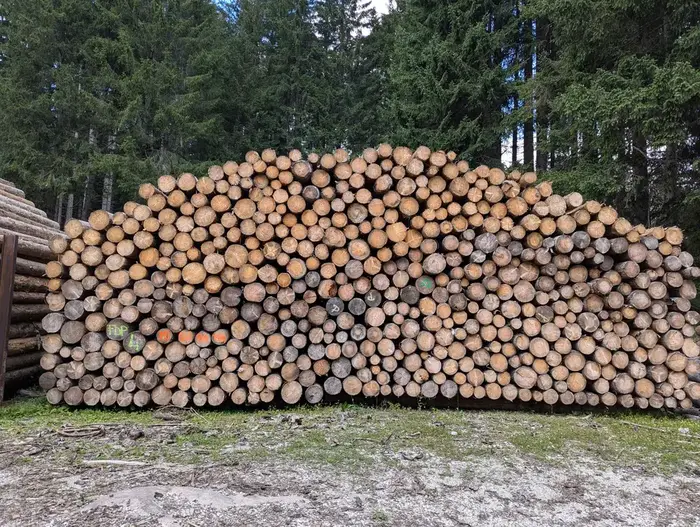
A saw log is not simply a big piece of tree. It is a straight, sound, metal-free section, long enough to be worth the mill’s time and clean enough not to wreck a blade. On the Central Coast that usually means a hardwood or a decent pine, eight feet or more of clear length, at least twelve inches across the small end, and no fence wire, nail, cable staple or lead slug inside it.
In a residential yard, that last condition is the one that fails. I have found horseshoes, clothesline hooks, a padlock and, once, a set of brass hinges grown over by forty years of Monterey pine. A mill will not touch a log with metal in it, and neither will a firewood buyer who has to split it.
When a log does qualify, it leaves on a flatbed and goes to a small mill inland, where it is sawn into slabs or dimensional stock and air-dried for a year or more. When it does not, it becomes firewood, and firewood is a different business with its own rules. Oak splits and seasons for twelve months before it burns well. Pine seasons in six, burns hot and fast, and leaves more creosote in a chimney than a hardwood does.
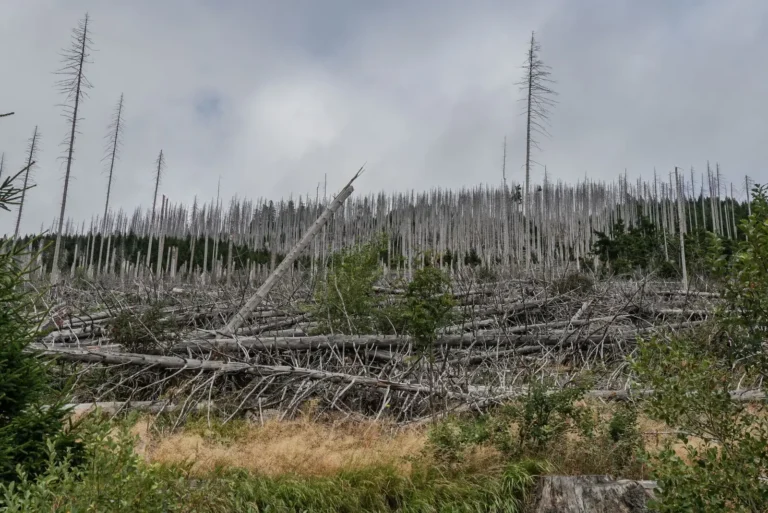
Beetle-killed pine is dry enough to burn almost immediately, which sounds convenient until you remember that moving infested wood off a parcel is how a beetle finds a new neighbourhood.
Chips are not free, and they are not always a gift
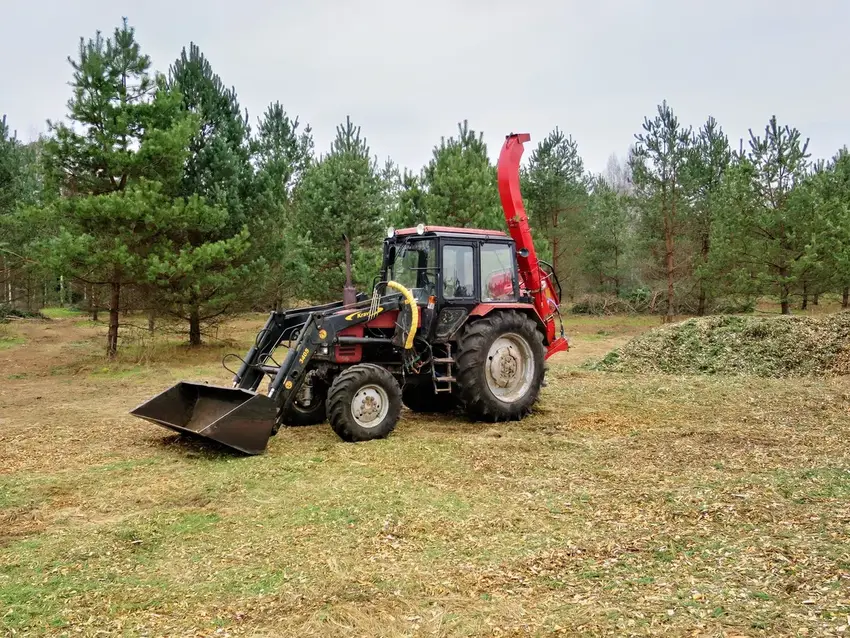
A medium residential tree produces somewhere between ten and fifteen cubic yards of chips once the brush goes through the machine. That is a pile roughly eight feet tall and the length of a pickup, and it has to go somewhere. Some clients want it; a three-inch layer under the oaks is genuinely good mulch, and it saves the haul. But fresh chips are not compost.
They are high in carbon and low in nitrogen, and if you rototill them into a bed the soil bacteria will borrow nitrogen from your plants to break them down. As a surface layer they are excellent. As a soil amendment on the day they arrive, they are a slow theft.
Eucalyptus chips deserve their own line. The old warning that nothing grows under a eucalyptus is overstated, but fresh chips from a blue gum are aromatic, slow to break down, and best left in a pile for a few months before they go on a bed. If the chips are going to sit in your driveway anyway, let them sit in a back corner instead of against the house.
Brush is a weight problem, not a volume problem
Green brush is heavy. A full load on a chip truck is limited by the scale, not by how much will fit in the box, and the transfer station charges by tonnage. That is why a removal estimate carries a disposal line at all, and why the line moves when a tree is bigger than the photo suggested. Two trips cost roughly twice one trip, and a Saturday drop-off can cost more than a Tuesday one.
There is a real alternative: leave the chips on site as mulch and keep the logs for the client. It is cheaper, it keeps carbon on the parcel, and it is what I recommend when the pile can sit somewhere it will not be in the way. The trade is that the yard looks like a sawmill for a month.
The three questions that change the number
If you want to know why two bids for the same tree differ by a thousand dollars, ask these three questions before you compare the totals.
Where does the wood go? Hauled, milled, split, or left. Each answer is a different line item.
How wide is the gate? A chipper needs about six feet of clear width; a stump grinder needs three to four; a crane needs a lot more and a place to set up. If the machine cannot reach the tree, the tree comes to the machine one piece at a time, and that is slower, heavier and more expensive.
What is under the grass? Irrigation, a septic line, a gas service, a fibre run. A tire track across a shallow line in February is a repair bill in March.
None of this is the dramatic part of the job, and none of it will be in the photograph your neighbour takes from the sidewalk. It is the part that decides what the invoice says, and it is worth ten minutes of questions before the crew arrives rather than a conversation afterward.