Watering a Tree That Has Been Here Since 1950
Quick answer: Watering a Tree That Has Been Here Since 1950 — Trees are watered at the root zone, deeply and infrequently — a long soak that reaches down, then a dry spell that lets roots look for water, rather than a daily sprinkle that keeps everything in the top inch of soil. On the fog belt the question is rarely whether there is moisture in the air but how much got down to the roots.
Field note. What we see here is that salt air and wind dry a canopy faster than the thermometer suggests, so a tree can be water-stressed on a grey week when nothing looks hot to the person holding the hose.
On the other hand, more water is not a cure-all: on clay, a daily soak drowns roots more often than drought does, and the symptoms look almost identical from above.
The standard figure is one inch of water per week, including rainfall. It is a good figure. It is also almost meaningless until you convert it, because one inch over the canopy of a mature coast live oak is not a watering-can quantity. It is a few hundred gallons, and it has to go into the soil at the edge of the canopy rather than against the trunk.
The arithmetic, once
One inch of water over one square foot is about 0.62 gallons. A tree with a canopy thirty feet across covers a circle of roughly 700 square feet. One inch over that circle is around 440 gallons a week. A tree with a fifty-foot spread covers about 1,960 square feet, and the same inch is roughly 1,220 gallons.
That sounds absurd until you remember that a mature tree is not a tomato plant. It has a root system that has been exploring the same soil for seventy years, and in a normal year it is living on stored moisture and on the fog drip that this coast delivers for free.
The one-inch figure is what it takes in a dry spell to keep a tree out of deficit, not what you should pour on it every week of its life.
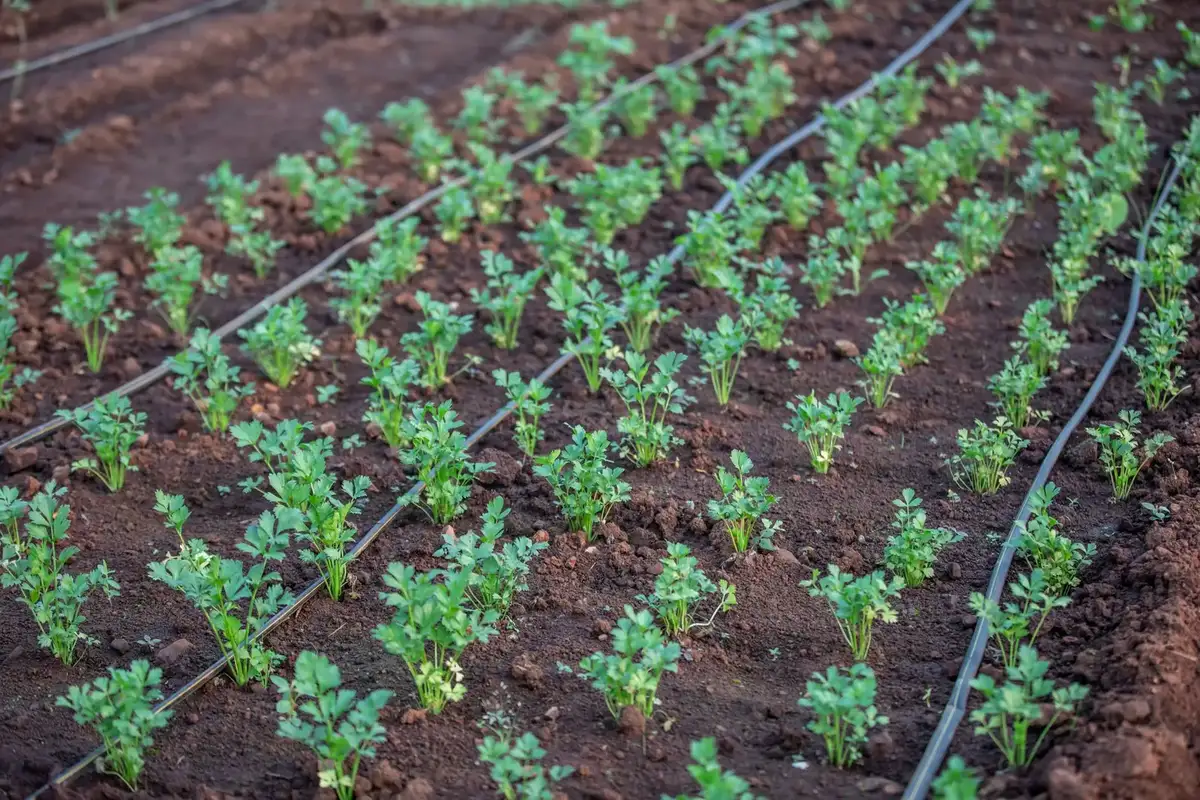
Where the water goes
Feeder roots are in the top foot or so of soil, and they extend well past the canopy edge. Watering at the trunk is worse than useless: it keeps the root flare wet, which is how you get rot at the base of an oak, and it misses the roots that are actually taking up water.
Put the water in a ring at the drip line, or in two or three rings between the trunk and the canopy edge, and let it soak rather than run.
On this coast, with sandy loam over a shallow water table, water moves fast and the soil holds little. Two passes of half an inch, an hour apart, puts more water into the root zone than one pass of an inch, most of which runs past the roots before they can take it up.
The tuna can, and the two-week test
Set an empty tuna can under the sprinkler or the hose. Time how long it takes to fill. That is your inch, in minutes, for that emitter. Then multiply: if one can takes forty minutes, the tree needs that forty minutes spread across the area under its canopy, not forty minutes in one spot.
The better test is the two-week one. Water deeply, wait a fortnight, then push a screwdriver into the soil a foot down, a few feet inside the drip line. If it goes in easily, you are fine. If it stops, you are dry. If it comes out muddy and smells sour, you are overwatering, and that is a different problem with a worse prognosis.
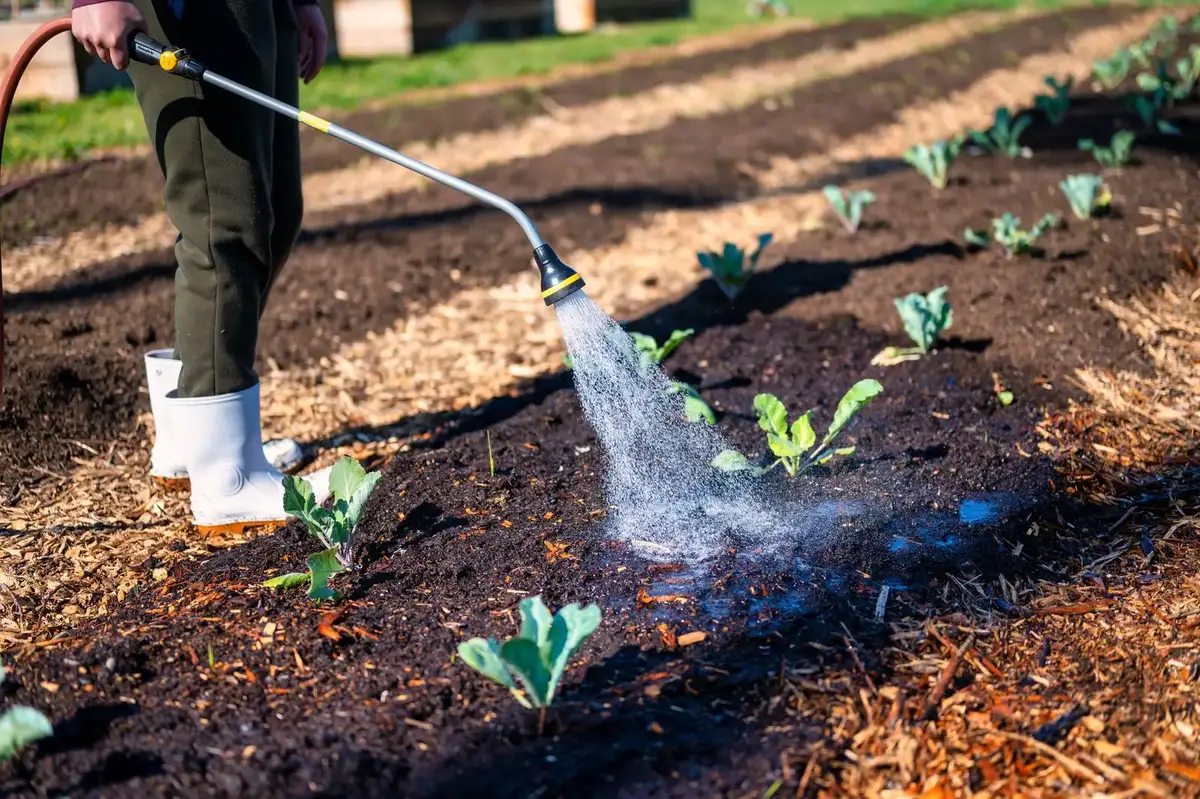
What overwatering looks like, because it looks like drought
An overwatered tree wilts. Its leaves yellow between the veins or drop in midsummer. Its crown thins from the inside out. The cause is not too much water but too little oxygen: saturated soil drowns the fine roots, and then the tree cannot take up water even though it is standing in it. Phytophthora, the root-rot organism that kills oaks on this coast, spreads in wet soil and moves with runoff.
A tree that gets a little water in a dry September is healthier than one that gets a daily sprinkle all summer.
The rule I use: water deeply and infrequently, never against the trunk, never in the evening during fog season, and stop when the soil a foot down is cool and moist rather than wet.
And if the tree has been here since 1950, it has survived worse droughts than this one. The goal is not to make it grow faster. It is to keep it out of deficit long enough that it can defend itself against the beetle that is already in the neighbourhood.