What Actually Happens Between the Knock and the Stump
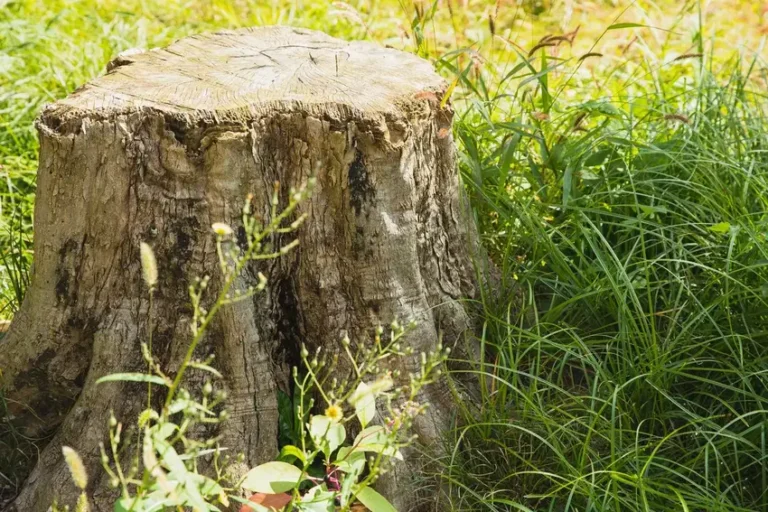
Quick answer: What Actually Happens Between the Knock and the Stump — A stump is the part of the problem that is still in the ground: it holds the roots that lift pavement, keeps a species alive if it re-sprouts, and occupies the spot where the next planting goes. Grinding removes it below the surface so the ground can be worked again, and the roots that matter are the ones under the driveway rather than the ones beside the trunk.
Field note. On this coast the stump is rarely the end of the job: Monterey pine and eucalyptus both keep enough energy in the roots to push new growth, so we are looking at the species before we quote the grind rather than after.
On the other hand, a stump left in a garden bed is sometimes the better answer — it decays, feeds the soil and costs nothing — so grinding is a choice, not a rule.
People ask what a removal will be like, and they mean the noise. The noise is the least informative part. What determines whether the day goes well — whether the roof, the fence, the septic line and the crew all end it intact — happens in a sequence most homeowners never watch, because they are inside making coffee.
Here is that sequence, in the order it actually runs.
- Before the truck moves
A walk-around. The estimator or foreman circles the tree reading lean, unions, canopy balance, and where the tree would land if the plan failed.
- On arrival
The drop zone is marked and cleared. Vehicles move. A ground person is assigned to the zone and to nothing else.
- First mechanical step
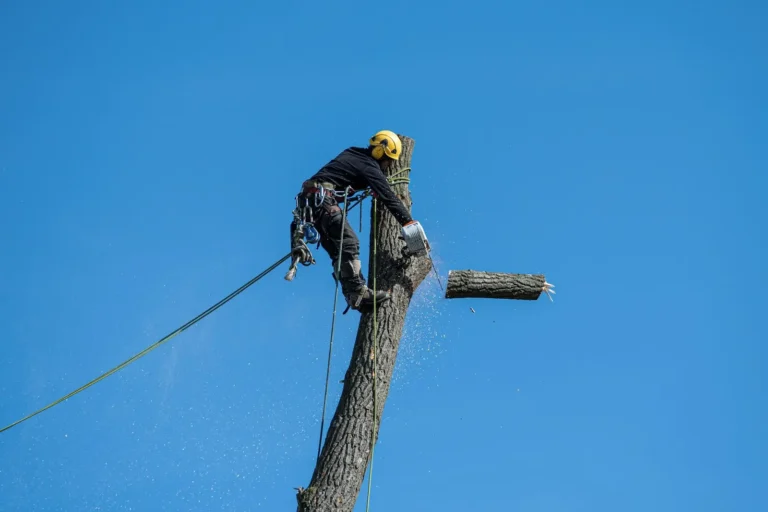
A throw line goes up and a climb line is set over a sound union — not over the limb being removed.
- Before the first cut
The climber checks the tie-in point, the ground person checks the zone, and the two agree on signals.
- Mid-job
Rigging: limbs are lowered on a rope through a friction device rather than dropped, wherever a drop could reach something.
- Last
The spar comes down in sections, the stump is cut low or ground, and the chips and debris leave the property.
The bucket or the rope, and why it matters to your quote
Two removal methods dominate: a climber on a rope, and an aerial lift. A lift is faster and safer over structures and power drops, and it needs a truck that can get within reach on ground firm enough to hold it. On a Cambria lot with a narrow drive and a slope, that access may not exist, which is often why two quotes for the same tree differ by a third.
Neither method is better in the abstract. The right question is which one your access allows, and a crew that tells you without walking the property has not answered it.
The tie-in point is the whole job
The climber’s rope goes over a part of the tree that will still be there at the end. Set it above the limb being removed and the first cut drops the climber. That is not a subtlety; it is the single most consequential decision of the day, and it is made by eye, from the ground, before anyone leaves it.
Watch for this if you watch anything. A crew that rigs deliberately, checks the tie-in aloud, and puts one person on the drop zone with nothing else to do is a crew that has thought about the day.
Rigging, in plain terms
Rigging is controlled falling. A limb is cut, caught on a rope, and lowered by a ground person through a friction device, so it arrives at the ground at walking speed instead of terminal speed. It is slower than dropping, it takes two skilled people instead of one, and it is what makes removal over a roof or a greenhouse possible at all.
If your tree leans over structure, rigging is not an upgrade you are being upsold. It is the only method that keeps the pieces off the structure.
The part nobody photographs
The end of a removal is cleanup, and cleanup is where a quote is honoured or quietly abandoned. Chips go into the truck. Rakings go into the truck. The stump is either cut flush to grade or ground to a specified depth, and those are different jobs at different prices. Logs are either taken or left, and if they are left, someone has to tell you where before they are on your lawn.
Ask at the quote stage: chips removed, debris removed, stump at what depth, logs gone or stacked. Four answers, in writing. Everything after that is just a day of work.