Tree Root Damage You Can’t See: Roots and Foundations
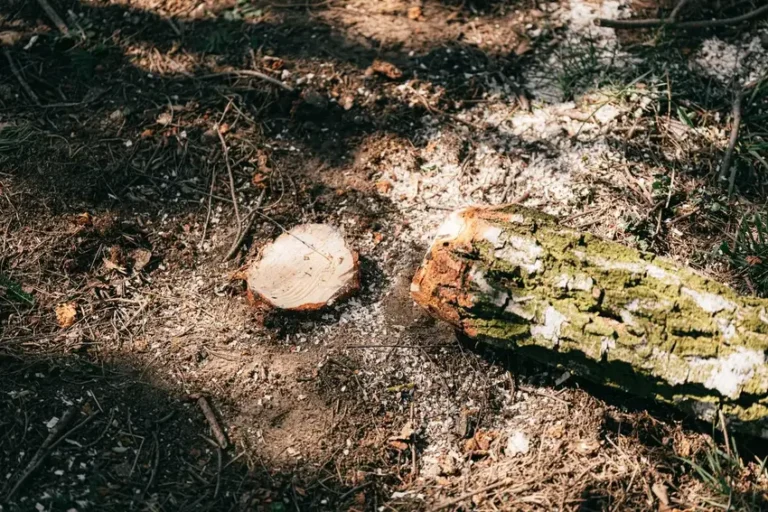
Quick answer: Tree Root Damage You Can't See: Roots and Foundations — A stump is the part of the problem that is still in the ground: it holds the roots that lift pavement, keeps a species alive if it re-sprouts, and occupies the spot where the next planting goes. Grinding removes it below the surface so the ground can be worked again, and the roots that matter are the ones under the driveway rather than the ones beside the trunk.
Field note. On this coast the stump is rarely the end of the job: Monterey pine and eucalyptus both keep enough energy in the roots to push new growth, so we are looking at the species before we quote the grind rather than after.
On the other hand, a stump left in a garden bed is sometimes the better answer — it decays, feeds the soil and costs nothing — so grinding is a choice, not a rule.
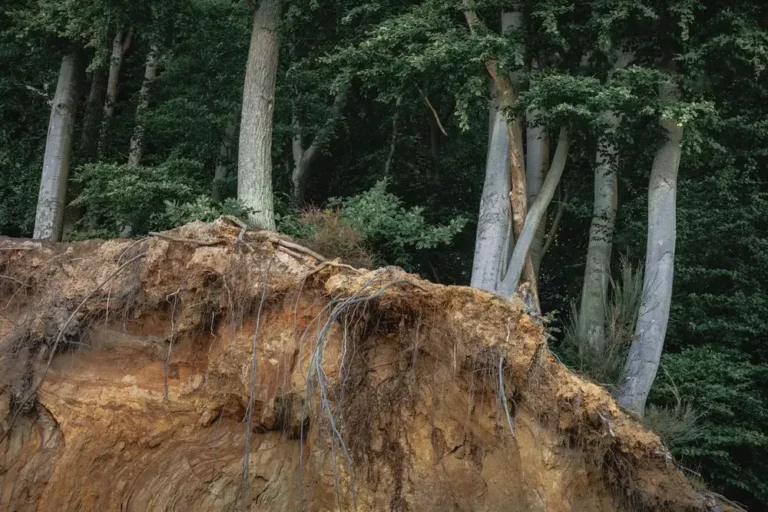
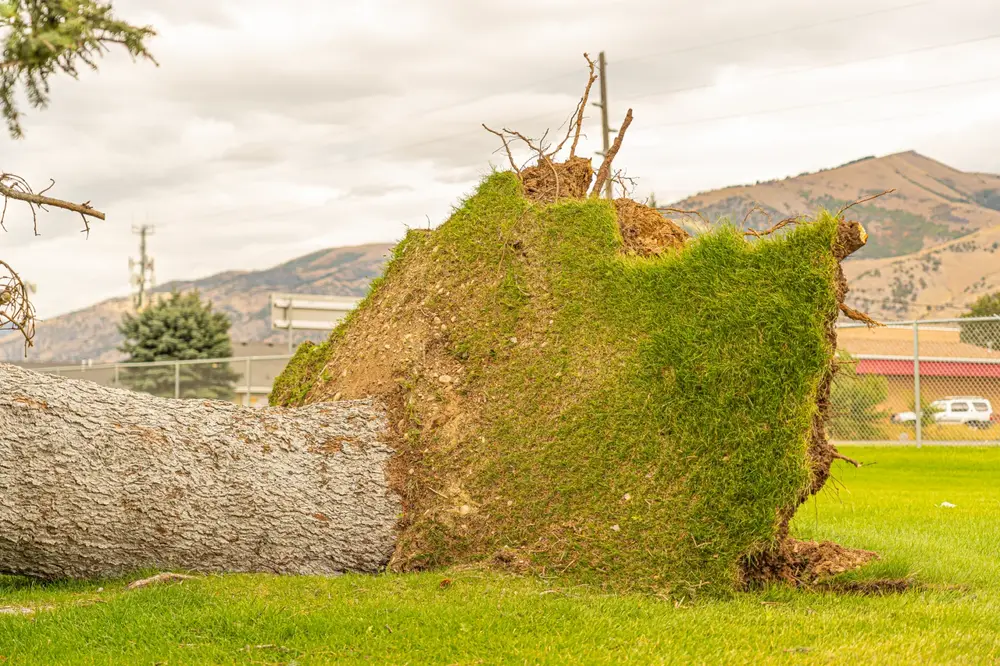
A tree’s root system is wider than most people assume and far shallower than almost anyone believes. On this coast the roots that keep a pine upright live in the top foot of soil, running out under and well past the drip line — the circle you could draw beneath the branch tips. There is no taproot anchoring the tree like a post. There is a wide, flat plate, and it is already underneath whatever you are planning to build.
The damage is usually done before the tree tells you anything, and by the time it tells you, the job has become a removal rather than a repair.
Where the roots actually are
The fine roots — the ones that take up water — are shallow, they take oxygen from the top layer of soil, and they live in that band. The larger structural roots spread out beneath them, buttressing the trunk in a plate whose width, for a mature pine, is measured in multiples of the crown. That is why a tree can look fine for three years after the trench and then lean.
The structural roots you severed did not die instantly. They decayed where they were cut, at roughly an inch a year, out of the plate the tree was standing on.
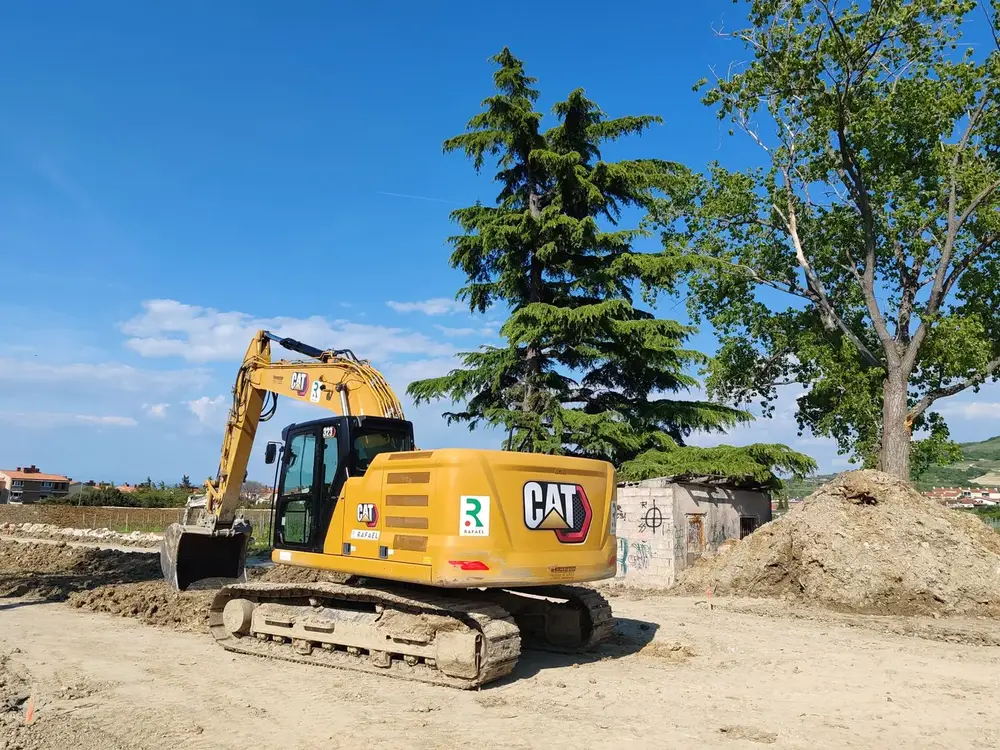
Which is the part worth sitting with: root damage is a slow-motion injury. A driveway widened over the plate, a utility trench within ten feet of a trunk, a lawn scraped back to bare soil and graveled, a pad cut into a hillside beside an oak. None of those trees fall that year. They fall on the sixth or the tenth, and by then nobody connects the event to the excavation.
The five things that actually kill roots
What to ask before you dig
The arithmetic is not sentimental. A root cut within a few feet of the trunk on a mature tree can change a stability rating, which moves the work from pruning to a documented risk decision. So before any excavation near a tree you intend to keep, ask three questions. How close will the trench come to the trunk, measured in feet. How wide a path will the machine take, and can that route be set outside the drip line.
And if the distance is unavoidable, is there a route that can be tunneled or hand-dug to save the structural roots on the far side.
Two local facts matter here. The soils on the marine terraces and the old dunes drain fast and hold a plate less firmly than the clay inland, so a tree on sandy ground gives less warning before it fails.
And a stump changes the ground around it: grinding the stump is fine, but grinding the roots out of a LIVING tree’s plate — the ones a homeowner can see surfacing in a lawn — removes the anchor to solve a cosmetic problem. Chase the visible root of a live tree and the lawn improves while the tree’s footing gets worse.
Our stump work stops at the stump for that reason, and slope work that has to cut into a root plate is planned as a soil decision rather than a landscaping one.
If a tree is already leaning, or the ground around its base has begun to crack and lift on one side, that is not a job for a root grinder or a rake. It is an assessment, because a failing plate is the one defect that cannot be pruned away.