
When Grinding Is Not Enough and the Roots Have to Go
Quick answer: When Grinding Is Not Enough and the Roots Have to Go — A stump is the part of the problem that is still in the ground: it holds the roots that lift pavement, keeps a species alive if it re-sprouts, and occupies the spot where the next planting goes.
Grinding removes it below the surface so the ground can be worked again, and the roots that matter are the ones under the driveway rather than the ones beside the trunk.
Field note. On this coast the stump is rarely the end of the job: Monterey pine and eucalyptus both keep enough energy in the roots to push new growth, so we are looking at the species before we quote the grind rather than after.
On the other hand, a stump left in a garden bed is sometimes the better answer — it decays, feeds the soil and costs nothing — so grinding is a choice, not a rule.
Stump grinding solves most stump problems — but not all of them. The service is fast, contained, and cost-effective: a cutting wheel chips the visible stump down below grade, and the spot is ready for grass within a day. The limitation is scope. Grinding clears the structure above the soil and a few inches below it, while the root system stays in the ground. When grinding is not enough and the roots have to go, the difference usually comes down to what the site will be used for next, what species the tree was, and whether the tree left anything behind worth worrying about. This article lays out the framework for telling one job from the other.
What Grinding Removes — and What It Leaves Behind
A standard grinder cuts roughly 6 to 12 inches below grade on most residential jobs. That depth clears the stump and the upper portion of the major roots — exactly what a lawn needs. It does not extract the lateral root network, which in a mature tree can spread well beyond the canopy’s edge, or the deeper structural roots that anchored the trunk.
Left in the ground, those roots decay on their own timeline — often several years for a large tree, longer for dense hardwoods. Two consequences follow. First, soil above decaying roots settles as the wood breaks down, which becomes a problem if anything is built over the area. Second, some species refuse to die quietly: willows, poplars, silver maples, black locust, and tree of heaven can resprout from viable root tissue for years after the stump is gone. For those species, grinding is a treatment cycle, not a cure.
When Grinding Is Not Enough and the Roots Have to Go
Three site conditions reliably move a job from grinding into full root removal.
1. The site has a construction future. A patio, driveway, home addition, or pool slab needs stable, root-free soil. Roots buried under hardscape decompose unevenly, creating voids and settling that crack concrete and shift pavers. Excavating the root system before construction costs far less than repairing the slab afterward.
2. Replanting is planned for the same footprint. New plantings compete poorly with a decaying root mass, which ties up soil nitrogen as it breaks down and can harbor the same pathogens that compromised the original tree. Fungal problems can persist in buried root tissue; removing the roots resets the planting site instead of gambling on it.
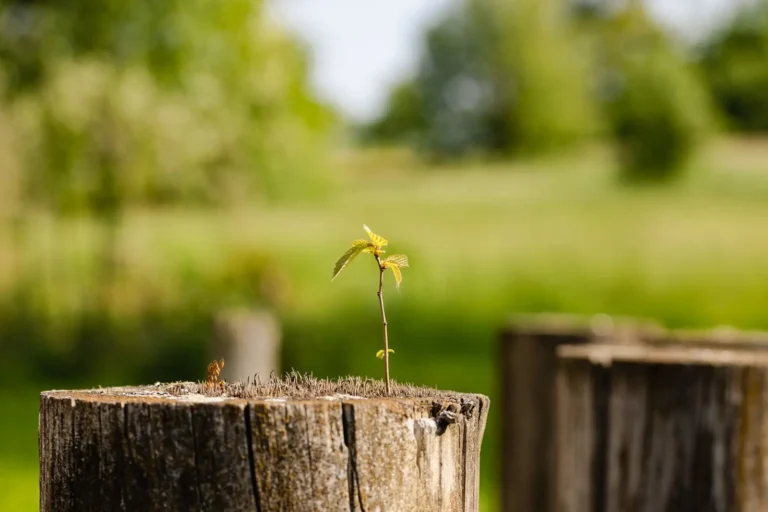
3. Regrowth is already happening. Shoots sprouting around a previously ground stump are proof the root system is still alive. Every season of regrowth strengthens the network — at that point, extraction is the only permanent fix.
Use this list as a quick screen before booking a service:
- Shoots or suckers have appeared around a stump that was ground in the past
- A new tree, garden bed, or lawn renovation is planned for the same spot
- A patio, addition, driveway, or pool is slated for the area
- The tree was removed because of disease, fungal infection, or pest damage
- The species is a known resprouter — willow, poplar, black locust, silver maple, tree of heaven
- Root tissue sits close to drains, sewer lines, or shallow footings that need clearance
What Full Root Removal Actually Involves
Extraction is a different scope of work, and the quote reflects it. Where grinding chips wood in place, removal physically digs or pulls the root system out. Common approaches include a mini excavator or backhoe to expose the root plate and sever laterals, a winch or mechanical puller to lever the stump free, or deeper grinding paired with raking for smaller root systems. The trade is straightforward: more machine time, more site disturbance, and debris haul-off in exchange for a clean slate.
Plan for restoration as part of the job. Extraction leaves a cavity roughly the size of the root plate, which should be backfilled with clean soil and compacted to prevent settling. Lawns recover quickly, garden beds recover immediately, and hardscape sites benefit from having the excavation finished before the builder arrives — not after.
A Three-Question Framework for the Decision
When comparing quotes, run the job through three questions. First: what happens on this site next? Grass over a forgotten stump points to grinding; a structure, replanting, or garden points to removal. Second: what species was it? Resprouters tip the math toward removal, while species that rarely regrow — pines and most spruces, for example — make grinding a permanent fix. Third: why did the tree come down? Storm damage or aesthetics favor grinding; disease or infestation favors removal to protect whatever gets planted next.
The bottom line: grinding is the efficient default, and full root removal is the targeted upgrade for sites with a construction plan, a replanting goal, a disease history, or a resprouting species. Match the method to the site’s future rather than to the stump’s appearance, and the job gets done once — at the right cost, the first time.
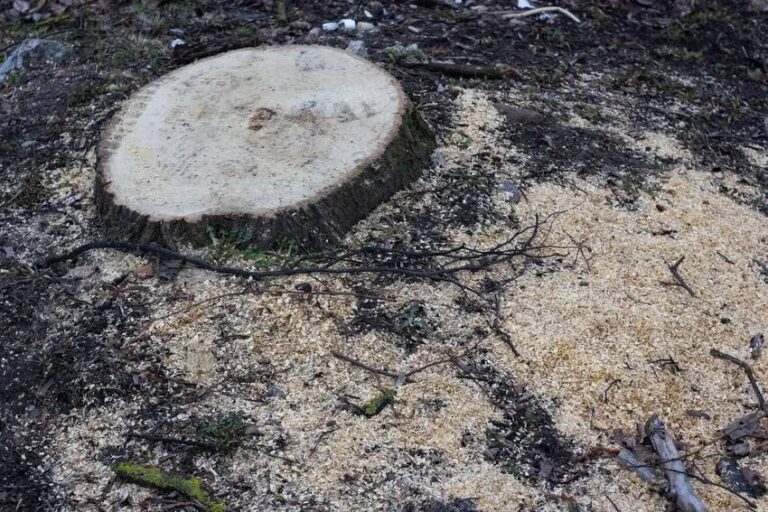
A stump left below grade is a hazard and a regrowth source; grinding removes it below the surface. stump grinding.
See our Cambria tree service for every service we run across the coast.
Leave a Reply