Five Natives That Belong Here, and Why the Others Fail
Quick answer: Five Natives That Belong Here, and Why the Others Fail — The tree that thrives here is the one chosen for this coast: fog, salt, wind and shallow soil are the local constraints, and mature size is the constraint most often ignored. Planting is a matter of putting the right species in a site that can hold it, then keeping the root flare visible and the first summers watered.
Field note. What we see is that the coast is forgiving to the right species and unforgiving to the wrong one: the same tree that looks comfortable four streets in will burn on the windward side of a Cambria lot.
On the other hand, natives are not automatically the answer at every address — a species that belongs in the watershed can still be the wrong size for the garden it is standing in.
Native planting advice usually stops at the word native, as if provenance were a guarantee. It is not. A coast live oak planted in a lawn with summer irrigation will die of root rot in eight years, and it will be a native the whole time. What matters is whether the site matches the plant.
The five, and what each actually wants
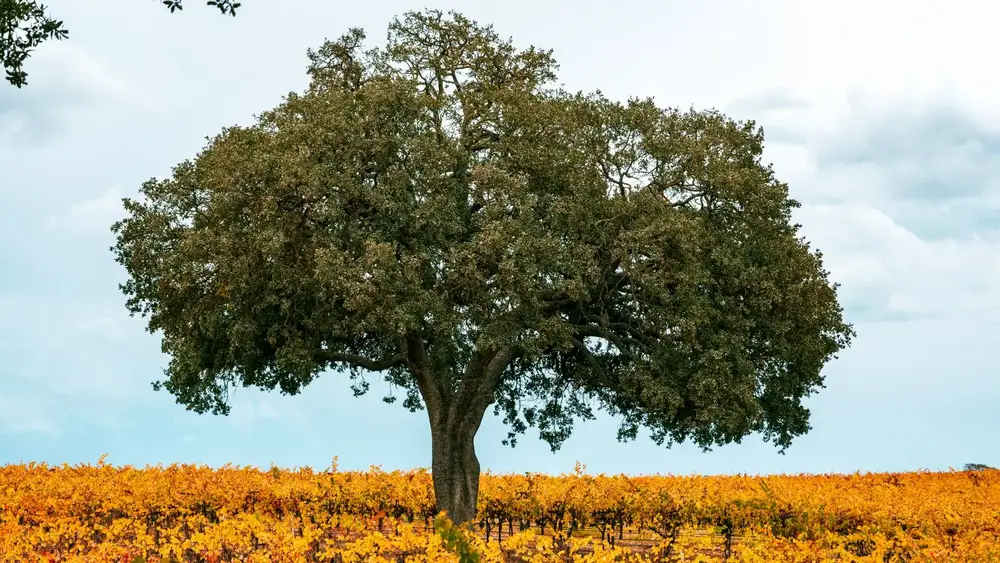
Coast live oak. Wants dry summers, no irrigation in the root zone, and space — forty feet of canopy and a root system wider than that. It is the backbone tree here and the one most often killed by kindness.
California bay. Wants a little more water and a little more shelter, and tolerates shade when young. It is fast, it suckers, and it needs a decision about whether you want one trunk or a thicket.
Toyon. A large shrub or small tree, eight to fifteen feet, and the most reliable berry crop on the coast. It takes pruning well, which makes it the best native for a smaller garden.
California buckeye. Drops its leaves in July and looks dead for four months. If that is acceptable, it is a beautiful small tree for a dry slope. If it is not, plant something else.
Western sycamore. Wants water — a creek edge, a seep, a downhill corner — and grows fast where it gets it. It is the wrong tree for a dry ridge and the right tree for a wet one.
Why the others fail
Most native failures are one of three mistakes. The plant went in too small and was watered like a petunia, which selects for a root system that stays shallow and a trunk that stays weak. The plant went in too large, from a nursery stock that had been irrigated and fed, and could not make the transition.
Or the plant went in the right place and the ground around it was changed — graded, filled, paved, or planted with a lawn.
The third one is the killer, because it happens after the tree is established and looks fine. A change of grade over the root zone is the single most common cause of a mature native dying in a garden where it had been happy for a decade.
Spacing, in the only units that matter
Space for the canopy at maturity, then add a third. A coast live oak at forty feet needs sixty between trunks if you want two distinct trees rather than one merged crown. A toyon hedge can go at six to eight feet. A sycamore wants thirty and a water source.
Plant small, in autumn, in a hole no deeper than the root ball, with the flare at grade. No amendment unless the soil is truly hostile, no fertiliser for two years, and water only through the first two summers. Then stop.
When native is the wrong answer
A native tree in a lawn is a conflict, not a compromise. The lawn wants summer water and fertiliser; the oak wants neither, and the irrigation that keeps the grass green is what kills the tree at year eight. On a small lot with a lawn, a toyon or a buckeye in a dry border is a better native choice than an oak in the middle of the grass.
Formal gardens are the other mismatch. A native planted for a clipped, symmetrical shape will be pruned into a form it did not evolve to hold, and the pruning is what shortens its life. Choose natives for the parts of the garden that are allowed to be irregular.
The cultivar question is worth one sentence: a named cultivar is still the species for water and soil purposes, but it may have been selected for a trait — colour, size, fruit — that matters less here than wind tolerance. Ask what the cultivar was selected for before you buy the one that photographs best.
The test of a native planting is not whether it survives the first year. It is whether it is still there, unwatered and unfertilised, in fifteen. Choose the species for the site you have rather than the site you intend to build, and the answer is usually yes.
The other test is simpler: if you would not plant it in your own garden in that spot, it is the wrong tree for that spot in a client’s.
Provenance is a starting condition. It is not a plan, and it does not water itself.