Two Cuts That Look Alike and Do Opposite Things
Quick answer: Two Cuts That Look Alike and Do Opposite Things — Pruning is a plan before it is a cut: deadwood and broken limbs first, then clearance from roofs, wires and paths, then the structure the tree will carry for the next decade. The right cut heals and the wrong one invites decay, which is why the order matters more than the number of cuts.
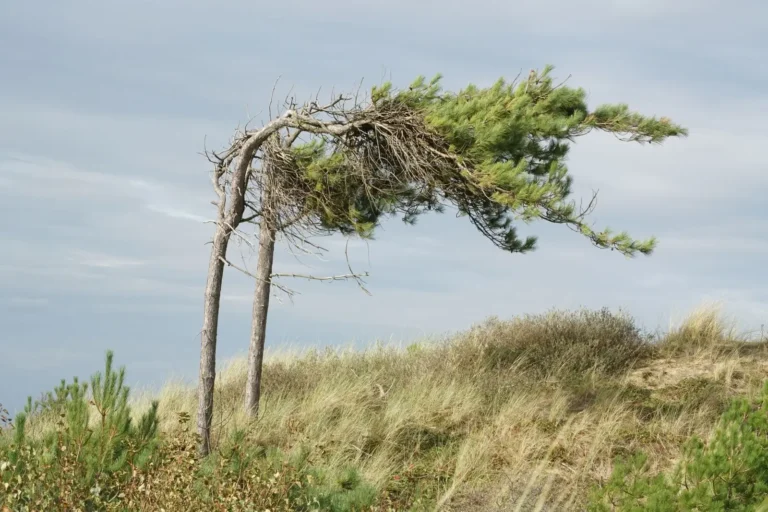
Field note. What we see on this coast is a pruning calendar that does not match the inland one: salt air, fog and wind mean a cut that would be minor in the valley can be the one that opens a crown to decay here, so we look at the species and the exposure before the season.
On the other hand, not every tree wants to be pruned: leaving a healthy canopy alone is a decision that pays, and a tree with plenty of space is often better served by doing nothing.
A homeowner calls and says the tree is too big. That sentence covers at least three different problems, and the cut that fixes one of them makes the other two worse. The two names in the trade are crown raising and crown reduction, and they are not degrees of the same operation. They are opposite moves on the same tree.
Crown raising: taking the bottom off
Raising removes the lower limbs so the canopy starts higher. That is what you do when a branch is scraping the roof, blocking the driveway, fouling a power drop or hitting you in the face on the mower. The tree keeps its height and its spread; you have simply moved the floor of the canopy up.
There are working numbers for this. Eight feet of clearance over a sidewalk, fifteen over a driveway or a street, and roughly three to four feet above a roof surface are the figures most municipal standards land on.
On a mature oak you can usually get there over two or three seasons rather than one, because removing too many lower limbs at once leaves a long bare trunk and a top-heavy crown that the tree then has to feed from a smaller engine.
Crown reduction: taking the ends off, correctly
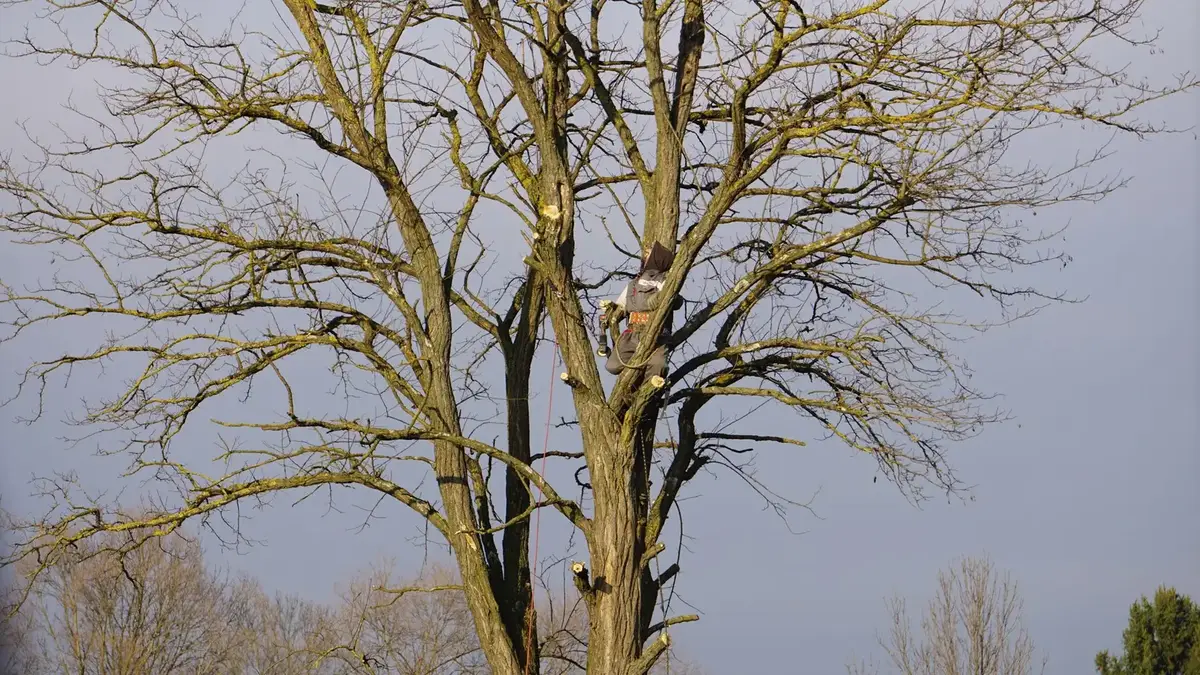
Reduction is for a tree that is genuinely too tall or too wide for its space: leaning over a rental, crowding a fence line, shading the only sunny bed on the parcel. The cut is made at the end of a limb, back to a lateral branch that is at least a third of the diameter of the piece being removed.
That lateral becomes the new leader and continues the line. Do it properly and the tree looks like a smaller version of itself.
Do it improperly and you get a row of stubs. Every stub sprouts a cluster of fast, weakly attached shoots, which is the tree’s panic response. Two years later those shoots are six feet long and attached to the parent by a patch of bark, and that is where the tree fails in the next wind. The trade calls the resulting silhouette lion-tailing, and it is one of the few pruning errors that reliably kills people.
The physics that explains why the difference matters
A limb is a lever, and the load at the attachment point rises with length. Shortening a limb by a third can cut the bending moment at the trunk by more than half. That is why reduction is the correct answer for a tree that is failing at the union: you are not making it shorter for looks, you are removing load from the weakest joint.
This is also why topping does not work. Topping removes the ends and leaves stubs; the tree replaces them with shoots attached at the outer edge of the old wound, which is the worst possible place to hang new weight. The tree gets shorter, then gets heavier in exactly the spot that was already weak.
What to put in the request
If you want raising, ask for clearance in feet and name the obstacle: eight feet over the walk, fifteen over the drive. If you want reduction, ask for a percentage of height or spread and require that every cut land on a lateral of at least one third the diameter. Ask what will be removed in total, and refuse anything above a quarter of the live crown in one visit.
A crew that can answer those three questions in numbers is a crew that knows the difference. A crew that says they will take the top out is not doing either job.
One more thing, because it comes up every autumn: if the tree is too big because it was planted twelve feet from the house thirty years ago, no cut fixes that permanently. Reduction buys you a decade, not a solution. The honest conversation about removal belongs in year thirty, not year forty-five, when the trunk is against the gutter.