Sudden Oak Death in Morro Bay: The Survey Line
Quick answer: Sudden Oak Death in Morro Bay: The Survey Line — Most tree trouble on the Central Coast is identified before it is treated: a borer, a canker and a drought-stressed root system can look the same from the ground, and each has a different answer. Diagnosis is the first cut — host, sign and season — and the least-toxic control that fits comes after it.
Field note. What we see on this coast is that the tree under fog is often the healthier one and the tree on a hot exposed edge is the one that gets hit — stress is the invitation, and the coast hides it well.
On the other hand, treatment is not always the kindest answer: for a hazard tree with internal decay, careful removal protects the neighbours, and replanting does more for the site than a season of injections.
Sudden oak death is a bad name for a slow disease. The pathogen, Phytophthora ramorum, does not kill a coast live oak suddenly — it establishes in the bark, causes bleeding cankers, and over a period of one to several years the crown thins from the top down and the tree dies. What is sudden is the moment the owner notices, which is usually when the tree is already past helping.
Around Morro Bay the disease is present on the hills and in the fog belt, and it behaves differently from the way it behaves in the denser forests further north. The pattern here is patchy, tied to moisture, and very often tied to a drainage line.
What it looks like, in order
The first sign is usually a bleed: a dark, wet-looking stain on the bark, often near the base, sometimes weeping a rusty or black fluid. It looks like the tree is sweating, and unlike a normal wound it does not dry to a callus.
Under the bark at that point the tissue is dead and discoloured, with a distinct margin between dead and live cambium — a line you can find with a knife, though you should not cut a tree open to look for it.
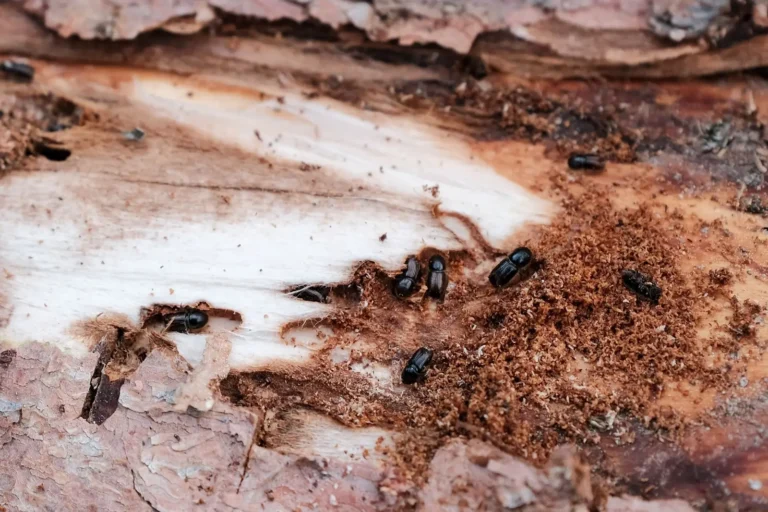
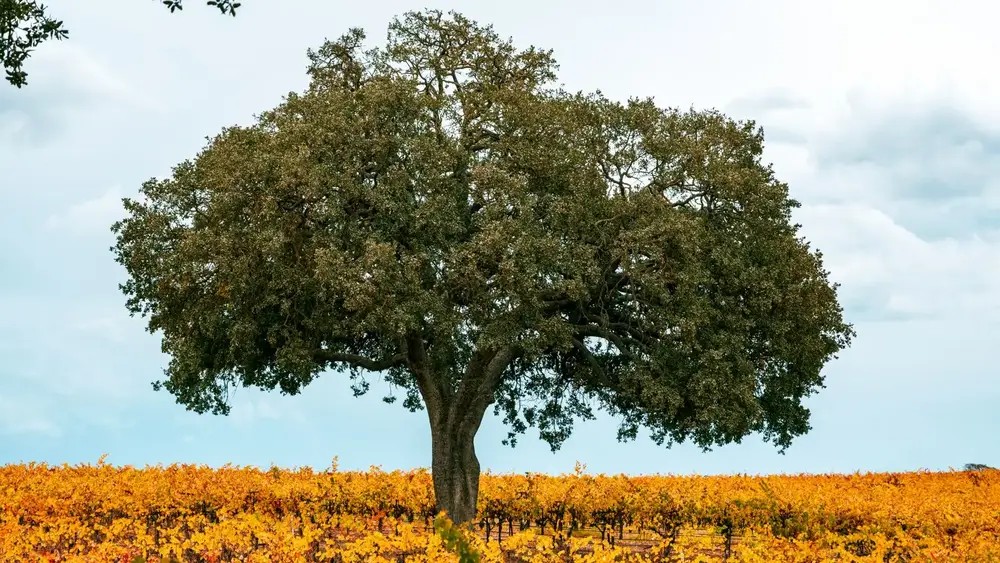
The second sign is the crown. Dieback starts at the top and the outer branches; a tree with a thin, transparent top and a still-green middle is a tree to look at closely. The third is the bark beetle, which arrives on a stressed tree and accelerates the end. By the time beetles are visible, the tree has been sick for a while.
What it is not
Plenty of things look like it from the road. Drought stress thins a crown without a bleed. Armillaria causes a white fungal mat under the bark at the base and a different pattern of decline. A root injury from grading or excavation will kill a tree from the top down and look almost identical to a pathogen problem. And a tree with a bleeding canker may have something other than P. ramorum: several fungi produce similar stains.
That is why a laboratory test on a sample from the margin of the canker is the only confirmation. A diagnosis by eye is a hypothesis, and it is the kind of hypothesis that gets a healthy tree removed or a sick one kept.
The survey line
One sick oak is a case. Several sick oaks in a line is information. The pathogen spreads in water — splashing rain, runoff, soil movement — and it moves downhill. So a walk along a slope that records which trees are symptomatic and where the water goes will usually show a pattern: infection starting at a drainage, a seep, a road cut that concentrates runoff, and moving downslope from there.
That pattern changes what you do. A single infected tree in an isolated grove is a tree to remove and a site to watch. A line of infection along a drainage on a property boundary means the source is uphill and the management question is about water, not about the trees you own.
It also means removing the symptomatic trees is a containment measure — the dead and dying trees are the reservoir that produces spores — rather than a cure.
What can actually be done
There is no cure for an infected oak. There are treatments that reduce the chance of infection in nearby healthy trees, applied preventively and repeated, and there is a great deal of landscape management that reduces the conditions the pathogen likes: no overhead irrigation near trunks, no soil import from an infected site, no moving firewood off the property, clean tools between trees.
For a landowner, the practical sequence is: identify what is sick and what is not, remove the trees that are dead or dying and pose a hazard, keep the wood on site (moving it moves the pathogen), and protect the healthy oaks around them. The Cayucos article covers the same disease on the other side of the bay; tree diseases has the wider diagnostic list, and tree health diagnosis is the visit that separates them.