How Insects Actually Damage a Tree
Quick answer: How Insects Actually Damage a Tree — Trees on this coast live with fog, salt, wind and thin soil, and the work that keeps them healthy is decided by those conditions rather than by a calendar written inland. Structure, clearance and the root zone are what a tree here needs looked at, and small work done early is what keeps a tree out of the emergency list.
Field note. What we see on this coast is that the trees people worry about are usually not the ones in trouble: the pine with a clean crown and a lean that predates the house is often sounder than the tidy tree that has been quietly drowning in its own root zone.
On the other hand, there is no schedule that suits every tree — the same species on two sides of one street can need opposite care, which is why we look before we recommend.
“Something is eating the tree” covers three completely different problems, and the treatment for one is usually useless against the others. The first step is to read the injury: what was removed, where, and in what pattern.
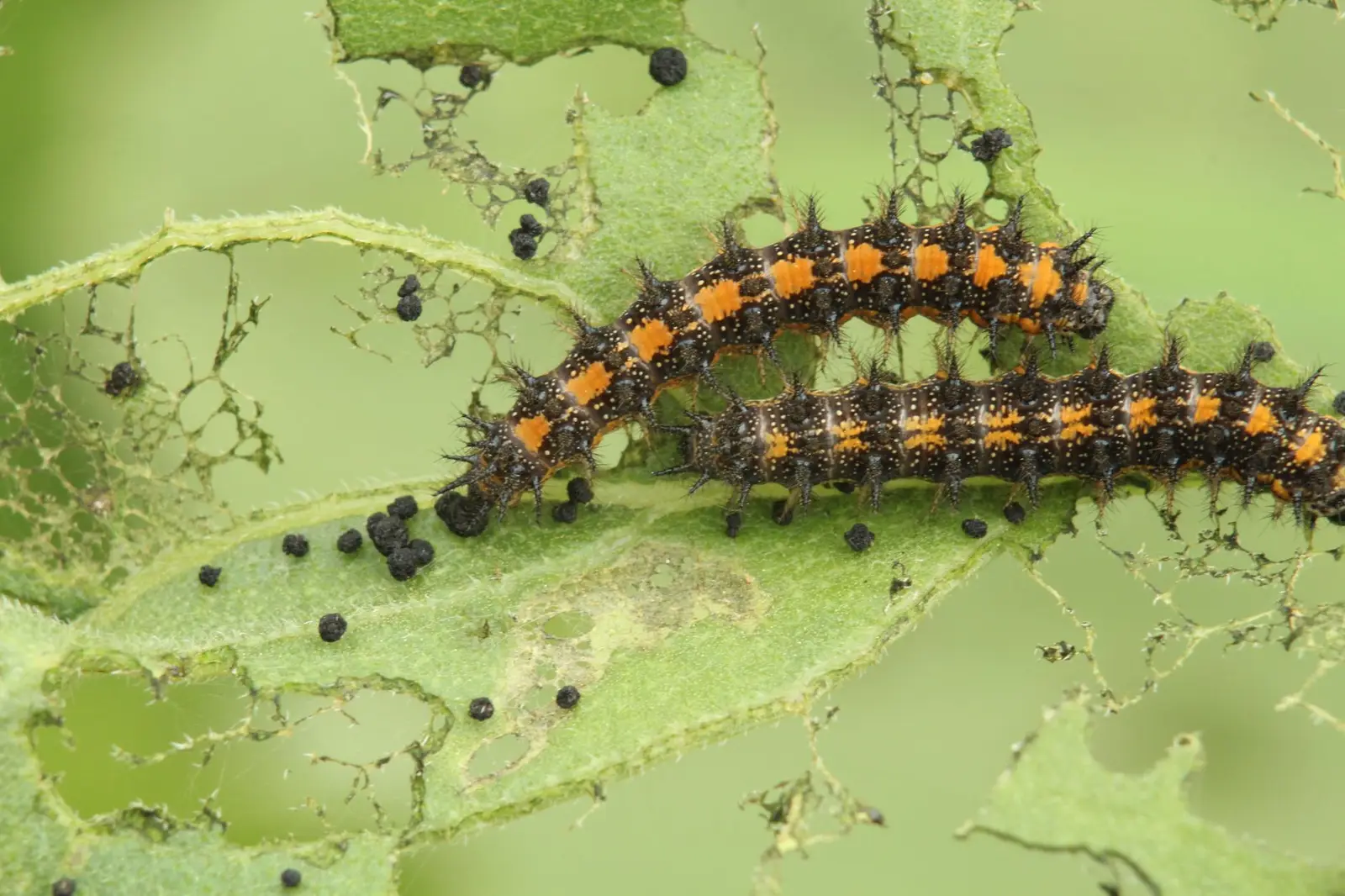
Chewing insects
Caterpillars, beetles and grasshoppers remove tissue. The evidence is missing leaf area, holes with clean edges, or entire leaves gone. On a mature tree, moderate defoliation is usually cosmetic; the tree has reserves and refoliates. The damage that matters is repeated defoliation in consecutive years, or defoliation in the same season as a drought.
A healthy tree can lose a surprising amount of leaf and be fine. A stressed tree cannot, which is why the same caterpillar outbreak kills one tree and not the one next to it.
Piercing and sucking insects
Aphids, scale, whitefly and lace bugs insert a stylet and remove sap. The leaf does not disappear; it yellows, curls, or develops a sticky honeydew that grows sooty mould. Ants farming aphids is a common clue.
These insects usually follow new growth, which is high in nitrogen. That is why heavy fertilization makes an aphid problem worse, and why the first response should be a hard jet of water and patience rather than a spray. Predators — ladybirds, lacewings, hoverflies — arrive within a couple of weeks if the ants are controlled.
Borers
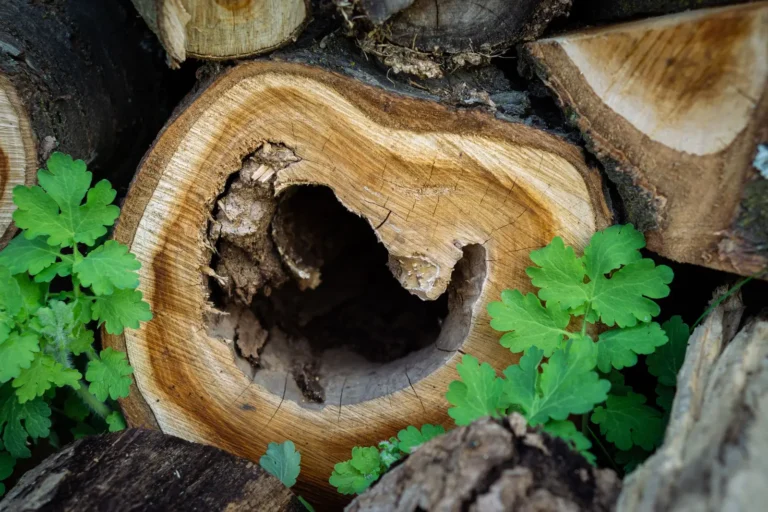
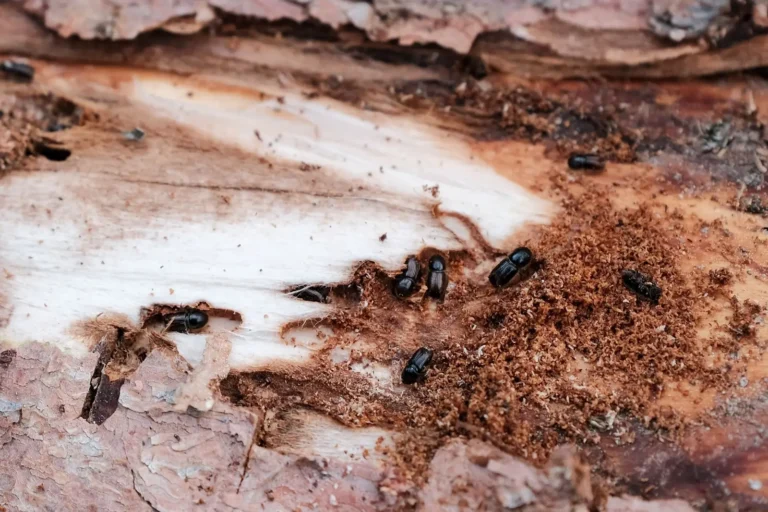
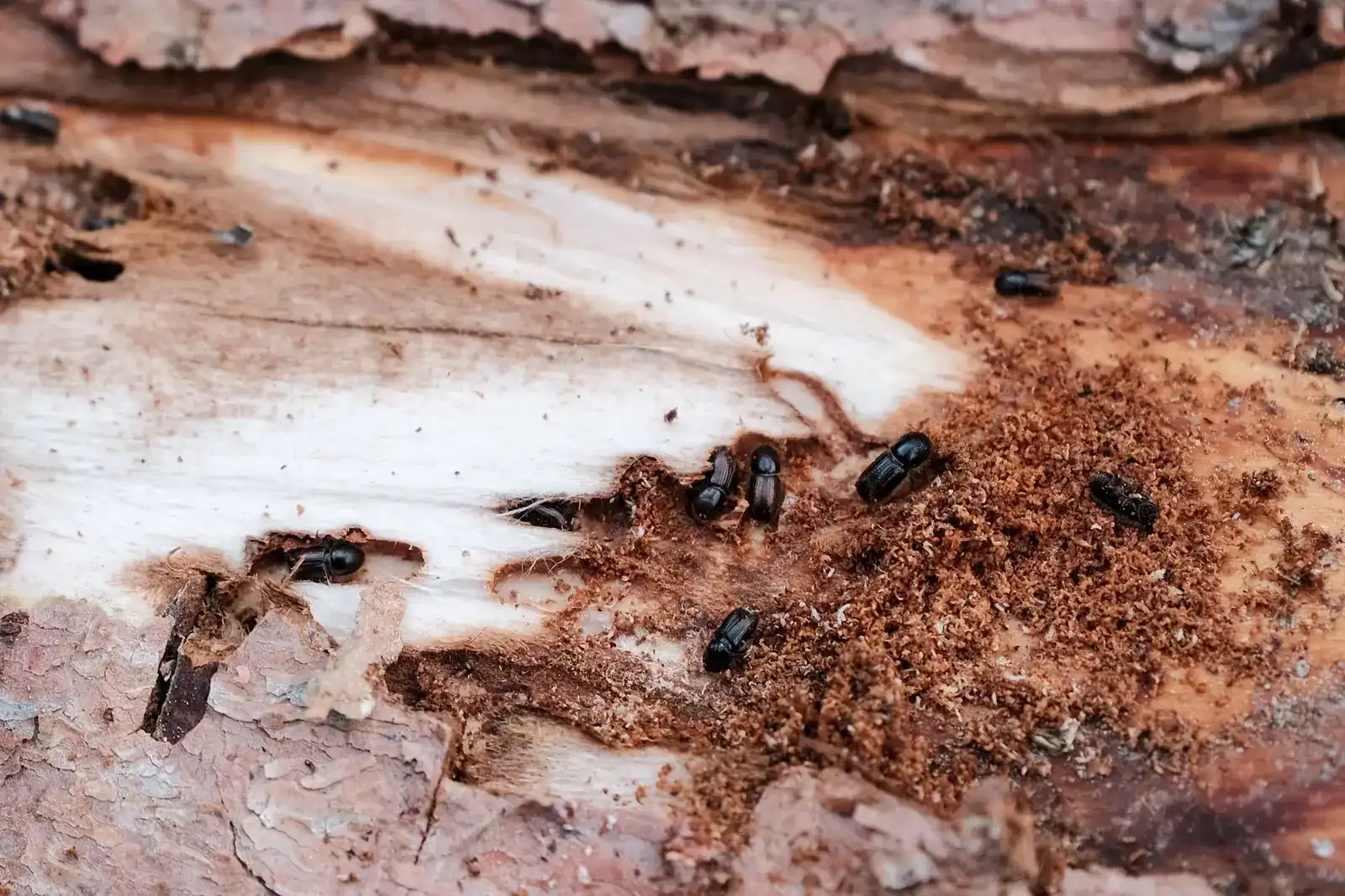
Borers are the ones that kill. The larvae feed in the cambium or the wood, cutting the tissue that moves water and sugar. The signs are entry holes with frass, sap oozing, bark that sounds hollow, and a crown that thins from the top. By the time the crown is visibly thin, the larvae have been working for a year or more.
Bark beetles are the best-known example on this coast, but the flatheaded borers and the clearwing moths do similar work in different species. The pattern is the same: stressed trees, successful attacks, and a crown that declines after the fact.
Why spraying usually disappoints
An insecticide applied to the outside of a tree cannot reach a larva tunnelling under the bark. It kills the predators along with the pests, which is how a small aphid problem becomes a large one. And it does nothing about the condition that made the tree attractive in the first place.
What works is unglamorous: water deeply in dry spells, mulch, avoid heavy nitrogen, remove the badly infested wood before the insects emerge, and keep the tree vigorous. A vigorous tree is the pest-management strategy. Everything else is a supplement.
Reading the season, not the insect
Most of these insects have a window, and the window is set by temperature and by the tree’s own condition. Aphids arrive with the soft new growth in spring. Caterpillars of the oak moths and the tent-makers work in the first warm weeks.
The bark beetles fly when the days are hot and the tree is short of water, which on this coast means late summer into autumn, in a dry year, on a tree that has been irrigated at the surface and not deeply.
That is why the same insect is a nuisance in one garden and a death sentence in the next. The insect is not choosing. It is responding to a tree that has announced, through its chemistry, that it is under stress.
So the calendar matters more than the spray. Deep water in July and August, once a month, to the depth of the root zone. Keep three inches of mulch, pulled back from the trunk. Do not fertilise a tree you are trying to protect from borers; the nitrogen pushes soft growth that the insects prefer and the drought makes the tree unable to defend.
Walk the trees in late summer and look at the crowns from a distance. A tree that is thinning at the top in August is a tree that was attacked in June. Binoculars are the cheapest diagnostic tool in this trade, and the view from twenty feet back tells you more than a close inspection of any single leaf.
That is the window in which something can still be done — usually removing the infested limb, not spraying the whole tree.
If a tree has lost a third of its crown to borers in one season, the honest answer is usually removal, not treatment. The insects are a symptom of a tree that was already failing, and the next wind will finish the sentence.