The First Five Years Decide the Next Fifty
Quick answer: The First Five Years Decide the Next Fifty — Pruning is a plan before it is a cut: deadwood and broken limbs first, then clearance from roofs, wires and paths, then the structure the tree will carry for the next decade. The right cut heals and the wrong one invites decay, which is why the order matters more than the number of cuts.
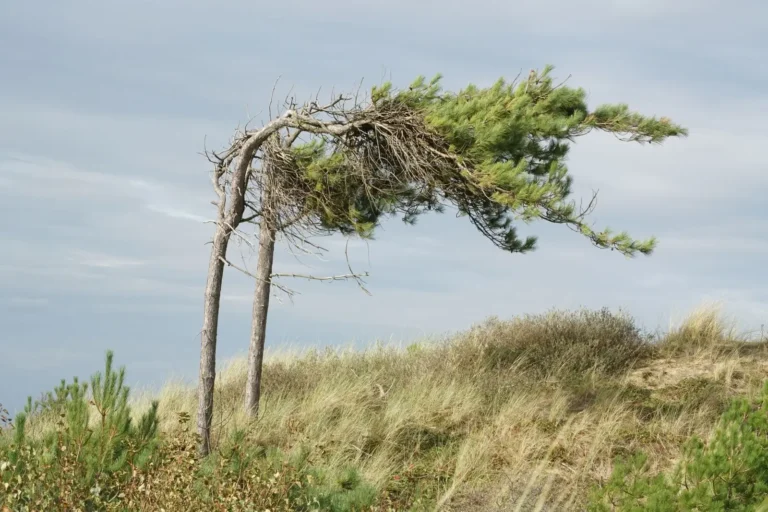
Field note. What we see on this coast is a pruning calendar that does not match the inland one: salt air, fog and wind mean a cut that would be minor in the valley can be the one that opens a crown to decay here, so we look at the species and the exposure before the season.
On the other hand, not every tree wants to be pruned: leaving a healthy canopy alone is a decision that pays, and a tree with plenty of space is often better served by doing nothing.
Almost every structural defect I am called to look at in a mature tree was set in its first decade: a codominant stem that was never chosen against, a branch that grew directly above another, a narrow angle that was allowed to become the main fork. None of that is visible from the ground when the tree is eight feet tall, and all of it is easy to fix then.
The one decision: which stem is the leader
A tree with two stems of equal vigour has a fork with bark trapped in it, and that fork will be the weakest point in the tree for the rest of its life. The fix is to choose one and shorten the other, while both are still small enough that the cut is a nick rather than a wound.
Choose the straighter, better-attached stem — usually the one that continues the line of the trunk. Shorten the other by a third, and keep shortening it each year until it is clearly subordinate. Do not remove it in one cut if it is more than a third of the trunk’s diameter: the tree needs its leaves while the leader establishes.
Spacing: the branches that will fight
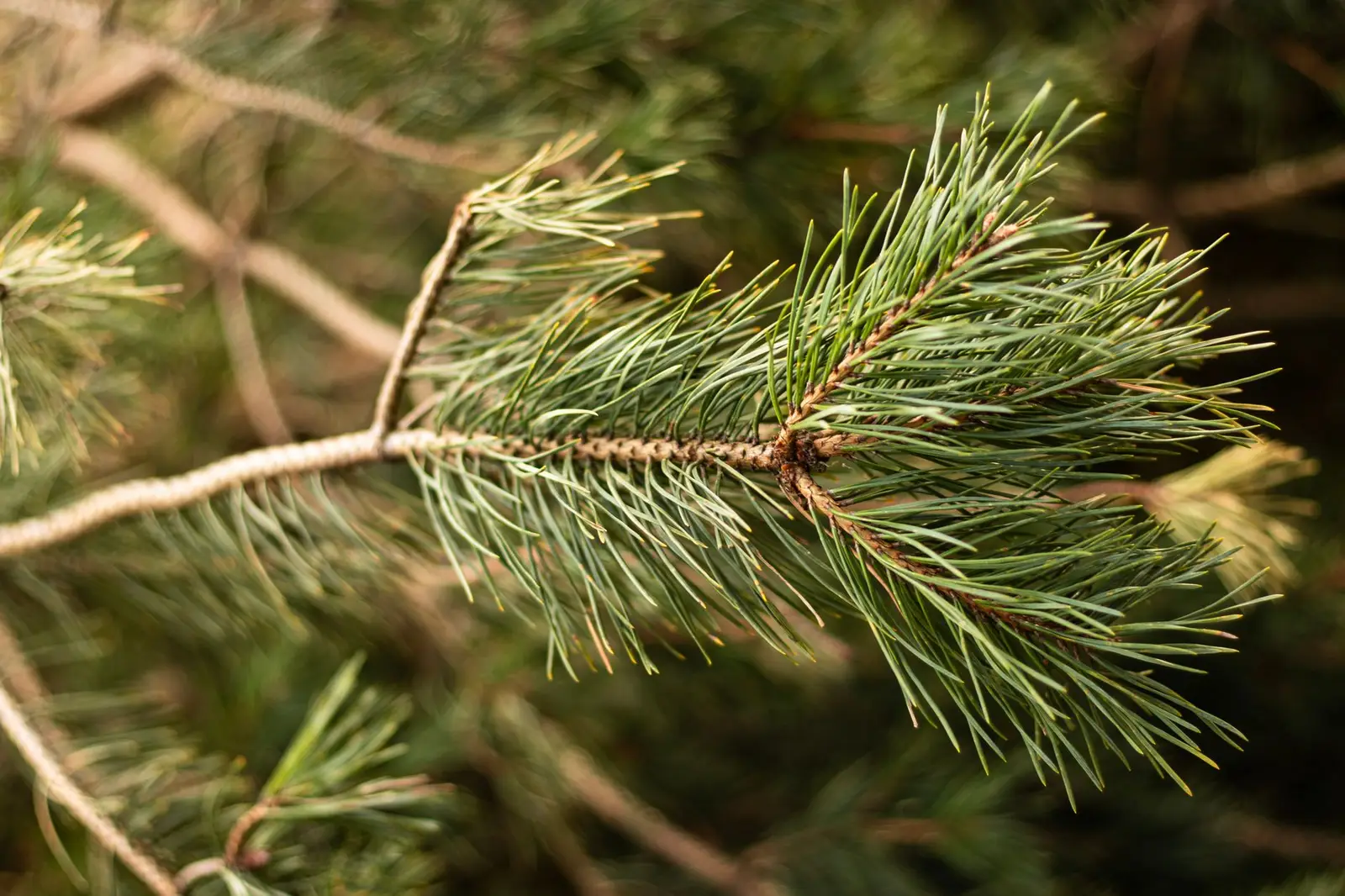
Permanent branches should be spaced along the trunk, not stacked above one another. A branch directly over another shades it out, and the lower one dies back to the trunk, leaving a wound and a weak point. The old rule is to keep them at least eighteen inches apart vertically on a young tree, and to favour the ones with the widest angle to the trunk.
Wide angles are stronger because the wood fibres run continuously from branch into trunk. That is a fact about how wood forms, and it is why a forty-five degree branch outlives a twenty degree one.
How much, and when
Very little. A young tree should lose no more than ten to fifteen percent of its live growth in a year, and the cuts should be the smallest that achieve the structure. The commonest mistake is to cut a young tree back hard to make it branch — it produces a dense, weak crown and sets the tree back a season.
Prune in late winter, before bud break, while the tree is dormant and the structure is visible. A second light pass in midsummer can correct a shoot that got away, but the main work belongs in dormancy.
The three mistakes that cannot be undone
Cutting the leader to force branching. It produces a bush, and the tree never regains a straight trunk.
Leaving the stake and ties on for years. The tree grows a trunk that depends on the stake, and the tie strangles it. Two seasons, then remove — and check the tie every few months.
Planting too deep. The root flare buried is a slow death that looks like drought for a decade. It is corrected in the planting hole, not afterwards.
The stake is a tool, not a crutch
A newly planted tree needs a stake to stop the root ball rocking while the roots establish. It does not need a stake to hold the trunk up, and a tree that is held for years grows a trunk that cannot stand without it. The tie should be loose enough to allow movement, because the movement is what builds the response wood the trunk needs.
Two seasons, then remove it. Check the tie every few months: a strap that has been forgotten will girdle the trunk invisibly under the bark, and the first sign is a tree that snaps at the tie line in a wind. If the tree still needs support after two years, something else is wrong — usually the planting depth or the soil.
Five years of small decisions, ten minutes a year. After that the tree is on its own, and the work becomes the ordinary maintenance of something that was built correctly.
One more thing that belongs in the first five years: the ground. A young tree in a lawn competes with grass for water and is nicked by a mower at the base every fortnight. A mulched ring, three feet across and three inches deep, pulled back from the flare, does more for the tree’s future than any cut in this article.
The mulch is the cheapest thing you will ever do for a young tree, and the only part of the first five years you can outsource to a wheelbarrow.