What Tree Removal in Cambria Actually Costs, and Why the Number Moves
Quick answer: Tree Removal Cost in Cambria: What the Number Depends On — Removing a tree is planning before it is cutting: where the wood lands, what is under it, whether a rope or a crane takes the weight, and what is left when the crew drives away. A removal is finished when the drop zone is clear and the stump is dealt with, not when the trunk hits the ground.
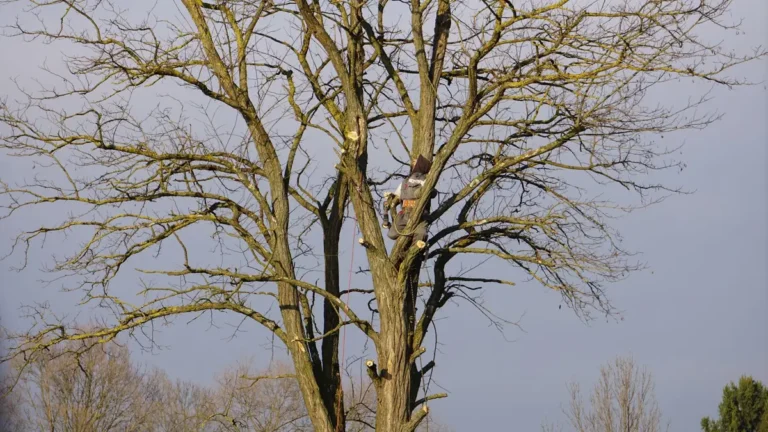
Field note. What we see here is that access decides the price more than height does: a pine over a fence on a slope with no driveway costs more to take down safely than a taller tree with a clear drop, and the plan is where that shows up.
On the other hand, removal is not the only safe answer — a tree with one failing limb, or a lean that can be corrected by reduction, is often better kept and managed than gone.
A cost page that never states a cost is not a cost page. So here is the shape of the answer before the detail: on the Central Coast, a small tree under thirty feet comes out for a few hundred dollars, a mature sixty-foot pine runs into the low thousands, and the difference between two quotes for the same tree is almost never the hourly rate. It is what each contractor believes has to happen before the saw starts.
The figures below come from published 2025 and 2026 cost guides, not from a local price list. Nobody in San Luis Obispo County publishes a residential rate card, so treat these as the range a fair quote should fall inside rather than a promise about your specific tree.
The published ranges, in dollars
- $226-$596Removal, trunk under 12 in, canopy under 30 ft
- $808-$2,132Removal, trunk 12-24 in, canopy over 30 ft
- $1,562-$4,117Removal, trunk 24-36 in, canopy over 30 ft
- $2-$6Stump grinding, per inch of stump diameter
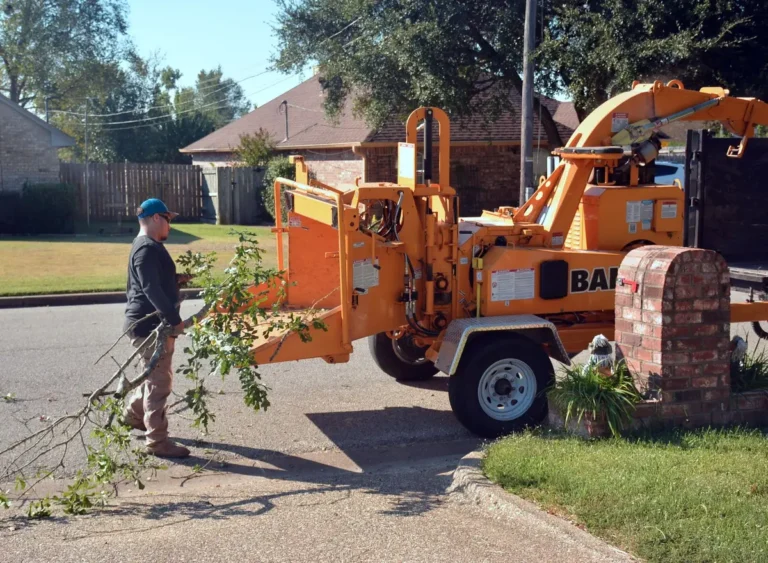
Those four bands come from Thumbtack’s 2026 tree removal guide, which attributes its size table to Xactware pricing data and notes that the figures cover labor and equipment but exclude the stump. That exclusion is the single most common surprise on a removal invoice, because a stump left in the ground is a second job wearing the first job’s coat.
Height-based guides land in roughly the same country by a different road. Fixr puts trees up to thirty feet at $150 to $400 and trees past a hundred feet at $1,300 to $2,000. HomeGuide reports $200 to $500 for the smallest band and $1,200 to $2,500 and up beyond eighty feet.
Read the two systems together and you get the honest picture: diameter and canopy width bracket the price, height refines it, and neither predicts an individual tree on an individual parcel.
What the same tree costs to trim instead
| Tree height | National per-tree range | California per-tree range |
|---|---|---|
| Under 30 ft | $75-$450 | $100-$400 |
| 30-60 ft | $150-$875 | $200-$800 |
| Over 60 ft or difficult access | $200-$1,000 | $400-$1,600+ |
| Hourly, where billed that way | $60-$80 per hour | $165-$205 for a two-person crew |
The California column is a statewide estimate published by a tree-care provider in November 2025, and it is the more useful one here. Note what it does to the hourly figure: $165 to $205 is a crew rate, not a climber’s wage, and a homeowner who budgets as though it were a single worker will be shocked by a four-hour invoice. Most established companies quote flat anyway, which protects them and you from a day that goes sideways.
The four conditions that move your number
Access. A tree in an open meadow and a tree behind a fence, a retaining wall, or a twenty-foot drop to a creek are different jobs with the same trunk. Everything that must be carried out by hand instead of chipped at the curb is paid for in hours.
Proximity to structure. Once a tree leans over a roof, the work stops being about felling and becomes about controlling where the pieces go. That is rigging, and rigging is slower than gravity.
Condition. A dead or split tree cannot be trusted to hold a climber, so it is often removed in sections from a lift instead. Pest damage and root failure both push a tree into this category, and both are things a competent estimator looks for before quoting.
Crane requirement. Fixr reports $1,500 to $2,500 for crane-assisted removal as a whole-job figure, and that distinction matters. A crane is not an add-on line item; when one is required it frequently replaces most of the climbing labor, so compare the total, not the equipment charge.
The line most quotes leave out
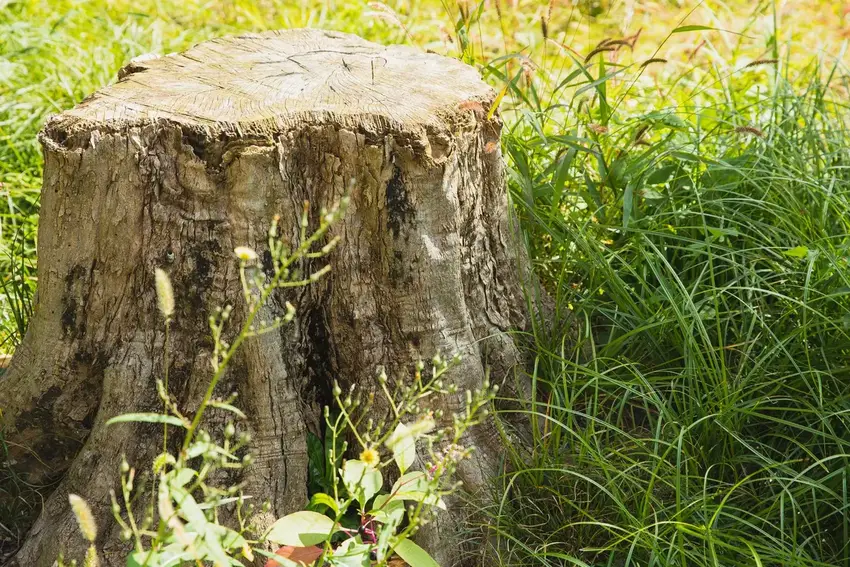
Stump grinding is priced per inch of diameter, generally $2 to $6, with minimum service fees reported between $80 and $160 and $120 to $400 for the first stump. On a twenty-four-inch stump that arithmetic gives you somewhere between $48 and $144, which is why the minimum fee is the number that actually arrives.
Depth matters too: the customary four to six inches below grade is enough for turf, and not enough if you intend to plant a tree in that spot.
Permits are the other quiet line. For unincorporated county and coastal-zone parcels, San Luis Obispo County requires a tree removal request before certain removals, and its fee schedule carries a tree removal permit row covering up to five trees with a per-tree charge beyond that.
Because coastal and inland rules differ, and because an incorporated city sets its own fees, the correct move is to ask the county or the city directly whether your parcel’s status applies. Do not take a contractor’s reassurance as a permit.
What a quote should itemise
A quote you can hold someone to names the tree, the removal method, whether the stump is included and to what depth, where the debris goes, whether the driveway or lawn is protected, and who carries the liability insurance and at what limit. If any of those is missing, you are not comparing prices. You are comparing the parts of the job each contractor happened to think about.
Emergency work is its own economy. HomeGuide reports same-day or next-day removal at two to three times the standard rate, and Fixr describes emergency removal as running two to three times more across a broad $450 to $5,000 range. That premium is real and it is not greed: it is a crew called off another job, at night, on a slope, with a tree that has already demonstrated it will move.
Sources & further reading
One last thing, and it is the cheapest advice on this page. Ask three contractors the same question in the same words: what would make this job cost more than your quote? The one who answers with a list is the one who has thought about your tree. The one who says it will not is either guessing or hoping.