


Access. The carrier has to actually reach the tree: road width, turning room, overhead obstructions and the grade of a driveway all get checked first. On Highway 1 corridor properties the approach is often the deciding factor.
Quick answer: Crane-Assisted Removal in Cambria, CA — Removing a tree is planning before it is cutting: where the wood lands, what is under it, whether a rope or a crane takes the weight, and what is left when the crew drives away. A removal is finished when the drop zone is clear and the stump is dealt with, not when the trunk hits the ground.
- Typical timing: When the tree is a hazard, the schedule is immediate — storm damage, split leaders and leaners do not wait for good weather.
- What it involves: A written plan for the drop zone, rigging or crane work over structures, protecting driveways and roofs, and deciding the stump’s fate in advance.
- The standard: The ANSI Z133 safety standard for arboricultural operations, and ISA best practice for removals near structures.
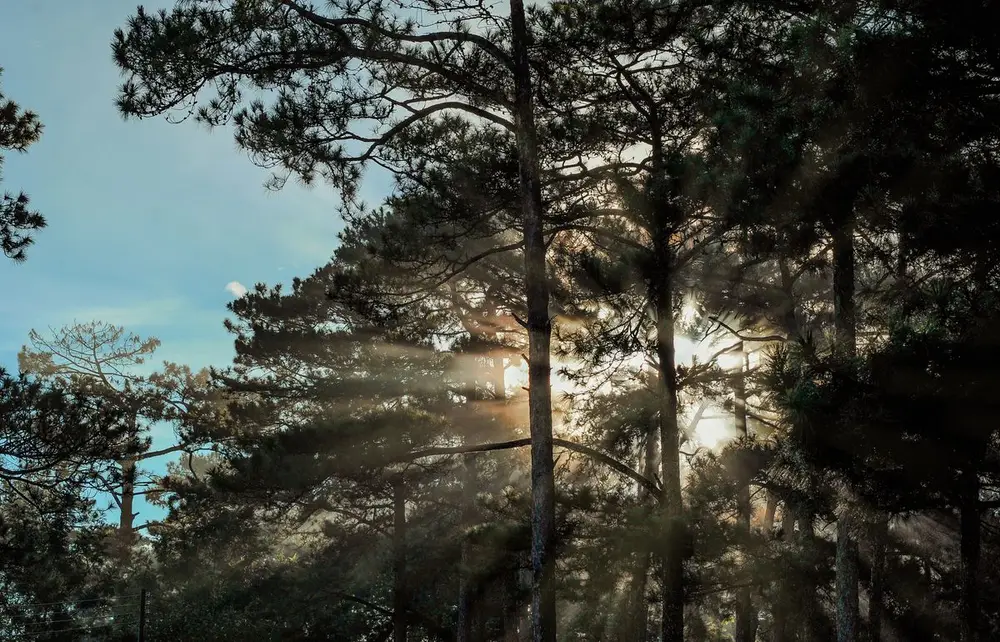
- Where we work: Small town lots, coastal acreage and the narrow properties of the Cambria pine belt.
- Our own record: 503 pages and 291 stories published on this site. Counted from our own archive, not a stock table.
Field note. What we see here is that access decides the price more than height does: a pine over a fence on a slope with no driveway costs more to take down safely than a taller tree with a clear drop, and the plan is where that shows up.
On the other hand, removal is not the only safe answer — a tree with one failing limb, or a lean that can be corrected by reduction, is often better kept and managed than gone.
Standards and sources: Safety standards (ISA — International Society of Arboriculture) · Homeowner guidance (TCIA — Tree Care Tips)
Prepared by Cambria Pines Tree Service Inc. — ISA-certified arborists working on the Central Coast.
What a Crane Actually Changes
Crane assisted tree removal does not make a hard tree easy; it changes where the risk sits. On a conventional removal the climber works inside the tree, ties in to the wood being removed, and lowers each piece on a rope to a ground crew. With a crane, the tree is taken apart in fewer and much larger pieces, each one rigged and lifted clear before it is ever cut free.
The climber is not holding weight, the ground crew is not catching weight, and the wood never gets the chance to fall — it is carried. On a coastal lot where the tree overhangs a roof, a glass greenhouse or a fence line you cannot replace, that difference is usually the whole reason for the job.
When a Crane Is the Right Answer
- The tree cannot be climbed safely. Advanced decay, a hollow spar, a dead top or a leaning stem all mean there is no wood a climber should trust with a lifeline. This is the most common reason we bring a crane.
- There is no drop zone. If everything within the tree's height is house, drive, road or garden, a crane can lift the pieces over the obstruction to an open landing area instead of dropping them into it.
- The wood is simply too big. A mature pine or eucalyptus butt section can weigh more than any rope rig can safely carry; a crane takes it in one pick.
- The window is short. Sometimes it is a weather window, sometimes a road closure, sometimes a buyer's deadline. A crane reduces the number of cuts aloft and the time the site is closed.
- Access or terrain is the problem — a tree on a slope above a structure where there is nowhere for a climber to stand and work.
What a Crane Setup Needs on a Coastal Lot
A crane is a heavy machine on a narrow road, and the setup is where most of the planning goes.
Ground bearing. The outriggers spread an enormous load onto the soil. Soft ground, an old septic field, buried utilities or a hillside edge need mats and steel plates, and occasionally the machine is simply too heavy for the location.
Overhead conductors. If the boom has to cross or work near a service drop or a distribution line, the line is dropped or the utility is involved first. There is no version of this job where we work under a live line.
A certified operator and a rigging plan. Load charts, pick weights, sling angles and the lift path are worked out before the first pick, not decided mid-air.
Traffic control and permission. A machine blocking a lane may need a road closure or an encroachment permit, and neighbours need to know a large tree is being flown out over the boundary.
The Plan Comes Before the Truck
The crane is the last decision, not the first. We walk the site, look at the tree's defects and lean, measure the picks, and confirm where every piece is going to land. Then we identify the one or two picks that are genuinely awkward — the top over the chimney, the limb pointing at the neighbour's roof — and plan those first while there is still plenty of tree to work with.
The trunk gets sectioned from the top down, and the crane lifts each piece to the landing area where it is cut to length and the debris handled.
Where Conventional Rigging Still Wins
A crane is not automatically the better job. It is slower to set up, it needs a road and firm ground, and it is a separate cost. Where a tree has sound wood, a climber can reach it safely and the pieces can be lowered on ropes into a clear area, conventional removal is often faster and cheaper — and on a small tree the crane would be a solution looking for a problem.
We will tell you plainly which one your tree needs. We would rather quote the cheaper job and get the work than sell a machine you did not require.
What It Costs, Honestly
A crane adds a mobile crane and its operator to the crew, so the cost is higher than the same tree rigged by hand. The honest trade is risk and time: a crane usually removes a hazardous tree faster and with less exposure to the structure than any other method.
If a tree is dead, decayed or leaning over something occupied, the question is not whether you can afford the crane — it is whether the tree can be taken down safely without one. We will give you a written estimate for each option when both are viable.
Arranging a Crane-Assisted Removal
If you have a large or compromised tree with nowhere safe to fall, photographs from a couple of angles and the width of the access are enough for us to tell you whether a crane is realistic at your address. Call (805) 927-4414 or use our contact page. We work across Cambria and the rest of the coast, and if the tree has already failed, our emergency service answers day and night.
Next step
Ready when you are.
Questions, quotes, or just exploring — we’re here to help.