Every Cut Named: A Homeowner’s Reference to Tree Work
Quick answer: Every Cut Named: A Homeowner’s Reference to Tree Work — Pruning is a plan before it is a cut: deadwood and broken limbs first, then clearance from roofs, wires and paths, then the structure the tree will carry for the next decade. The right cut heals and the wrong one invites decay, which is why the order matters more than the number of cuts.
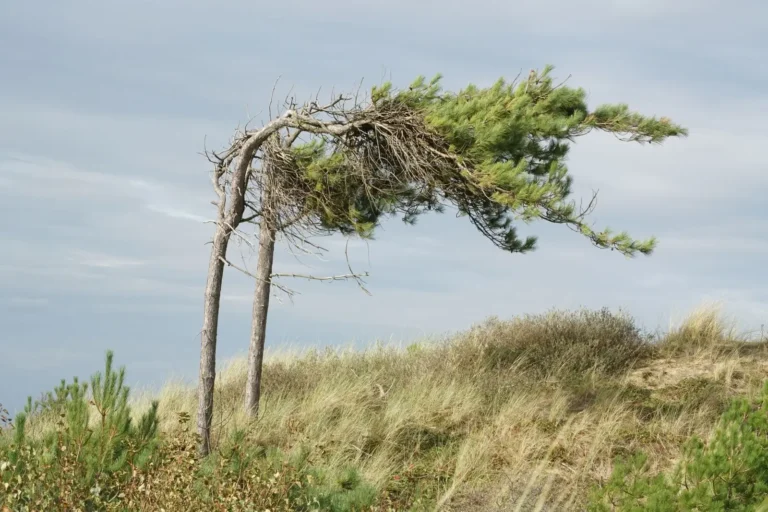
Field note. What we see on this coast is a pruning calendar that does not match the inland one: salt air, fog and wind mean a cut that would be minor in the valley can be the one that opens a crown to decay here, so we look at the species and the exposure before the season.
On the other hand, not every tree wants to be pruned: leaving a healthy canopy alone is a decision that pays, and a tree with plenty of space is often better served by doing nothing.
When a client says “just trim it up”, they could mean four different operations with four different effects on the tree. The trade has names for all of them, and using the names is the fastest way to get the work you actually want.
Cuts that remove wood from the inside: thinning
Thinning removes whole branches back to their origin, throughout the canopy, to let light and air through. It does not shorten the tree or raise the canopy. Done properly it is the best cut for a tree that has become dense, and it is the one that lets a view through without butchering the outline.
Done badly — taking everything out of the middle and leaving the ends — it becomes lion-tailing, which puts weight at the end of long, weakly attached limbs.
Cuts that lift the floor: raising
Raising removes the lowest limbs so the canopy starts higher. It is the cut for clearance over a roof, a drive or a path, and it does not change the height or spread. Typical targets are eight feet over a walk, fifteen over a drive, and three to four feet above a roof.
Cuts that shorten: reduction
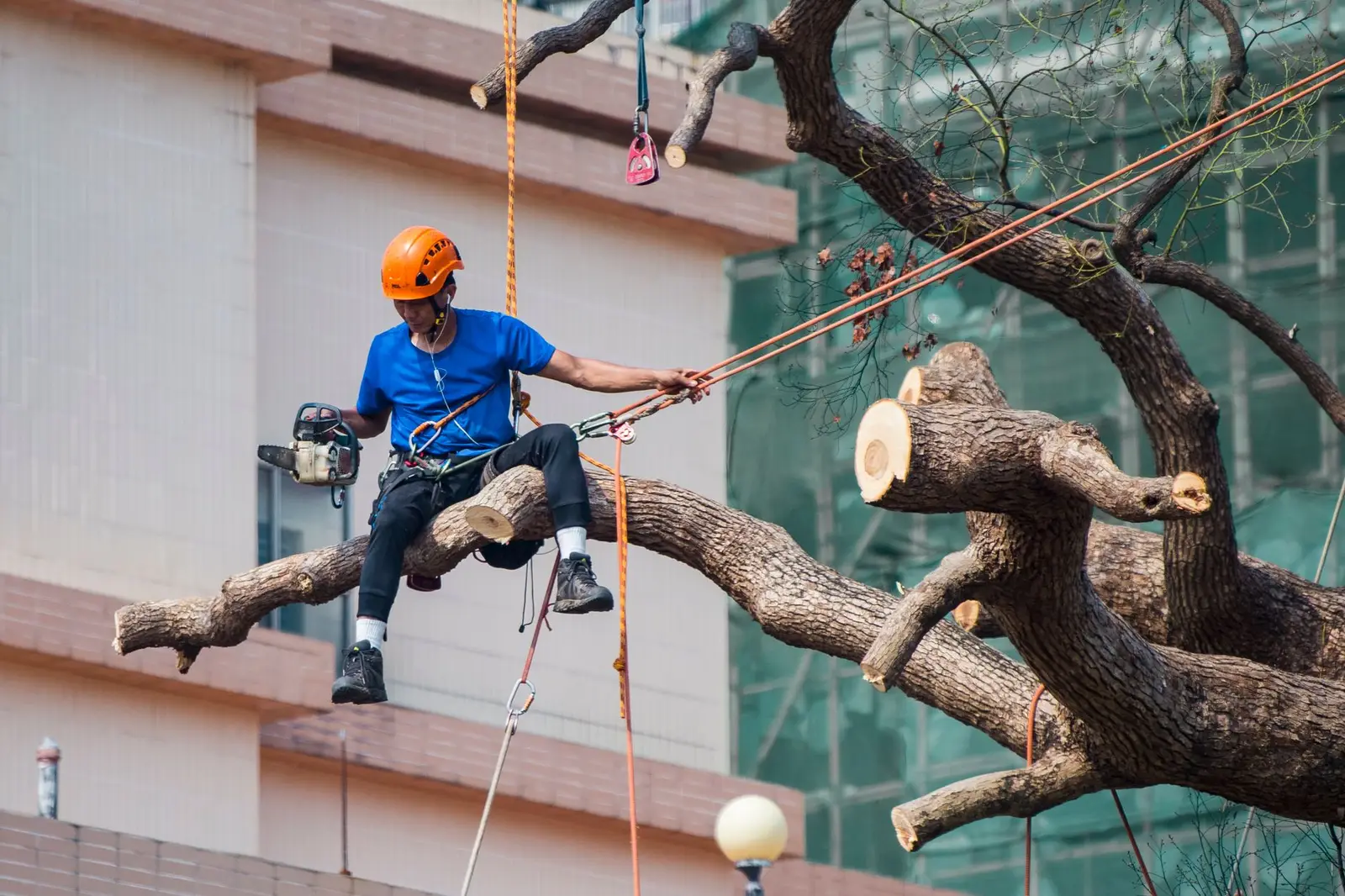
Reduction shortens limbs or the whole tree by cutting back to a lateral branch at least a third of the diameter of the piece removed. It is the correct answer for a tree that is too big for its space, because it removes weight and leverage from the weakest unions. It is not topping, and the difference is the lateral.
Cuts that take only what is dead: cleaning
Deadwooding removes dead, dying and broken branches. It is the cheapest improvement available on a mature tree, it changes the winter silhouette, and it is the work that most reduces risk for the least money. On an old oak it is often the only work needed in a decade.
The two that are always wrong
Topping removes the ends of limbs and leaves stubs. The tree responds with a cluster of fast, weakly attached shoots at the outer edge of the wound — the worst possible place to hang new weight. Every topped tree becomes a hazard tree with a shorter life.
Flush cutting removes the branch collar, the tree’s own barrier against decay. It is a small error with a long consequence: the wound is bigger, the seal is slower, and the decay has a door.
Pollarding, which is not topping
Pollarding is a deliberate, repeated system where a tree is cut back to the same knuckles every year or two, producing a compact head of shoots. It is a legitimate technique on certain species in certain settings, and it only works if it starts young and continues forever. Starting it on a mature tree is topping with a longer word.
How much can come off in one year
The standard is a quarter of the live crown in a single season, and less on a mature or stressed tree. That is not a bureaucratic number; it is roughly the point at which the leaves removed cost more sugar than the tree can replace, and the stored reserves go into regrowth instead of defence.
The exception people forget is that the limit applies to the whole tree, not to each limb. Three limbs at fifteen percent each is not fifteen percent. Add them up before the saw starts, and if the number is over a quarter, the job is a two-year programme.
There is also a limit that has nothing to do with percentage: never remove more than the tree can close. A cut on a four-inch limb heals in a season or two. A cut on a fourteen-inch limb on an old oak is a permanent opening, and the tree will spend the rest of its life walling it off.
That is the argument against reduction on mature natives, and the reason the honest answer is sometimes a smaller tree in a different place rather than a big tree made small.
Two practical checks before authorising anything. Ask what percentage of the live crown comes off, in writing. Then ask what the tree will look like in five years, not in five minutes. A crew that can answer the second question is a crew that has watched its own work age.
Use the names in the request. “Thin the interior for light, raise to eight feet over the walk, remove the deadwood, and do not shorten the long limb on the south side” is a brief a crew can price and execute. “Trim it up” is a conversation that ends in a disagreement about what the tree was supposed to look like.