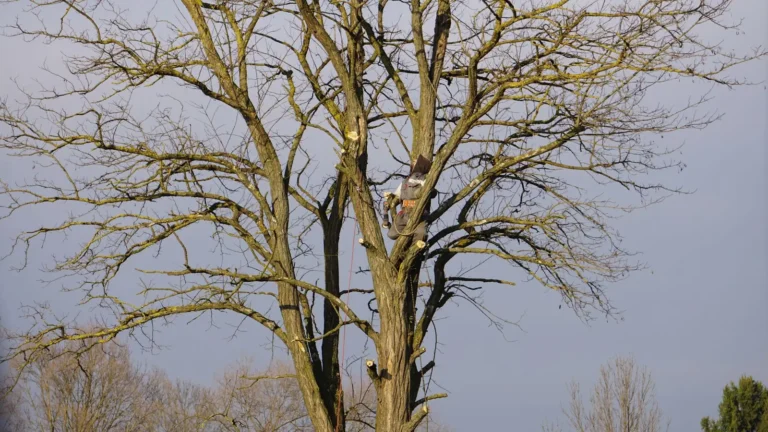
Pruning and Trimming Are Not Synonyms
Quick answer: Pruning and Trimming Are Not Synonyms — Pruning is a plan before it is a cut: deadwood and broken limbs first, then clearance from roofs, wires and paths, then the structure the tree will carry for the next decade. The right cut heals and the wrong one invites decay, which is why the order matters more than the number of cuts.
Field note. What we see on this coast is a pruning calendar that does not match the inland one: salt air, fog and wind mean a cut that would be minor in the valley can be the one that opens a crown to decay here, so we look at the species and the exposure before the season.
On the other hand, not every tree wants to be pruned: leaving a healthy canopy alone is a decision that pays, and a tree with plenty of space is often better served by doing nothing.
In everyday speech the two words are interchangeable. In horticulture they describe different operations with different objectives, and the difference is the reason two crews can quote the same tree and produce two completely different results.
Trimming: the surface
Trimming is about the outline. It is what you do to a hedge, a screen, a topiary or a shrub that has outgrown its space. The cuts are made at the perimeter, the goal is a shape or a clearance, and the plant is expected to regrow into that shape.
Applied to a tree, trimming is the lightest possible interpretation: cutting back what is in the way. It is legitimate for clearance and for a formal hedge. It is not a health treatment.
Pruning: the structure
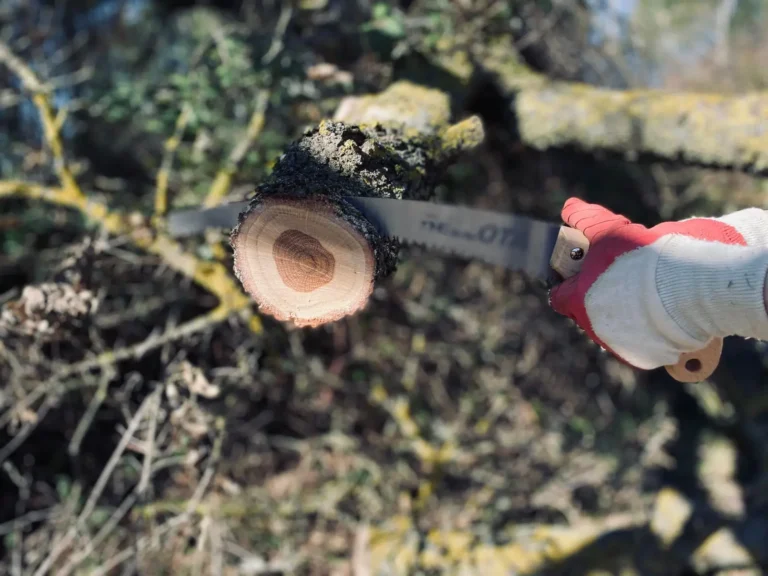
Pruning is about the tree’s architecture and its defence systems. It selects a leader, removes a codominant stem, takes deadwood, reduces a limb that is too heavy for its union, and opens the canopy for light. The cuts are made at branch collars and at laterals, and the goal is a tree that lives longer and fails less.
Pruning follows standards — the ANSI A300 series in the United States — which specify where a cut lands, how much live crown can be removed in one season, and which practices are not acceptable. Trimming has no equivalent standard because it is a shape, not a biology.
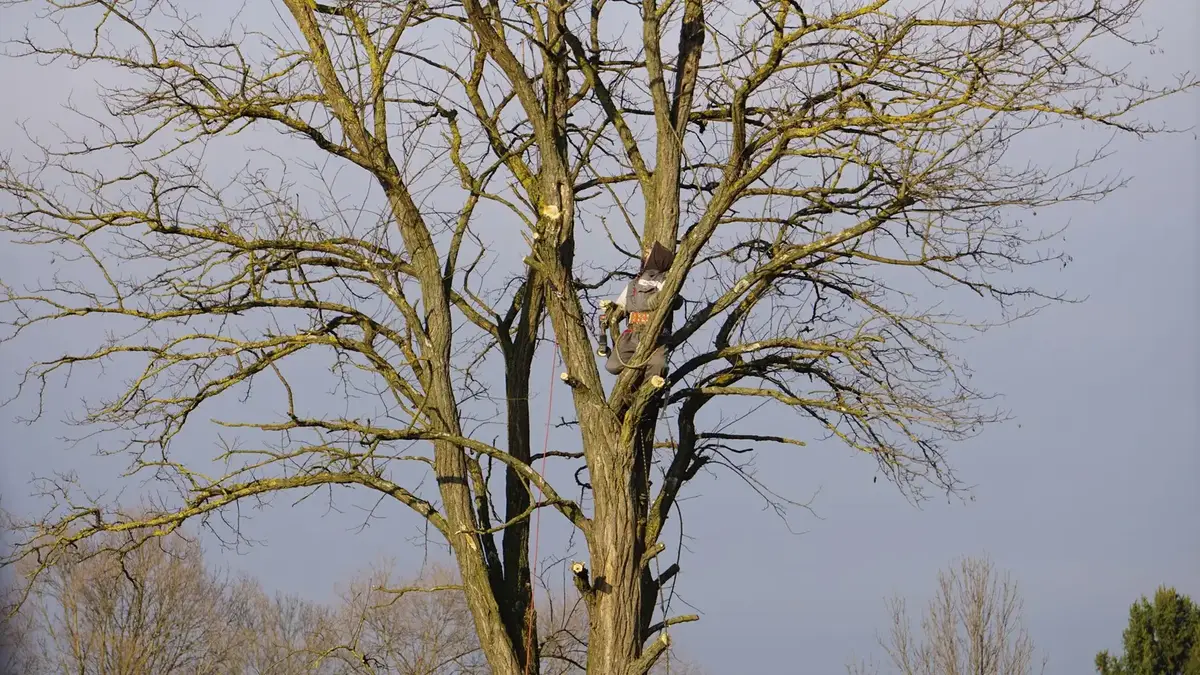
Why the confusion costs money
A client asks for trimming, the crew trims the perimeter, and the tree keeps its structural defect. A year later a limb fails and everyone is surprised. Or the opposite: a client asks for pruning, the crew does structural work, and the client is unhappy because the hedge still looks shaggy.
The brief has to name the objective. “Clear eight feet over the driveway” is trimming. “Remove the deadwood and reduce the limb over the bedroom by fifteen percent” is pruning. Both are legitimate; they are not the same job.
The trees where it matters most
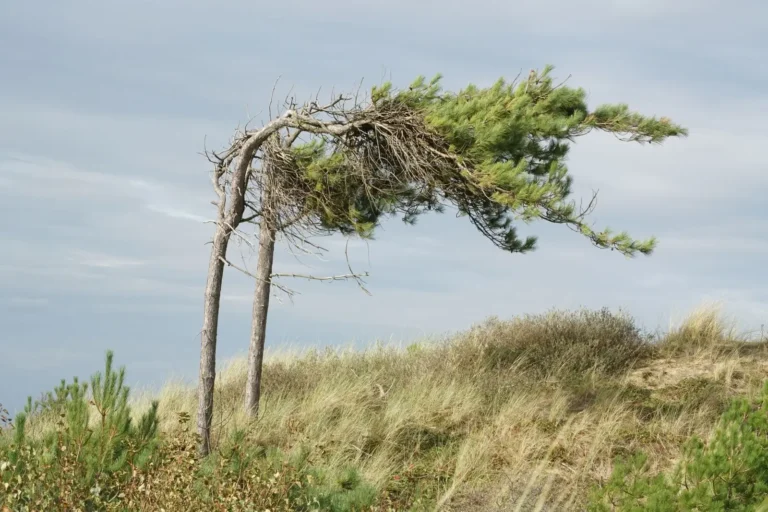
On a mature oak, trimming is close to meaningless and pruning is the whole job. On a Monterey pine, trimming the outline removes the windward armour and pruning for deadwood and clearance is what keeps it standing. On a hedge, trimming is correct and pruning would be nonsense.
On a fruit tree, the two overlap: you trim the outline to keep the tree reachable and prune the interior to keep it fruiting. That is why orchards have their own vocabulary.
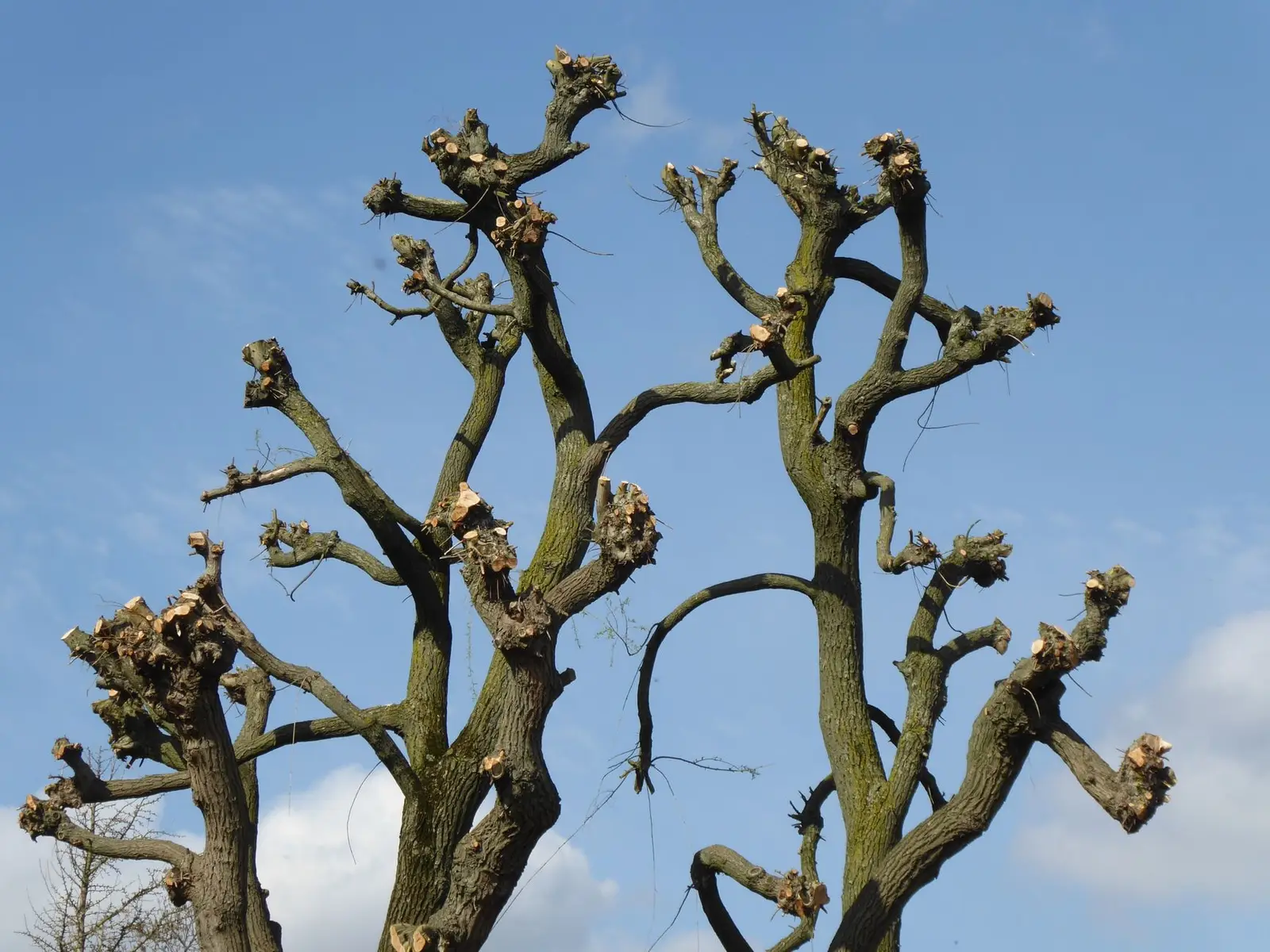
What to put in the request
Four lines are enough, and they will get you a quote you can compare.
The objective. Light through the canopy, clearance over the drive, deadwood out, the limb over the bedroom reduced. One sentence, in plain words.
The limit. What must not change: the height, the shape, the long limb on the south side, the branch the swing hangs from. Naming what to preserve is as useful as naming what to remove.
The percentage. How much of the live crown may come off. A crew that hears a number will hold to it.
The cleanup. Wood, chips, the lot, or leave the chips. Decided in advance, not at the end.
A good crew will ask two questions back: what is the tree doing that you want to change, and has anyone worked on it before. The first tells them the objective. The second tells them what they are inheriting — old topping cuts, a flush-cut scar, a limb that was left as a stub and has been sprouting ever since. Both answers change the plan.
A crew that asks neither is quoting a shape, not a tree.
You can hear the difference in a quote. A trimming quote says: shape the canopy, cut back from the house, tidy the outline, and it is priced by the hour or by the hedge foot. A pruning quote names the cuts: remove two dead limbs over the drive, reduce the south limb by fifteen percent, remove the codominant stem at the union. That quote is priced by the tree, because the work is decided before the crew arrives.
A quote that says trim and prices by the hour is the one most likely to end with a tree that has been shaved all over and a defect that is still there.
The practical version: if the request is about how the tree looks from outside, it is trimming. If it is about how the tree holds together, it is pruning. Say which one you want, and ask the crew which one they are quoting.