Monterey Cypress: The Tree That Survives the Wind and Not the Canker
Quick answer: Monterey Cypress Care: Wind, Salt and the Canker That Wins — The tree that thrives here is the one chosen for this coast: fog, salt, wind and shallow soil are the local constraints, and mature size is the constraint most often ignored. Planting is a matter of putting the right species in a site that can hold it, then keeping the root flare visible and the first summers watered.
Field note. What we see is that the coast is forgiving to the right species and unforgiving to the wrong one: the same tree that looks comfortable four streets in will burn on the windward side of a Cambria lot.
On the other hand, natives are not automatically the answer at every address — a species that belongs in the watershed can still be the wrong size for the garden it is standing in.
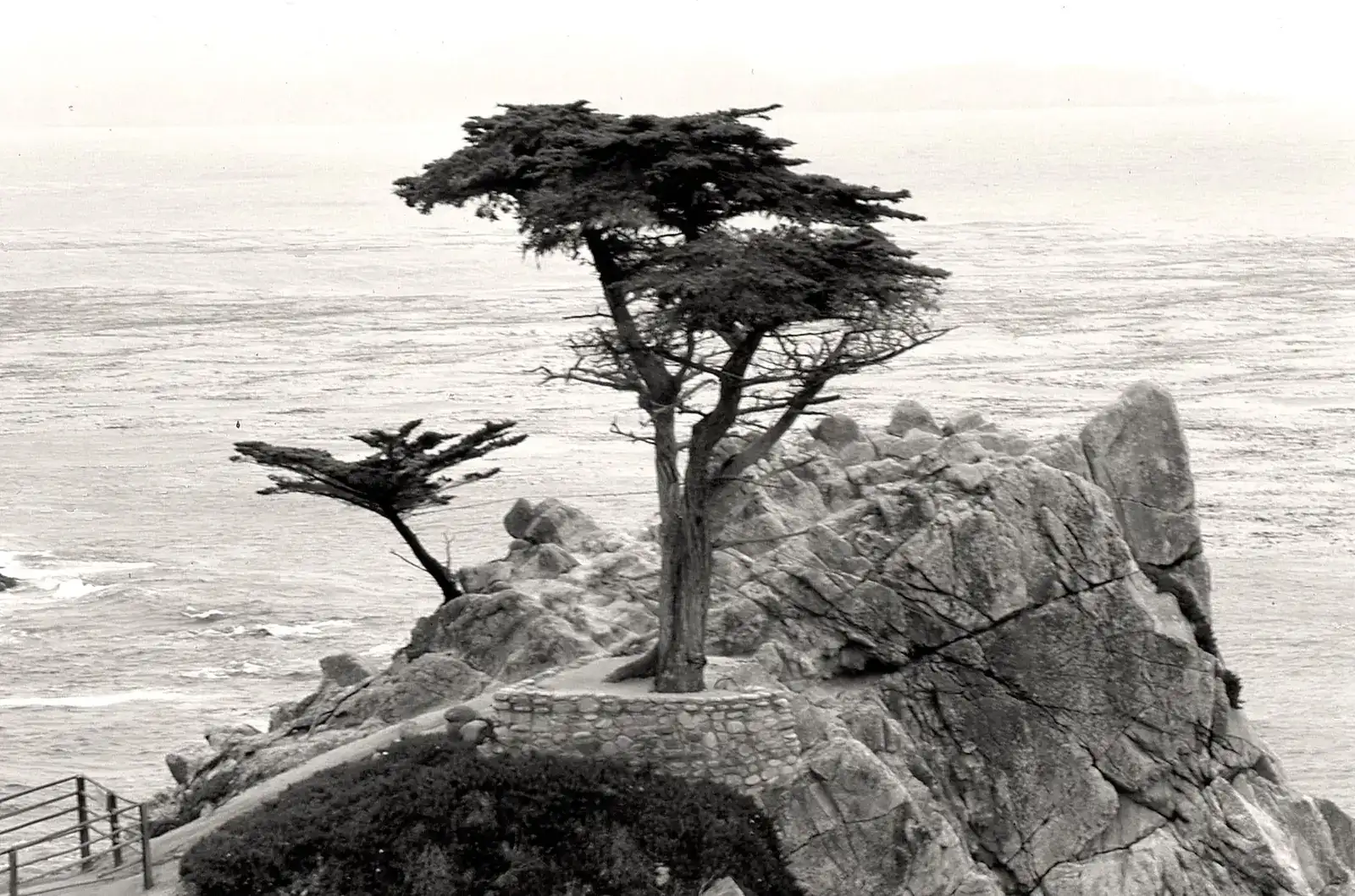
The Monterey cypress is the most coastal tree on this coast and the most misunderstood. It grows where nothing else will, it takes salt and wind that would shred an oak, and it dies from a fungus that gets in through a wound you made with a saw.
What it wants
Full sun, wind, salt and space. It is not a shade tree and it is not a small tree; a mature cypress is forty to seventy feet with a spread to match. It grows fast when young and then slows, and it holds its lower limbs unless they are shaded out.
The wind-shaped form — flat-topped, asymmetric, leaning away from the sea — is normal and healthy. Pruning it into symmetry removes the structure that resists the wind.
Canker, and why it matters
Seiridium canker is the cypress disease on this coast. It enters through wounds — pruning cuts, storm damage, hedge trimmers — and kills the cambium in a strip that shows as a sunken, dark lesion with resin bleeding. A branch beyond the lesion dies and turns a distinctive dull grey-brown while the rest of the tree stays green.
The pattern is usually one-sided and progressive. Cut into the lesion and you find dead cambium under intact bark. There is no cure that saves an infected branch; the treatment is to remove it well below the lesion, sterilise the blade between cuts, and stop making wounds in wet weather.
Pruning a cypress without killing it
Prune in dry weather, in late summer or early autumn. Make the fewest cuts possible, and never cut into old wood that has no green foliage on it — cypress does not reliably sprout from bare branches, so a hard cut into the interior leaves a permanent hole. Hedging the sides is fine; hedging into the brown is not.
Disinfect the saw between trees. Canker spreads on tools, and a hedge trimmer run through an infected hedge is a delivery mechanism.
When removal is the answer
Remove when the canker has reached the main trunk, when more than a third of the canopy is dead, or when the tree is a hedge of dead and dying plants that will infect the replacements. A cypress with a trunk lesion is a standing hazard, because the wood behind the canker decays while the crown still looks substantial.
If you replant, choose something with resistance or a different species entirely. Replanting cypress into the same infected soil, in the same wind, is how a garden ends up with a second dead hedge in ten years.
Hedge, screen or specimen
A cypress is asked to do three different jobs here, and the care differs with the job.
As a hedge it is a wall of foliage kept at a height you can reach. Trim the sides once a year in late summer, keep the top slightly narrower than the base so light reaches the lower foliage, and never cut back past the green. A cypress hedge that is hard-pruned into the brown stays brown, and the gap becomes a wind tunnel for the plants either side.
As a screen it is allowed to grow to its own shape with the lower limbs intact, because the lower limbs are the screen. Raising the canopy of a screen defeats the purpose, and it is the most common mistake I see on a property line.
As a specimen it needs space and almost nothing else. The wind does the shaping. The work is limited to removing deadwood, taking out a competing stem before it becomes a second trunk, and keeping the root zone clear of fill and paving.
Spacing matters more than pruning for the first decade. Planted at six feet, a row of cypress becomes a hedge by default, with the interior shaded and the canker risk rising as the air stops moving. Planted at fifteen to twenty feet, they become trees. Decide which one you are planting before the hole is dug, because the decision is very hard to reverse.
Water and soil, briefly, because they are where cypress care usually goes wrong. A young cypress wants deep, infrequent water for its first two summers and nothing after that. A mature one wants no summer water at all; irrigation in the root zone in July is a good way to shorten its life, and it is the reason cypress at the edge of a watered lawn decline while the ones on the bluff thrive.
Keep the root zone unexcavated, unpaved and unfilled. A cypress tolerates salt spray and wind, and it does not tolerate a change of grade over its roots.
One note for the bluff-top gardens: a cypress hedge is doing structural work, holding soil and breaking wind. Removing it without a replacement plan is how a slope starts moving. Take advice on the replacement before the removal, not after.