Fungus on a Tree: Reading the Fruiting Body
Quick answer: Fungus on a Tree: Reading the Fruiting Body — Fruit trees are pruned to a different standard from shade trees: every cut is aimed at light and air reaching the fruit, at a structure that holds a heavy crop without breaking, and at a canopy low enough to pick from. On the coast the fog changes the calendar, so the cut is timed to the tree rather than to a date on a chart.
Field note. What we see is that the fog belt shifts everything later: trees here come out of dormancy slowly, so a hard winter cut taken on a warm-inland schedule can expose wood that has no leaves to shade it yet.
On the other hand, a tree that has been let run for years often does better with two or three years of patient cutting than with one hard reset.
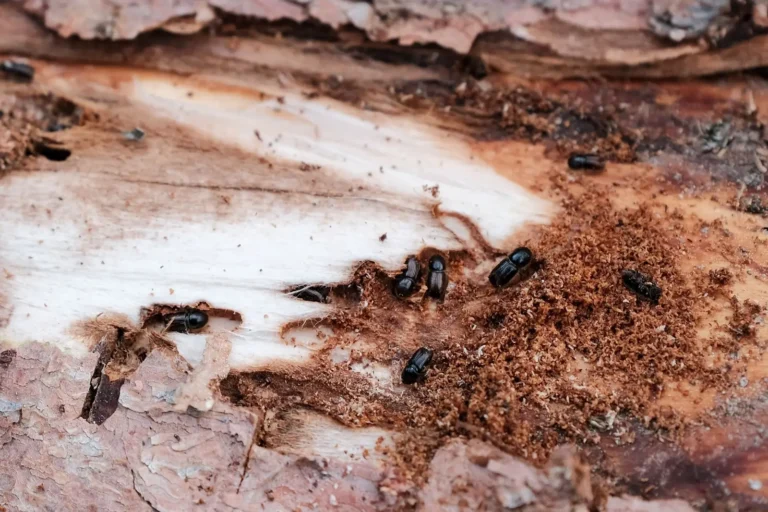
A fungus on a tree is not a diagnosis. It is an announcement that something is already happening inside the wood, and the useful information is in where it appears and what shape it takes.
Three categories, in order of concern
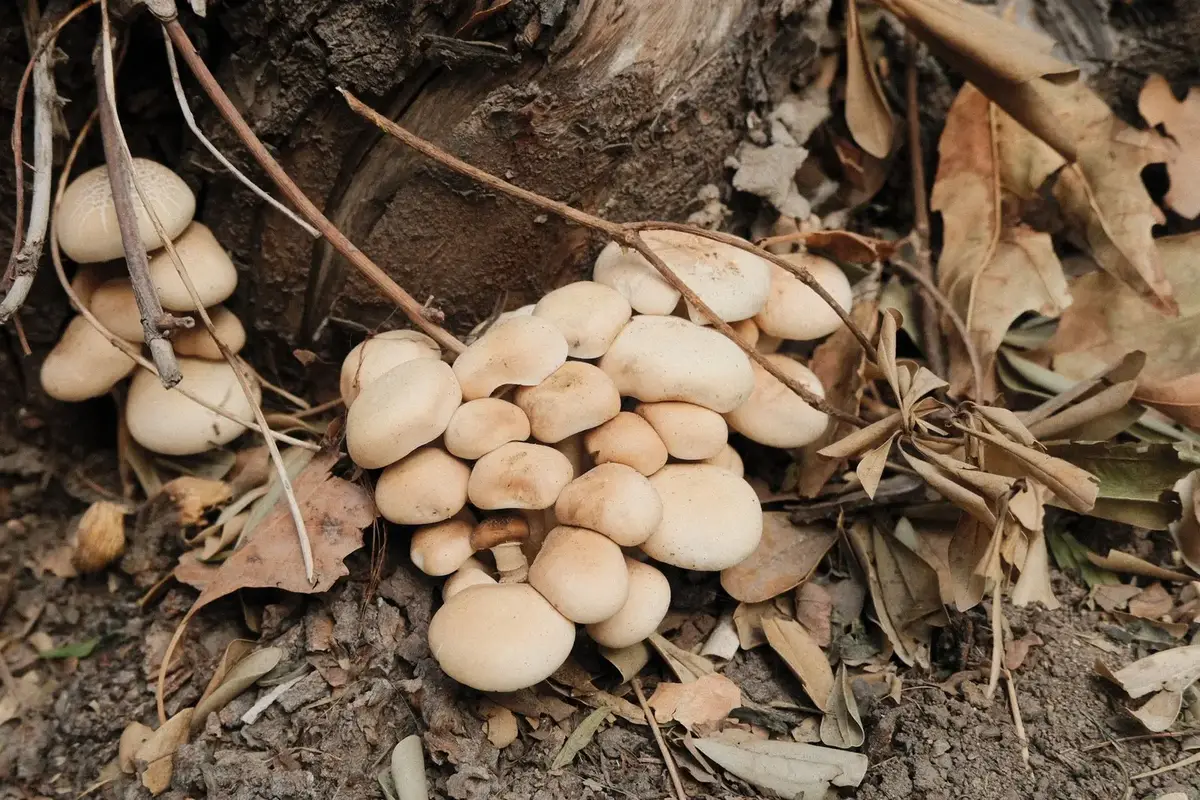
Root and butt rots. A conk at or below the root flare, a mushroom cluster at the base, or a black, brittle crust at soil level. These are the serious ones, because the decay is in the wood that anchors the tree. Armillaria and Phytophthora both present this way on this coast.
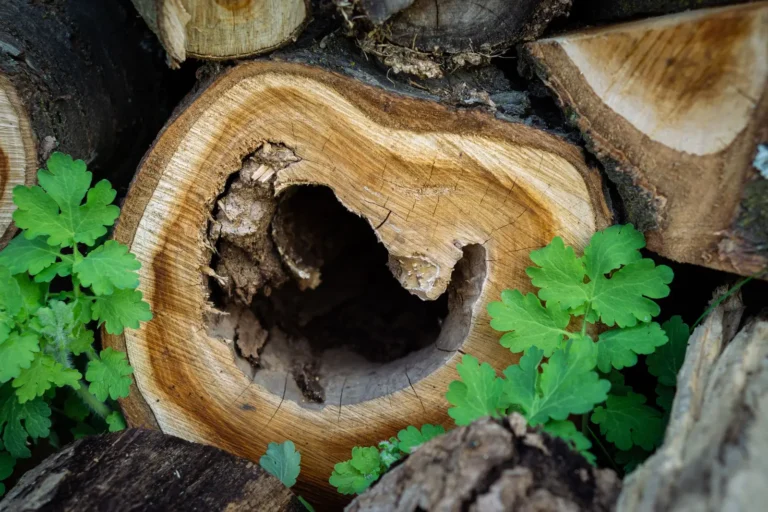
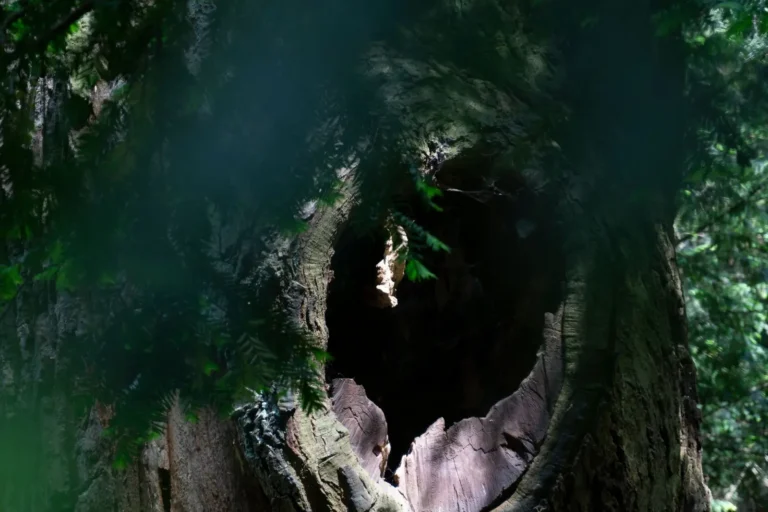
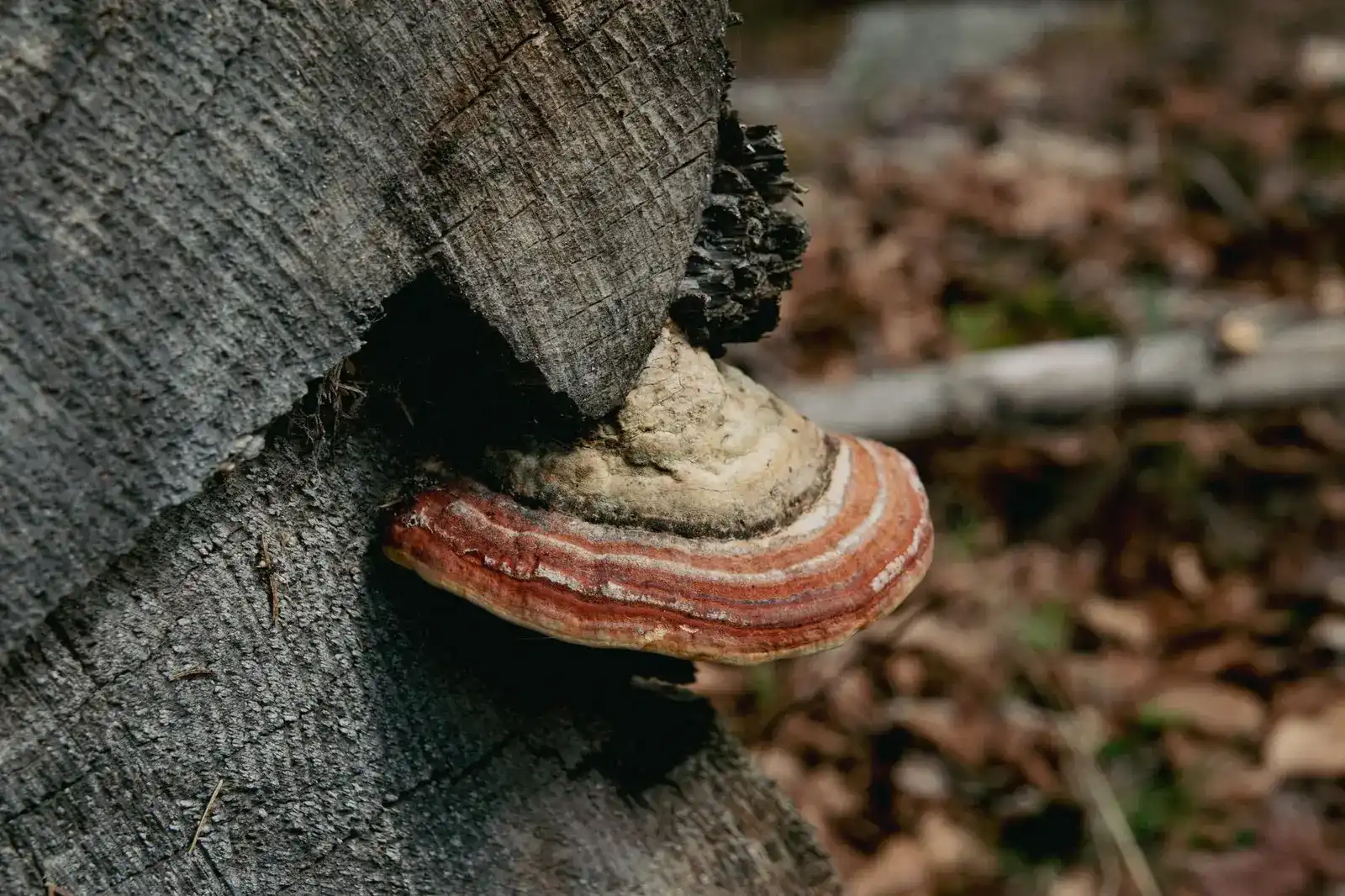
Heart rots. A bracket fungus on the trunk, often with a hollow behind it. The tree can live with a hollow for decades, but the wall thickness matters and the target matters.
Surface organisms. Lichen, moss, sooty mould on honeydew, and the small saprophytes that live on dead bark. These are cosmetic. Lichen is not a disease and does not need to be removed.
What the shape tells you
A bracket that is hard, woody and perennial, growing in shelves, usually indicates a heart rot that has been there for years. A soft, fleshy mushroom that appears after rain and collapses in a day is often a saprophyte feeding on dead material. A cluster of honey-coloured mushrooms at the base in autumn is the classic Armillaria sign, and it usually means the roots are already colonised.
The colour changes that matter
White rot leaves the wood pale and stringy, and it removes lignin — the tree loses stiffness before it loses mass, which is why white-rot trees fail without warning. Brown rot leaves the wood brittle and cubed, and the tree loses strength more visibly. Both are structural. Neither is treatable with a spray.
What to do
Photograph the fruiting body, note the location and the date, and get an assessment. Do not scrape it off and declare the tree cured; the fungus is inside the wood, and the conk is the part that sticks out. Do not paint, fill or seal. Do not fertilize a tree with root rot — nitrogen pushes growth the roots cannot support.
If the conk is at the base and the tree is within falling distance of a structure, the decision is about the target, not about the fungus. The fungus has already made its point.
One practical note: photograph the underside. The pore surface and the way the bracket attaches to the bark are the two features that identify the species, and both are invisible from above.